

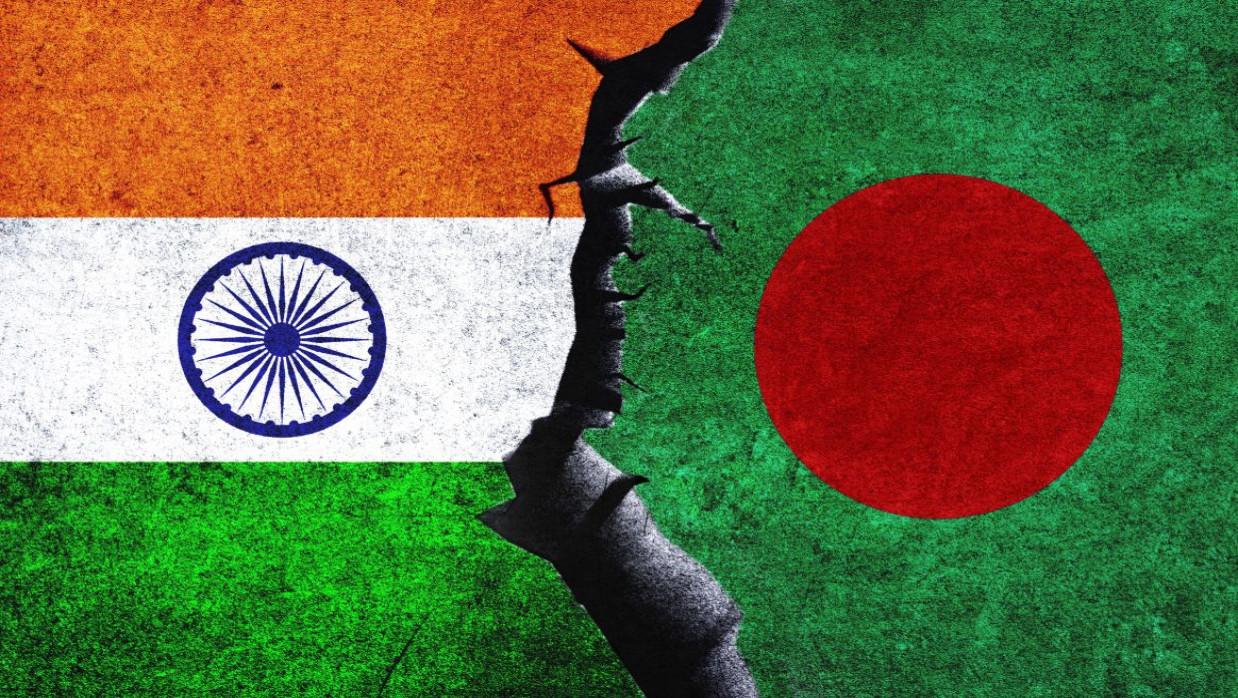
The evolving political landscape in Bangladesh following the decline of the two dominant figures, Sheikh Hasina and Khaleda Zia, marks a historic transition not only for Dhaka but also for New Delhi. Bangladesh seems to be evolving into some sort of new political order. Now it is time for India to decide whether to engage Bangladesh through a narrow prism of party politics or to acknowledge and embrace the multiple realities of Bangladesh and craft its Bangladesh policy accordingly. The latter option is advisable.
A Transitional Moment in Bangladesh
Bangladesh faces severe political instability right now. Bangladesh went to the polls in February 2026 without the Awami League participating. New developments in these elections included the return of BNP leader Tarique Rahman from exile, the emergence of new contenders such as the National Citizens Party (NCP), and the Jamaat-e-Islami's comeback in Bangladeshi politics through repositioning itself. Questions about the election's legitimacy have arisen following AL's boycott. Bangladesh has gone through this before: turmoil following the assassination of Sheikh Mujibur Rahman and the subsequent weakening of institutions in 1975, years of military/quadripartite rule, and attempted quasi-civilian rule. However, parallels can be drawn between these historical points and current-day Bangladesh. Institutions have been weakened, conflicting ideologies are emerging, and political polarization is on the rise. Many voters who traditionally sided with the Awami League due to their history with secularism and the Liberation War may abstain from voting at all.
India's Strategic Myopia
The primary objective underlying India's Bangladesh policy for decades now has been national security. "Our overarching goal has been to ensure that Bangladeshi territory is not used to conduct anti-India insurgent operations," says a former Indian intelligence officer. He has a point. India has legitimate reasons to worry about insurgent sanctuaries across the border because militants have regularly launched cross-border attacks in India's northeast.
But in trying to achieve that goal, India over-aligned itself with a single political party, the Awami League, especially during Sheikh Hasina's tenure. Strong action against insurgent groups and willingness to work with India on connectivity and security issues made Sheikh Hasina a likable partner. But India ended up appeasing its government and looking the other way when it veered towards authoritarianism, alienating segments of the other political factions in Bangladesh.
India was left exposed when the Hasina government was toppled. Her successors discredited most of the initiatives New Delhi signed on to with her. India should have known better than to overalign with a single leader in such a complex polity.
The Rise of Anti-India Sentiment
Anti-India sentiment in Bangladesh is neither recent nor monolithic, but has grown stronger over the years. The following are some reasons:–
Unlike Bangladesh, India is a big country. Bangladesh sometimes fears that India will enter into unequal treaties with Bangladesh and influence Bangladesh's internal affairs.
Two, Identity politics: the BNP creates the image of "Bangladeshi nationalism" against the Awami League's "Bengali nationalism" to create a psychological distance with India culturally and politically.
Three: New events, including Sheikh Hasina taking shelter in India, controversies over the handover of cricket kits to Bangladesh, and India allegedly instigating the doctors' movement, may have added fuel to public sentiment in Bangladesh. Any small incident, such as depriving Bangladeshi players of playing in Indian leagues or taking too long to respond to Bangladesh's concerns, is perceived as a snub or as arm-twisting.
This environment constrains any Bangladeshi government. Even if it seeks closer ties with India, domestic political pressures may compel it to adopt a more assertive or even adversarial posture.
Geopolitical Undercurrents: China and Pakistan
India's worries are compounded by the fact that new players are now eyeing the strategic space vacated by New Delhi in Bangladesh. China's growing economic clout has brought it many advantages in Dhaka. Pakistan too has signalled interest in renewing its ties with Dhaka.
India-Bangladesh ties had witnessed a similar phase during the beginning of the last decade when anti-India insurgent groups found safe havens in Bangladesh and were allegedly operating out of them with the connivance of Pakistan-based terror networks. While the situation is different now, there is a possibility of a strategic tussle among the three players.
China's investments in infrastructure and connectivity offer Bangladesh alternatives to India-centric development. Meanwhile, any perception of Indian overreach may push Dhaka closer to Beijing or Islamabad, not necessarily out of ideological alignment, but as a balancing strategy.
The Danger of Extremism
Another pressing concern is the rise of extremist and radical elements within Bangladesh. Attacks on media institutions, cultural organizations, and minorities indicate an attempt to delegitimize the liberal democratic framework that has underpinned the country since independence.
These forces thrive in periods of political uncertainty. If mainstream political actors fail to deliver stability and governance, untested or radical alternatives may gain traction, as the Maoists did in Nepal's 2008 elections. While Islamist parties have historically had limited electoral success, their street power and ability to mobilize discontent should not be underestimated.
For India, this presents a paradox. While security concerns justify vigilance, overt interference or heavy-handed responses could inadvertently strengthen these very forces by feeding narratives of external domination.
Toward a Multi-Dimensional Engagement
India should de-party it. A more people-centric and institution-centric approach could work better in India-Bangladesh relations.
India needs friends across all political sections. It needs to reach out to all political entities, regardless of ideology. India's political outreach should not be restricted to the ruling party in Dhaka but should also reach out to the political opposition, civil society members, youth wings, etc.
India needs to target people directly. India should launch more programs that directly benefit the common people of Bangladesh. The medical visa program needs to be expanded. Haats along the border should reopen. Indian universities should welcome more Bangladeshi students. Indian and Bangladeshi citizens should meet more people-to-people. If citizens of both countries benefit from India-Bangladesh bilateral relationships, hate speeches against India won't find any audience.
India and Bangladesh need to agree on terms that work equally for both countries. River waters, trade deficit, connectivity, and transit should not be seen as one-sided agreements that favor India. Dhaka should be made to feel like it's sitting at the same table as Delhi.
India cannot push on minority and migration-related issues if it doesn't want Bangladesh to push back. There are genuine issues with both matters, but India should avoid vocalizing them in public forums or taking the political route.
Rebuilding Trust Through Balance
Above all else, India needs to understand that Bangladesh is not a singular entity. It is a society with multiple identities, cross-cutting ideologies, and aspirations that are bound to change over time. Treating it as though it fits neatly into one political ideology, pro-Awami League or otherwise, will only serve to misunderstand its internal fault lines and to sabotage Bangladesh-India relations in the long term.
Bangladesh, being stable, democratic, and pluralistic, is ideal for India. However, getting there demands patience, humility, and smart planning. Walking this tightrope will be difficult, but India cannot let its short-term security objectives compromise its long-term goal of promoting democratic ideals and maintaining a respectful relationship with Bangladesh.
India will not win Bangladesh back through governmental agreements alone, but through how citizens of each country perceive one another. If New Delhi can re-engage with Bangladesh beyond the Awami League and rebuild trust across the political spectrum, it will have succeeded not just in checking China but in securing a peaceful and prosperous South Asia.

0 Comments
LEAVE A COMMENT
Your email address will not be published