

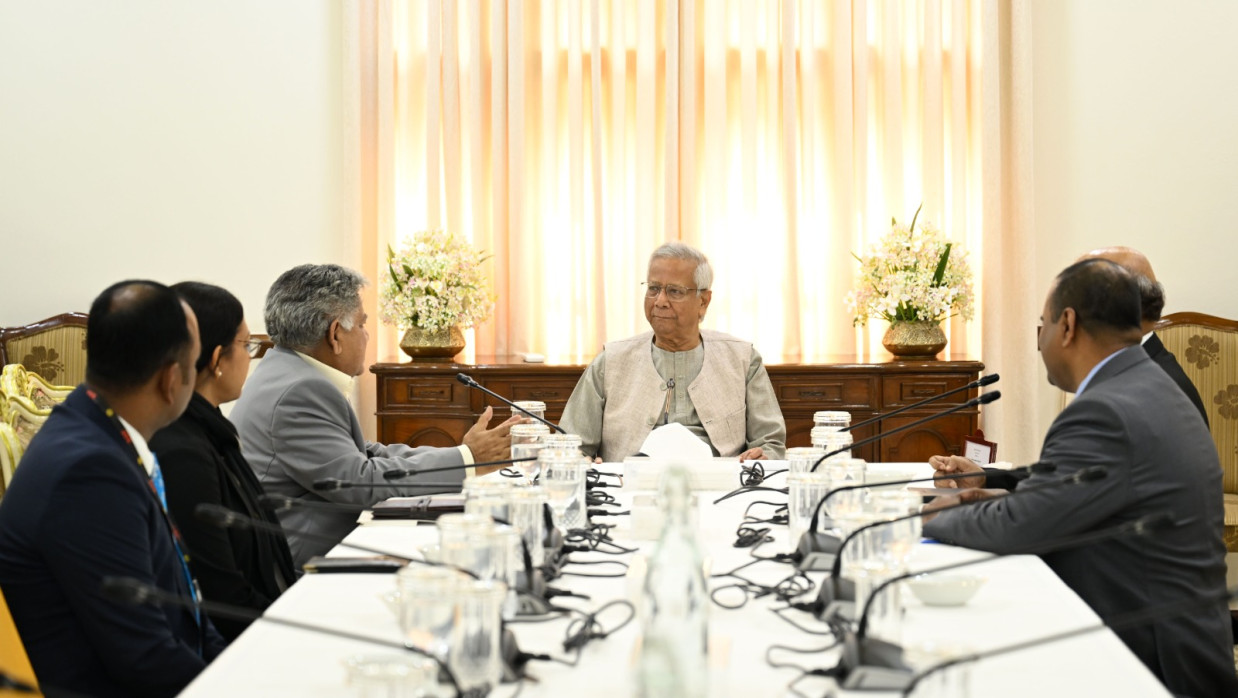
In Bangladesh’s cyclical political turbulence, few spectacles are as familiar as the post-facto revelations of former insiders. In recent weeks, Dr. Shakhawat Hossain, a senior adviser in the interim government and briefly entrusted with the powerful Home Ministry portfolio, has spoken at length about the dysfunction, secrecy, and “kitchen cabinet” politics of the previous administration under Muhammad Yunus. His interviews have offered rare glimpses into the inner mechanics of an unelected caretaker regime navigating unrest, institutional breakdown, and elite power struggles.
Information, no doubt, is valuable. But the central question confronting the public is stark: when he held the key to power, what did he do with it?
The Seven Days That Mattered
Hossain was the Home Minister (Advisor) at one of the bloodiest times in recent memory. When Sheikh Hasina’s government fell, and mobs roamed the streets, sniper attack claims flew. Police morale hit rock bottom. Nineteen cops died in violence, police stations were burned down, and the law enforcement bodies folded.
Now he talks about the misuses of 7.62 rifles. He speaks of battlefield-grade weapons mysteriously showing up in civilian hands. Targeted professional sniper fire during hartals. Hossain regrets there wasn’t an investigation into why murderous weaponry was being used during protests.
Except for one thing, he refuses to address: he was Home Minister at that time. Yes, even if it was for only seven days. Couldn’t he have ordered an independent judicial investigation to begin? Couldn’t he have set up a commission? Asked for a forensic audit of police armories?
These gestures matter in times of tragedy. If a Home Minister orders investigations into the matter, however incomplete they may be, it lets the public know that the government means business. When they say nothing at all, it only allows people to assume they’re scared or complicit.
Police Militarization and Moral Collapse
Corruption. Rampant politicization. Brutality. Moral decay. Dr. Hossain’s recent speech calling out those practices has won him praise from across the political spectrum. He’s absolutely right to decry the militarization of the police forces; that’s not what civilian police are for.
And yet… there’s been plenty of structural decay baked into Bangladesh's law enforcement for years. Bangladeshis have long complained of bullying at the hands of cops who use their positions for political gain, or brutally crack down when ordered to do so.
Progress requires institutional bravery. Let’s hold them to it.
Questions Remain
While it’s encouraging that this story was told at all, citizens are still waiting on some answers:
Who ordered those 7.62 rounds issued?
Who was responsible for their storage/dispatch?
Did SOP’s around custody of that stockpile lapse?
Were engagement rules broken when deadly ammunition was fired?
Until those questions are addressed and an investigation is launched, the people of Bangladesh will have little faith in their law enforcers.
Snipers, Intel, & Questions From July
The few things we know for certain are some of the most alarming. Claims of trained snipers being deployed during last July’s unrest have many alarmed. Not only does the police director general claim to have received intel that he was to be targeted…he claims to STILL HAVE THAT INTEL.
Meaning it should be searchable. Documented.
If the intel exists that state security was concerned over the director’s life being threatened by hired hands, who had that intel? Did state actors plan it? Did rogue elements inside our security services take matters into their own hands? Did puppet masters in power fuel the violence?
Regardless of who was involved, the people of Bangladesh deserve answers. Why weren’t investigations launched?
Sadly, we’ve been here before.
The culture of opaque violence stretches back decades in Bangladesh. The mutiny of the Border Guard Bangladesh (still known by most Bangladeshis as the BDR) in 2009 was met with numerous failed investigations and cries that the truth was covered up for political expediency. Did we forget what happened in 2007? Did we forget even earlier than that?
Ports, Power, and Patronage
In addition to police reform, Dr. Hossain was appointed head of the shipping ministry during a period of heightened port reforms. Bangladesh has struggled with ports plagued by bureaucratic inefficiency, a lack of contract transparency, and crony capitalism. The ports of Bangladesh, particularly Chittagong Port, and the developing Payra Port have been notorious for corruption and low rankings.
Bangladesh ranks 307th out of 347 countries on a global port index, while neighboring Vietnam ranks in the top 10. Retired naval officers, clogged ports, and rent-seeking gangs are all familiar issues at ports.
The Shipping Advisor says no new contracts were signed during the caretaker period. “Technically true,” and Legally true, but completely misleading. Empty accountability. Whatever your definition of “new” is, extending a PPP contract has exactly the same impact on our future as signing a new one. Extension packages often modify concession terms, payments and revenues, risk profiles, and contingent liabilities. Calling it something other than “new” does not change that fact. Nor does it change the fact that, by extending agreements reached under previous administrations without review, open tender, or audit, a caretaker government ensures those deals become the status quo. Had we truly been in caretaker mode, I would have expected more transparency than less. Even if the incoming government had no plans to reopen PPPs they had already inherited, announcing a review of existing agreements would have been simple enough. Making such an inquiry “float” wouldn’t scare off investors. If your caretaker government is serious about its job right now, the public should see you floating inquiries into deals being allowed to proceed without question… especially when those “deals” are worth billions of dollars and involve our ports.
It should have been asked if there were any signs of wrongdoing when the Payra Port was dredged or when terminals were allocated at Chattogram Port. At the very least, a white paper could have been issued explaining the liabilities passed on to the current government.
At best, there are accusations that family members of high-ranking officials have indirectly received kickbacks from port operations. There’s no concrete evidence to support this accusation. However, when you’re running a government fueled by public trust, that’s enough to tarnish your reputation. Public sentiment matters, Dr. Hossain.
Caretaker Constraints or Convenient Defense?
Proponents of caretaker government argue: limited by constitutional constraints. They can’t call elections, so they have to conduct elections by a certain time. They can’t do policy extravaganzas lest they be branded illegal.
This does not mean they cannot be transparent. Announcing investigations is not institutional reform. Sharing information does not mean they need votes in parliament.
The CTG successfully dealt with strikes in the readymade garments industry. It handled controversies surrounding politically-connected factories like BEXIMCO. It settled port deals under duress.
If they could do these things, why not more volatile security issues?
Elections and Institutional Memory
The elections were fair and free for the most part in 2008, Dr. Hossain has argued, despite low turnout. He has spoken out against military involvement in politics and politicized military promotions.
All excellent stances to take. However, Bangladesh seems to have a short memory. Reform dies when not recorded. Accountability dies when we have no independent bodies to monitor, just stories to debate.
We can't interview every politician after they leave office.
The Question of Integrity
In a democracy, you can’t point fingers and get away with it. People shouldn’t accept accusations about port graft or family pajama factories without proof. Nor should they accept pardons without examination.
Clean means you've proved you’ve looked.
Dr. Hossain, if you suspect any investigative attempts were stifled, release the minutes, orders, or whatever proves someone ABOVE you told you NOT to look. If generals or spies are shooting you down, let the people know.
Otherwise, own the lack of attempts yourself.
Beyond Personality: Institutional Reform
This isn’t just about one man’s repeated missteps. The recurring shocks tell us how fragile the Bangladesh landscape is:
*Militarized politics
*Lack of investigative autonomy
*Lack of transparency in port contracts
*Strongman Executive
Bangladesh needs an independent police force away from political masters, transparent bidding processes for ports and shipping, and an autonomous rights commission entrenched in the constitution.
Until then, every government change -caretaker or elected- will bring more deaths, covering up, then excuses.
Listening—and Holding Accountable
Let me start by saying that Dr. Shakhawat Hossain’s revelations are on record. Let them be heard. Let them be recorded. Let them also be questioned.
Sniper accusations. Controversial bullets. Mutiny cases. Port tragedies. Strike after strike. These are but a few things Bangladeshis have had to listen to repeatedly over the change of governments. We are not looking for opinions. We want answers.
Leadership entails accountability for actions taken and choices made while in power. Even if it’s for a week. History will remember those who ruled for years. It will also remember those who were at the helm of the state at critical junctures of history and decided to do nothing.
Bangladesh will be seen as a truly democratic nation when our leaders act to strengthen institutions while they are still in office, rather than make grand speeches only after they leave.

0 Comments
LEAVE A COMMENT
Your email address will not be published