

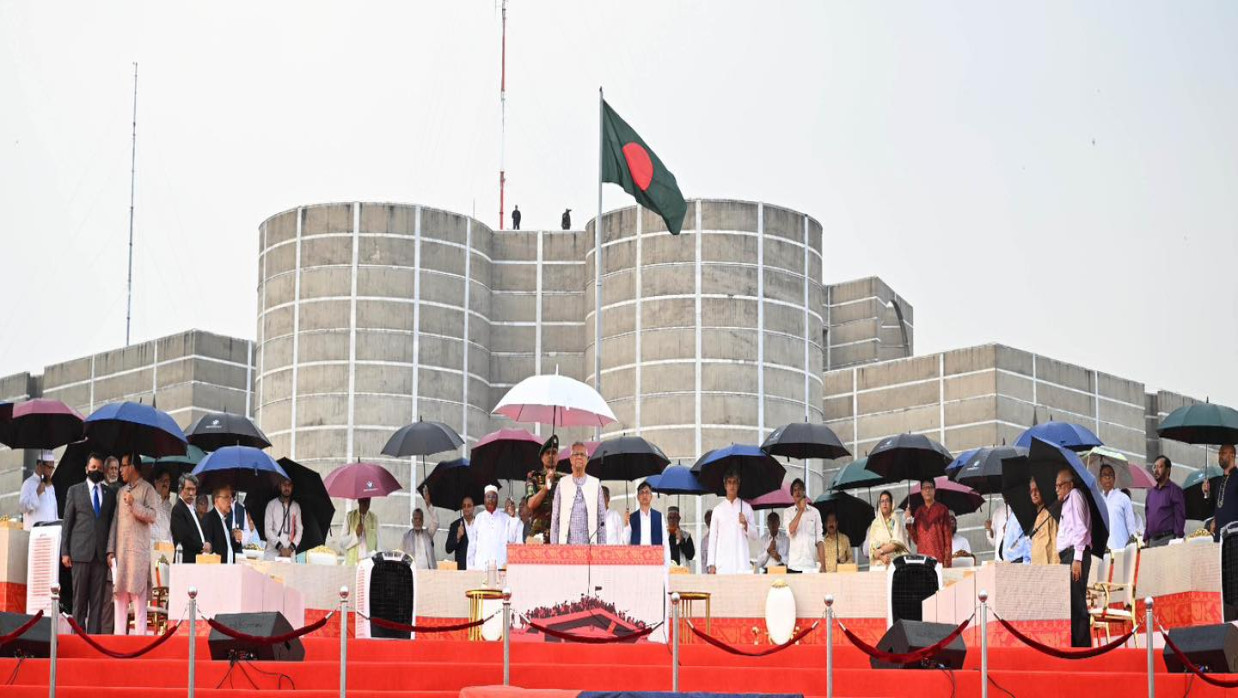
BNP’s Oath, Constitutional Dilemmas, and Political Calculus
Bangladesh's controversial proposed July Charter has already emerged as one of the most important constitutional and political controversies of this transition period.
Why did the BNP initially agree to take an oath on the charter but subsequently back off? This appears to be at the heart of the controversy, which has generated harsh reactions from political watchers, civil society, and constitutional experts.
BNP’s Explanation: A Constitutional Concern
The BNP’s primary explanation for not taking the oath on the July Charter rests on constitutional grounds. Party leaders have argued that there is no explicit provision within the Constitution of Bangladesh for political parties to take a binding oath on a political charter outside the parliamentary framework.
According to BNP sources, any such oath, if taken formally, could be legally challenged in court and potentially declared unconstitutional or ultra vires. This would not only create legal complications but could also undermine the credibility of the election process that the charter seeks to facilitate.
The party’s position can be summarized in three points:
Absence of a constitutional provision for such an oath outside formal legislative procedures.
Risk of judicial challenge, which could delay or complicate the transition.
Preference to legislate charter provisions through parliament once elected with a popular mandate.
In private and public discussions, BNP leaders have suggested that their agreement to the charter’s principles was intended primarily to expedite the election process and maintain political consensus during a sensitive transitional phase. Now that the party holds a parliamentary majority or expects to do so, it argues that the charter’s commitments can be incorporated into law through constitutional and legislative channels rather than symbolic oath-taking.
Why Agree in the First Place?
A question that critics have asked: If BNP had constitutional qualms, why did it agree to sign onto the charter to begin with?
Political Analysts theorize that, when it came down to brass tacks, BNP pragmatically felt it had to agree to move forward. There was a recognition that this was a negotiated settlement in a fragile post-crisis atmosphere and that all sides needed to be on board for the greater goal of salvaging electoral legitimacy.
BNP agreed in principle to play ball with other parties and the ad interim administration to hold elections as agreed under the July Charter parameters, but stopped short of outright saying that it believed the charter itself to be constitutional.
In other words, they agreed to agree. Pure transition politics if ever there was:
Agree to hold elections.
Give it the force of law through the parliamentary process.
No lose either way, and cover all constitutional bases.
Ali Riaz and the Consensus Argument
Political scientist Ali Riaz has emphasized the significance of collective agreement among political parties. He has argued that once all major parties have reached consensus on a political framework, there is little room for reversal without damaging political trust.
From this perspective, the July Charter represents not merely a technical agreement but a moral and political commitment among stakeholders. If one major party appears to retreat from a symbolic endorsement such as an oath, it risks creating doubts about the durability of the consensus that underpins the transition.
Riaz and others have noted that political agreements in transitional periods often rely more on normative commitment than strict legal enforceability. In such contexts, the credibility of parties becomes central to sustaining public confidence.
Other Voices in the Debate
Political and constitutional analysts have also reacted to the situation as follows:
Advocates and constitutional analysts in Dhaka have said that the concerns BNP expressed about oath-taking were legitimate to an extent, as bringing in extra-constitutional means for oath-taking would be questionable before the court. However, politics has its own place, which sometimes overrides constitutionalism.
A section of civil society leaders feels that taking an oath over the Charter was necessary. Without taking an oath, BNP may appear to be publicly dissociating themselves from their responsibilities; later, they might say they will enact the Charter's provisions by passing legislation. To them, an oath is a symbolic promise to people, not a legally binding promise between two parties.
A few others have interpreted the BNP statement as the party confidently saying that it will not follow the charter because it will have a majority after the elections. If that is the case, the party wants to participate in the drafting of Charter provisions rather than be tied to a symbolic pre-election promise.
The Broader Political Implications
Behind the controversy over the July Charter are fundamental issues of political faith and how Bangladesh is governed:
Can Bangladeshis reach an agreement if emotional issues, such as swearing an oath, are taken out of politics?
Is the letter of the law more important than political promises made during periods of transition?
How do political parties weigh technicalities against optics?
If the Bangladesh Nationalist Party eventually enacts most or all of the reforms contained in the charter upon taking office, much of the fuss over refusing to sign the oath will be chalked up to quibbling over process. But if it delays or dilutes those reforms, critics will likely point to its refusal to sign the oath as the first act of backpedaling.
Conclusion: Law, Legitimacy, and Political Timing
The BNP's decision not to take the oath on the July Charter might, at first glance, appear to be evidence of constitutional scrupulousness. Perhaps it also signals hesitation regarding their ability to deliver on political promises. However, it is also likely that electoral strategy and political pragmatism surrounding the transition led the party leadership to make such a move. Their stated position that they support the ideals of the charter but want to see them institutionalized through legislation rings somewhat hollow, considering issues of trust that have plagued the political process in Bangladesh for decades. Whether or not an oath was taken on the July Charter will matter little in the long run. What will matter is if the reforms agreed upon in that document take hold as institutions in Bangladesh’s budding democracy.


0 Comments
LEAVE A COMMENT
Your email address will not be published