

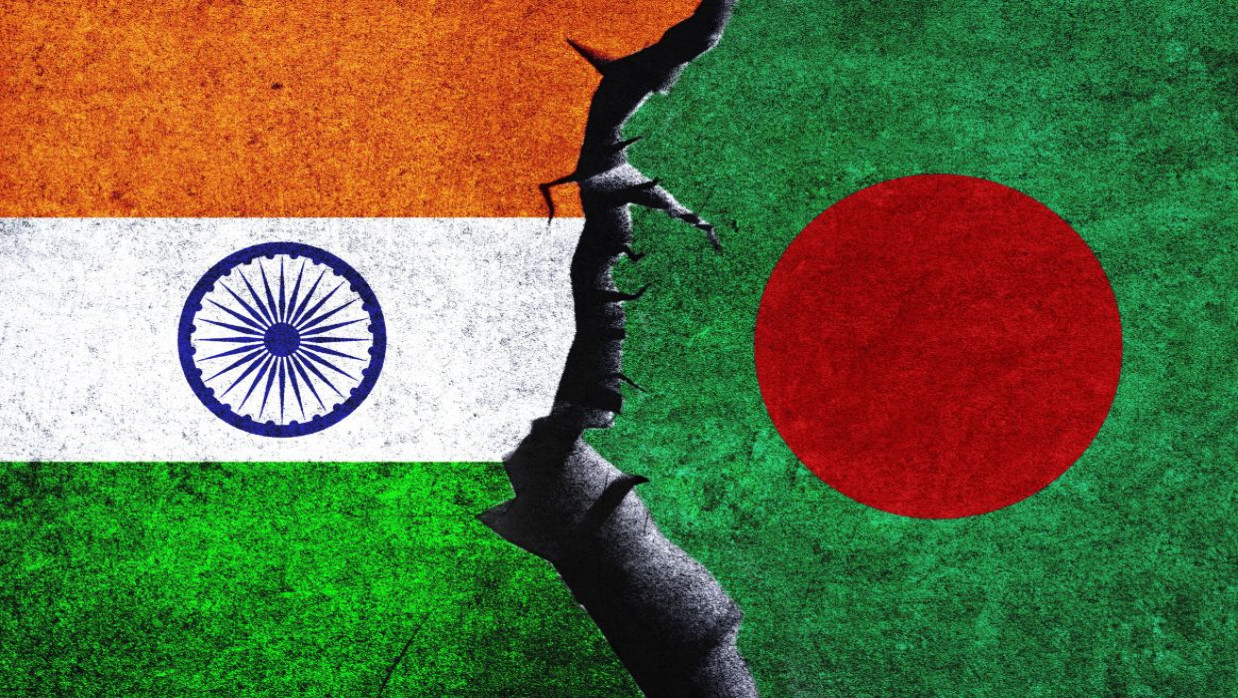
Bangladesh is entering a new political era following the change in government following the recent general elections. India is also at the threshold of a new chapter in bilateral relations as it recalibrates its policies towards Dhaka in light of this new reality. India–Bangladesh relations have often ebbed and flowed with Bangladesh’s internal politics and regional dynamics. With Bangladesh under new leadership and Delhi facing new realities at home and abroad, the bilateral relationship will need some fine-tuning.
India has a history of consolidating its presence and power within the subcontinent. During India’s independence movement and soon after, India integrated Hyderabad, Junagadh, Sikkim, and Goa either through diplomacy or coercion. While much of India’s foreign policy can be analyzed through the prism of Kautilya’s Arthashastra or realpolitik, many Bangladeshis view India through a similar long-term strategic lens.
A large number of Bangladeshis view India with suspicion because Bangladesh shares the world’s longest common land border with India and sits between India’s North East region and the Bay of Bengal. For India to reach its North Eastern states, Bangladesh must remain cooperative, making Bangladesh a geopolitical necessity for India. Dhaka takes umbrage if it feels India is trying to control its domestic politics.
The Awami League government is gone, and the leader who campaigned on a pledge to liberate the country from Indian occupation has been democratically elected as the new Prime Minister of Bangladesh. Many former AL leaders, ministers, and top military intelligence people have sought political asylum in India. India may very well be doing Bangladesh a favor by sheltering these political refugees. But that has not stopped many Bangladeshis from believing that New Delhi still has its fingers in Dhaka’s political pie.
India has relied on Bangladesh for many geopolitical and geoeconomic reasons. Bangladesh will always remain important for India’s economic connectivity projects, energy partnerships, and security cooperation. But Bangladesh has changed, and so must India if it hopes to have a strong relationship with all of Dhaka and not just one political party. New Delhi must now walk a diplomatic tightrope with the new Bangladesh government.
If handled well, this new reality could benefit India–Bangladesh relations. New Delhi now has the opportunity to reset ties with Bangladesh on more respectful terms and promise non-interference in Dhaka’s domestic politics. India cannot take Bangladesh for granted; it must nurture Bangladesh through equitable bilateral partnerships.
In recent times, several Indian analysts have published op-eds in major Indian newspapers stating that India needs to “reset” its ties with Bangladesh. These analysts suggest that while India should deal with the newly elected BNP government “like any other government”, it should also keep ties warm with other opposition parties for the future. This recommendation has been echoed by several others within the Indian Strategic community.
Prime Minister Narendra Modi, though invited, will not attend Tariq’s inauguration personally. India is expected to send a senior representative or special envoy instead. Speculation is rife that Modi could not find enough time in his schedule to attend the ceremony. India is still sending a senior representative, a significant diplomatic gesture that signals that India still values its relationship with Bangladesh.
A report in The Print highlights that “New Delhi is mulling engaging with other major political forces in Bangladesh apart from the Awami League. India should keep engaging with all major political stakeholders in Bangladesh to maintain and further bilateral projects and agreements. The problem with this strategy is that India cannot publicly declare it will work with any political party in Bangladesh that comes to power. Bangladeshis take great pride in their country and their freedom struggle. The Bangladeshi people have fought too many political battles to let foreigners tell them who to support. From the tutelage of the Sen Dynasty, the Delhi Sultanate, the Mughals, Hindu Zaminders, 1947 independence, the Language Movement, to the Liberation War of 1971, and the democratic movements in the past few decades, Bangladesh has never shied away from standing up for what it believes in.
Bangladesh’s youth, in particular, are very passionate about their political system and elected representatives. Bangladesh has one of the highest youth populations in the world, and a large majority of this young population is active on social media. They will demand better from their elected leaders, and India will have to answer to them as well.
Bangladesh wants a friendly relationship with India but does not want New Delhi to meddle in its domestic affairs. India needs Bangladesh as a friendly neighbor to develop its North East through economic corridors, stop terrorist infiltration from across the Bangladesh border, and extend the economic pie of South Asia. If both countries understand and accept this simple fact, India–Bangladesh relations are sure to soar to new heights.
India and Bangladesh both have more to gain by working together than by not working together. There are several opportunities for bilateral cooperation between the two countries. India and Bangladesh can work together on Trade, Economy, Energy partnerships, Transit agreements, Infrastructure development, Climate Change mitigation policies, and more.
India and Bangladesh need to take a realistic approach when dealing with each other. Bangladesh cannot trust India because of its past interference in Bangladeshi politics, and India cannot expect Bangladesh to welcome every decision that New Delhi makes. But that does not mean they cannot work together; it just means that both countries will have to extend their hands in good faith.
Both India and Bangladesh have a chance to reset the relationship on equal terms. Now is the time.


0 Comments
LEAVE A COMMENT
Your email address will not be published