

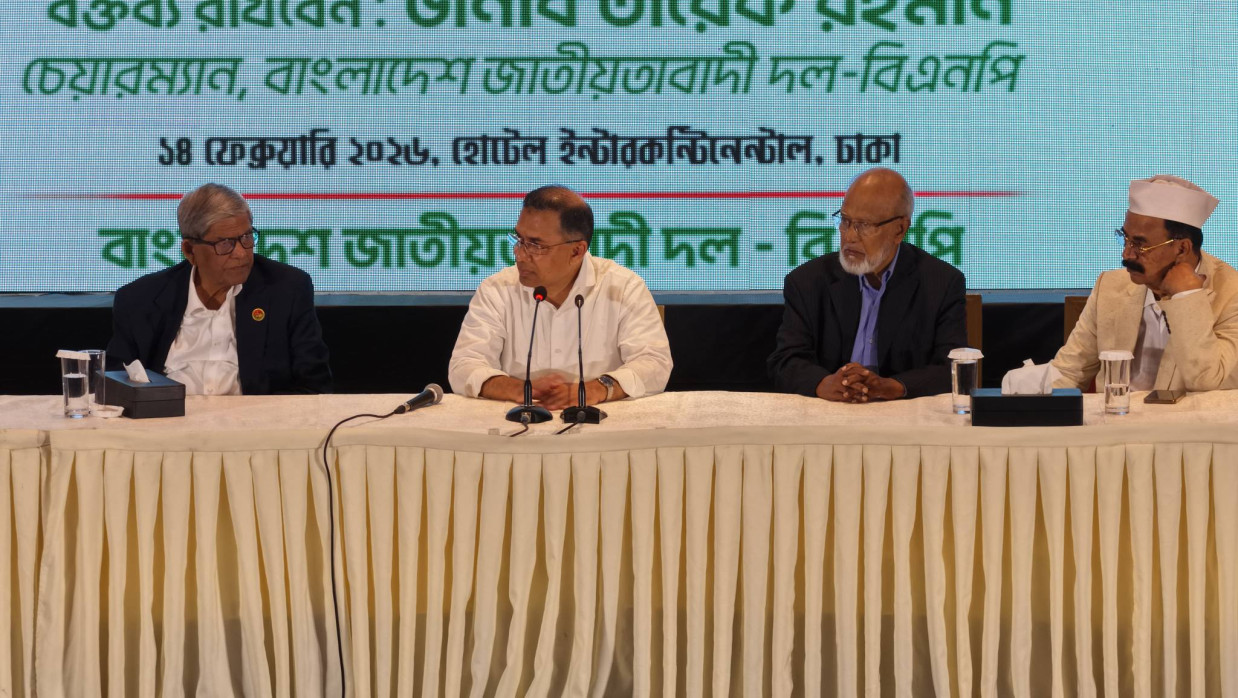
A Defining Political Transition
Bangladesh’s parliamentary election was one of the most significant political developments in the recent past. The party leading in seats won as the election unfolds is the Bangladesh Nationalist Party (BNP), which finally reclaimed the driver's seat after being out of power for nearly two decades. According to early trends and political analysts’ opinions, BNP is projected to win roughly 213 seats and, as such, could comfortably claim a majority and form the next government. Although less than what was expected by early media projections of a landslide victory.
The election results revealed some stark realities of Bangladesh politics: the people demanded change, organizational flaws in major parties were exposed, and some unusual voter trends emerged.
The polling took place relatively peacefully in most parts of the country, and the result was greeted with joy by many Bangladeshis and the international community. However, the election was also marred with allegations of irregularities by some party members and candidates, mostly from Jamaat-e-Islami and the alliance. Post-election violence broke out in some parts of Bangladesh, leading to fatalities and the subsequent arrest of political workers.
Some of the major talking points post-election were the election results, allegations of voting irregularities and complaints, the acceptability of the July charter and the constitutional reform process, and the formation of the new government. and lastly, the political and economic future of Bangladesh.
Jamaat-e-Islami’s Surprise Comeback
Jamaat-e-Islami pulled off one of the biggest political upsets this election cycle. BNP was projected to come in at a disappointing number, far less than the number of seats they held in the previous parliament. Terming it a party predominantly composed of cadres, they were expected to at least retain the same seats, if not lose them.
Analysts point to several factors that worked in their favor. Their continuous ground-level campaigning seemed to have paid off, reaching out to voters in every urban and semi-urban center. Jamaat’s foray into student politics over time paid off, as it reached out to the youth. Jamaat strategically avoided the hardline Islamist stance of the previous election cycle and played it cool, focusing mostly on constituency issues and capturing swing votes.
Jamaat crossing the threshold to qualify for party status in parliament indicates that they have surpassed the cadre-based party status. We can expect Jamaat to play a major role in Bangladesh's political framework going forward.
Declining Parties Gone and Forgotten
While BNP and Jamaat succeeded in winning seats and exceeding expectations, a few parties failed to garner any significant attention during the election. BNP’s arch-rival in the late 90s and former Prime Minister of Bangladesh, Khaleda Zia’s successor party, Jatiya Party, failed to win a single seat despite fielding candidates across the country. Jatiya Party’s ideological confusion and lack of a clear leader seem to have cost them the loyalty of their vote bank. Many of their votes seem to have been siphoned off by the BNP and the Jamaat.
Other small political outfits, like the Nationalist Citizens Party (NCP), managed to scrape through by winning a few seats, but these parties lack identity and heavily rely on coalitions with major parties to reach voters. They, too, would find it difficult to make any significant political comeback.
The new political map of Bangladesh suggests a trend towards parties with more structured on-the-ground organizations. There will be fewer parties with fringe votes, leading to a more stable parliament but a lack of diversity.
Leadership and Election Manifesto
The leadership of BNP undoubtedly was the catalyst for their success this time around. Tarique Rahman’s return to Bangladeshi soil and taking an active interest and control of party campaigning and political rhetoric. His speeches were inclusive and nonpartisan, wooing not just traditional BNP voters but also the middle class. With pledges to create more jobs, drive economic recovery, and implement institutional reforms, BNP captured the hearts of voters.
These promises now hold the key to BNP’s success or failure as a government. Tarique would have to ensure a speedy economic recovery and create more jobs. In addition, institutional reforms such as depoliticizing the administration, the courts, and the election commission would go a long way toward regaining the people's trust.
Vote Irregularity Claims/Post-Election Violence Complaints
Voting in this year's election was generally peaceful, though there were some minor disruptions here and there. Jamaat, along with its coalition partners, has filed complaints with the Election Commission and the returning officers of certain constituencies.
The majority of these complaints deal with vote irregularities. Claiming a significant difference between the votes polled and votes declared in favor of the winning candidate in at least 30 constituencies nationwide. Margins in these constituencies range from around 2000 to 9500 votes. The opposition representatives allege that if a recount were held in these constituencies, the results would be in their favor.
Void declaration sheets without the authorization of presiding officers, polling agents being forcibly removed from polling stations during voting and counting, and unauthorized people being allowed to take part in the counting process in some areas are among the few discrepancies brought up by the opposition. also claims that in constituencies like Dhaka-6 and Dhaka-13, the results sheets were handwritten rather than printed on official ballot papers.
There were also discrepancies, including forged polling agents' signatures and votes being overwritten in favor of the winners. Allegedly, in constituencies like Khagrachari-2 and others, election seals were incorrectly positioned, leading to a high number of invalid votes that, according to the opposition candidate, were in their favor and should have been counted during the recount.
Several incidents of violence have been reported from districts like Bagherhat, Munshiganj, and Feni, where opposition party members were killed in arson attacks and clashes. Additionally, many instances of intimidation were reported by party supporters across the country.
Although these complaints need to be looked into by the election commission and verified if they hold any truth or not. Bangladesh still has a long way to go to achieve full electoral transparency.
Acceptability of the July Charter
Analysts interpret the July charter as having multiple parts, with certain pledges being subject to compromise while others are binding on the party that agreed to them. As such proposals such as a caretaker government, unicameral to bicameral parliamentary structure can be debated and discussed by the parliament however certain reforms that have been demanded by the people of Bangladesh and agreed upon by political parties such as an independent judiciary, increased women representation in parliament, stronger local government system and defined role of opposition parties are nonnegotiable and binding on the government.
The July charter is Bangladesh’s shot at changing political culture from adversarial politics to consensus-based politics. The July charter itself is the product of consensus from all major parties in the country. As such, the acceptability of the July charter by the incoming BNP-led government would play a pivotal role in determining how effectively reforms are implemented.
Analysts expect BNP to take a balanced approach when implementing the July charter, taking into account the binding reforms that it has agreed to, while opening parliamentary debate on certain reforms.
Structural Constitutional Reform
The constitutional reform process would be carried out systematically. Elected representatives would take the oath as parliamentarians and then as Constitutional reform council members.
The council, which would comprise all MPs, would then have a 180-day tenure to debate and confirm reform pledges, as per the July National Constitution Implementation Order 2025.
This would also allow council members to include a “Note of Dissent” to record their political disagreement with certain reform pledges, providing political wiggle room while reinforcing the importance of consensus politics.
Council members who would take the reins of running the government would be able to balance governance and constitutional reform. The probability of future constitutional instability would be reduced, as the implemented reforms would have undergone the full parliamentary process and been passed by consensus.
Formation of New Government
Tarique Rahman is expected to be officially sworn in as the next Prime Minister of Bangladesh, following the simple-majority rule of being elected unanimously by members of parliament. After which, he would appoint his cabinet.
Expecting Rahman not to bloat the cabinet as his predecessor did, the new cabinet would consist of around 40-45 cabinet members, including state ministers.
Senior BNP figures from the party’s permanent committee are likely to play central roles in the government. Leaders such as Mirza Fakhrul Islam Alamgir, Dr. Moin Khan, Amir Khosru Mahmud Chowdhury, and Iqbal Hasan Mahmud Tuku are considered strong candidates for key ministries or constitutional posts. At the same time, technocrats and professionals are expected to be incorporated to strengthen governance capacity. Figures such as Selima Rahman, Abdul Awal Mintu, and retired Air Vice Marshal Altaf Hossain Chowdhury are being discussed for technocratic or advisory positions, reflecting a desire to combine political experience with technical expertise.
Regional balance is another major consideration in cabinet formation. Efforts are being made to ensure representation from across Bangladesh’s 64 districts, acknowledging the party’s nationwide mandate. Newly elected members of parliament and younger leaders are also under consideration for deputy ministerial or political secretarial roles, suggesting a generational blend within the administration.
Key constitutional and parliamentary positions remain under discussion. Potential candidates for President, Speaker, and Deputy Speaker are being evaluated, with the possibility of including coalition allies in certain roles to maintain political inclusivity. Some advisors from the interim government may also be incorporated into the cabinet, particularly in specialized ministries such as law, finance, and planning.
While the final composition of the cabinet will depend on Tarique Rahman’s decisions and internal consultations, the emerging picture suggests a government aimed at balancing political loyalty, administrative competence, and broad-based representation. If successfully assembled, this cabinet will shape the direction of Bangladesh’s governance in the coming years and determine whether the BNP can translate its electoral mandate into effective, stable leadership.
Ideally, cabinet representation would portray what kind of leader Tarique would be. As such, he could include a mix of young and old experienced cabinet members, balanced with male and female representatives.
Economic and Governance Roadblocks
BNP would have its work cut out for it. Economic recovery would have to be immediate, creating jobs, initiating development projects, and improving the country's investment-friendly environment.
Restoring investor confidence and reassuring policy continuity would be of utmost importance. In addition, institutional reforms such as restoring the judiciary's neutrality, rebuilding public trust in the election commission, and implementing decentralization by empowering local governments would go a long way toward improving governance.
Ensuring clean, transparent administration, courts that combat corruption, and prompt, efficient service would serve as a benchmark for this government's successes.
Ensuring political stability would be essential to any economic progress. BNP would do well to keep opposition parties in check, avoiding needless political provocations and polarization.
Conclusion
Bangladesh has arrived at a watershed moment in its democratic journey. The election served as both a mandate from the people for change and illustrated some of the changing dynamics of politics in Bangladesh.
BNP and Tarique Rahman have been given a golden opportunity to prove their governance capabilities and show the people that they have what it takes to lead the nation into the future. The successes and failures of this government would determine how Bangladesh’s democracy fares in the years to come.
Would Bangladesh celebrate the birth of a new era in its democratic history, where stronger institutions, political plurality, and sustainable economic growth are the norms, or would Bangladesh revert to its old political ways?
Time would tell, but what’s certain is that the ball is now in Bangladesh’s court.


0 Comments
LEAVE A COMMENT
Your email address will not be published