

The first thing to say about the unrest in Bangladesh this week is that there has been plenty of this in Bangladesh before, so what is happening after the death of 33-year-old Hadi is not new in itself. The second thing to say is that whenever these things happen in Bangladesh, there is an inevitable script that gets played out in the Indian political-media complex. It is fast, coordinated, and ideologically predictable. Protests become “radicalization”, widespread anger is retold as “Islamist resurgence”, and sovereignty is reframed as “anti-India hysteria”. The information and influence operations, on the other hand, are not quite as visible because they take the most basic form: How India explains Bangladesh. To some, this is a meaningless enterprise, a distraction from more pressing problems, a messy fringe business disconnected from national goals. For others, who have seen the hand that other states have played in their neighborhoods for decades, the stakes could not be higher.
The aim of this counter-narrative, written in the hope that journalists, scholars, analysts, and concerned Indians will pick up its baton, is not to deny Bangladesh’s internal problems or to romanticize unrest. It is to ask what happens when one of the largest and most powerful states on earth explains another not as a neighbor with agency, but as a problem to be managed, a wayward child to be disciplined, or a situation to be narrated out of relevance.
The Default Indian Explanation: Islam, Not Politics
In the immediate aftermath of the mass mobilization after the death of Hadi, the default Indian response on Twitter, television, and cable news was to describe it as an Islamist phenomenon. Indian politicians, television anchors, and verified social media accounts have repeatedly framed the popular uprising as evidence that Bangladesh is “sliding toward fundamentalism.”
This is a revealing starting point, to put it mildly. Framing a largely secular nationalist outburst as Islamist conveys an inability or unwillingness to recognize secular nationalism when it pops up in countries other than India, let alone a willingness to shape the story in ways that suit Delhi’s interests. The fact is that the crowds thronging the streets of Dhaka were not screaming Islamist slogans. They were angry at a perceived foreign power, the sheltering of political fugitives in the neighborhood, and years of asymmetric influence. These are legitimate political grievances, not theological ones.
In truth, their ideological orientation in any traditional sense is immaterial. If naming a crowd “Islamist” helps Indian policymakers feel that they have solved the Bangladesh problem without engaging with it, that will be sufficient for them. If it allows Delhi to talk to Western audiences in the same coded terms that New Delhi used for decades about Sri Lanka and Afghanistan, that is, to describe its neighbor as a security risk rather than a democratic actor, then that is more than sufficient.
Disinformation Is Not a Bug; It Is a System
India’s reputation as a global counter-narrative fighter is one it has often used to avoid scrutiny of its own information malpractice. But recent events—from election interference claims to distorted threat narratives to the targeting of the wrong terrorist plots—have shown India in a different light. In short, New Delhi has made a habit of weaponizing disinformation in pursuit of both foreign and domestic policy goals.
The Bangladesh example fits a familiar, surprisingly nuanced pattern. Selective reporting, the amplification of fringe accounts, and the use of ideologically aligned digital platforms to reframe reality are not organic responses to a crisis in Dhaka, or to India’s neighbors in general. They are the output of a fully formed ecosystem where the distinctions between media, politics, and statecraft are seamless.
To describe the expression of Bangladeshis’ public anger as somehow irrational or extremist is not a bug of analytical laziness or media short-sightedness. It is a feature, and a political one at that. For how else does one turn a sovereign demand into pathology?
The “Stability” Argument and Its Hypocrisy
Another explanation for India that is sure to come down the pike is the argument of “regional stability.” In this framing, India has the right to intervene, whether overtly or covertly, to manage, contain, or direct events in Bangladesh because regional stability is at stake.
Except, of course, that this argument does not survive any attempt at examination. Bangladesh has just spent 15 years with elections widely considered unfree, a violently suppressed political opposition, and institutions hollowed out to an extreme degree. It spent 15 years living under the same Awami League government that has now fallen, and India was content to speak of “stability” all that time. The standard that India has imposed on Dhaka over the past two decades has not been democracy, but compliance.
In Indian strategic thinking, “stability” has rarely meant anything of the sort. It has meant predictability. Predictability in a sense that Delhi likes. It means “predictability” of responses to Indian interests. When that predictable reaction starts to look less reliable, the narrative flips from one of partnership to panic.
Tarique Rahman and the Fear of Uncertainty
In all of this, the official return of Tarique Rahman to Bangladesh is the cherry on top of a particularly unsettling Indian summer. The explanation coming from New Delhi is that India is neutral. The subtext running through the Indian media debate is that this is both suspicious and also probably just fine.
The anxiety is not so much ideological as structural. Tarique Rahman is not a known quantity like the previous government. Even if quiet understandings exist with Delhi, as some Indian commentators grudgingly acknowledge, his political fortunes will rise or fall on his ability to respond to a deeply anti-hegemonic mood in the public domain.
Indian analysts like to ask why Bangladeshis mistrust India, given “historic ties.” The reason is experience. Political fugitives allowed to shelter across the border, public lectures on democracy given in a highly selective way, and consistent narrative policing have taken a toll. Trust is not an order to be obeyed. It is a quality to be earned.
The Gen-Z Problem India Does Not Understand
India’s analytical blind spot is Bangladesh’s youth. The young students who drove the 2024 uprising are the same people who have been in the streets mourning Hadi, and they do not see India through the prism of 1971 nostalgia. They may be aware of the chapter, and they may revere it as a historic good, but that alone does not give India a license for perpetual dominance.
This generation is wired to the world, politically skeptical, and uninterested in inherited narratives. They are as likely to question power centers at home as those with an economic and cultural interest in looking the other way. To paint them as radicals is not just an insult; it is a profound misunderstanding.
Indian thinking about Bangladesh often assumes that Dhaka’s political options are limited to today's elites. That is a rapidly outdated assumption, and any effort to “manage” outcomes will come up against a generation that has already demonstrated its ability to subvert a political script.
Sovereignty Is Not Anti-India
Finally, there is the most insidious of all Indian explanations for Bangladesh: The conflation of sovereignty with anti-Indiaism. These are not the same. Bangladesh's right to make decisions that India may not like does not negate the two states’ bilateral relationship. It is an attempt to remake it on equal terms.
India has long seen itself as a sort of civilizational elder in South Asian affairs. Elders who expect unconditional obedience eventually lose respect. Friendships are long-lasting when they are mutual, not hierarchical.
If India persists in looking for evidence of ingratitude or extremism behind every assertion of Bangladeshi agency or choice, it will end up isolated not because of conspiracies or alliances, but because of its own behavior.
What India Refuses to Acknowledge
There is one inconvenient truth in the Indian narrative that the entire exercise above runs up against and that Indian strategic thinking on Bangladesh still refuses to acknowledge: The current widespread anger in Bangladesh is not an externally manufactured phenomenon. It is an endogenous one that has been incubating for years and is a product of political experience and not ideological import.
No intelligence agency, or combination of them, can mobilize millions onto the streets unless the conditions already exist for it. No foreign hand can invent resentment where no state has done its utmost to respect the dignity of citizens. To project everything onto shadowy forces is a classic form of evasion in the context of a long-term policy failure.
India now has a choice. It can continue to explain Bangladesh to itself in stereotypes, security parlance, and media caricatures. Or it can accept Bangladeshis as the sovereign political actors they are and absorb Bangladesh as it goes through a turbulent but predominantly legitimate democratic reordering.
One path will only drive the two states and their people further apart. The other will take a rare humility, often in very short supply in regional power practice. Hadi’s death has closed one chapter in the story of Dhaka-India relations. Bangladesh is no longer negotiating its place in the region quietly. It is speaking loudly and sometimes angrily, but unmistakably in its own voice.
The question is not whether India approves. The question is whether India can listen.
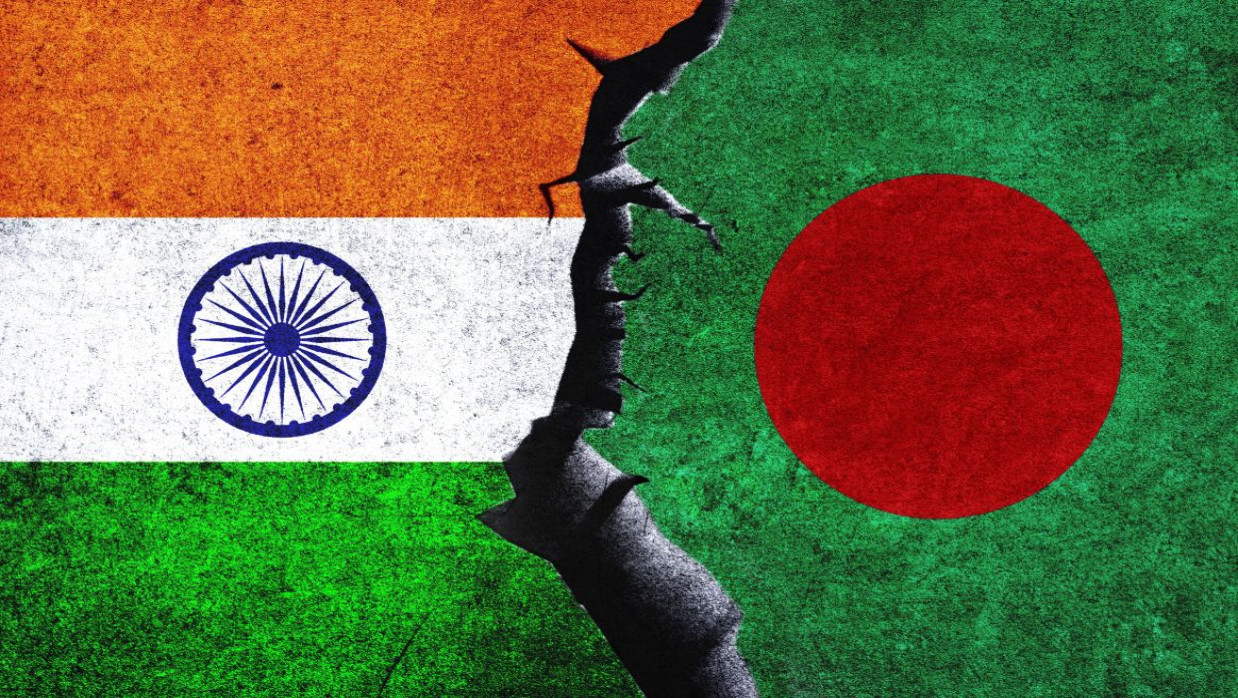
Manufacturing the “Extremist” Next Door: How India Explains Bangladesh to Itself and the World


0 Comments
LEAVE A COMMENT
Your email address will not be published