

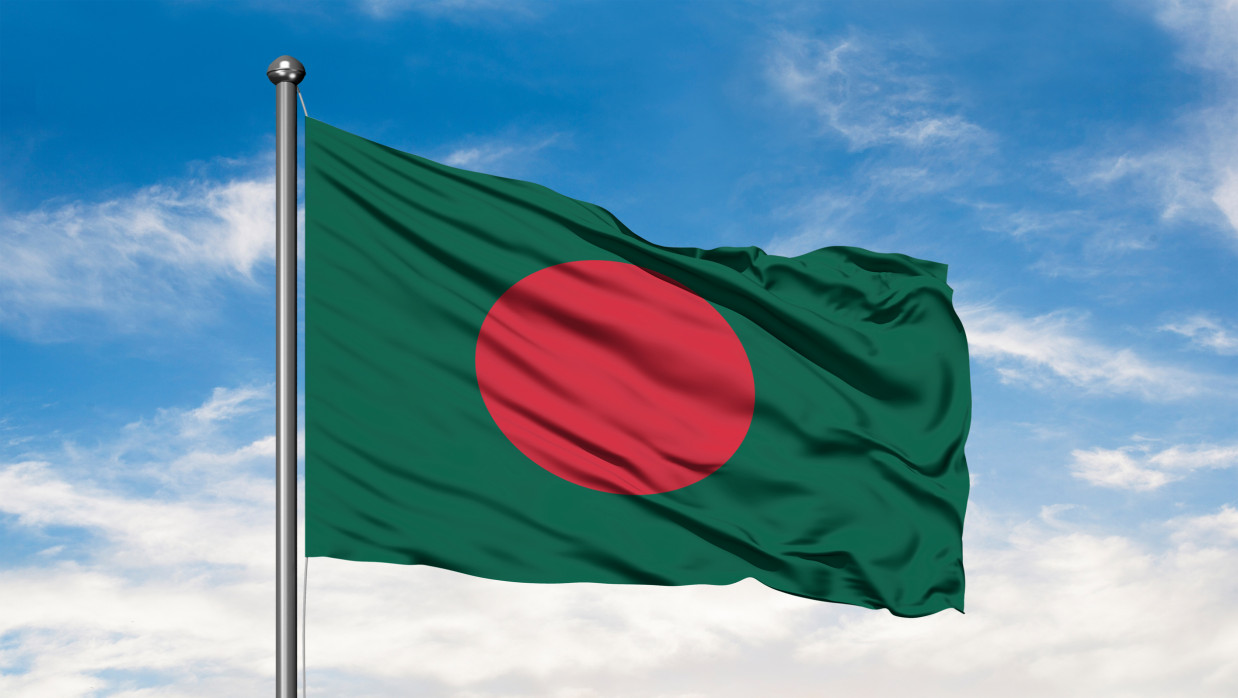
"Freedom is never voluntarily given by the oppressor; it must be demanded by the oppressed."--Martin Luther King Jr.
December 16, 1971: A Reminiscence
I got the confirmed news around 5 am. Apart from a folded map, a walkie-talkie and a binocular that remained hung around my neck almost all the time, a small transistor radio remained my closest companion for the past few days. As the commander of 2 Field Artillery under the Z Force of Colonel Ziaur Rahman in Sylhet Sector, my emotions knew no bounds.
The talk of surrender by the Pakistan military in Bangladesh was in the air since December 13, 1971, when Sam Manekshaw Ka Paigham (SAM Manekshaw’s message) kept continuously buzzing in the air. The Indian Army Chief conducted a psychological warfare against the Pakistani forces to surrender, otherwise they faced dire consequences. By the night of December 15, Pakistani Commander in Bangladesh, General Abu Abdullah Khan Niazi, succumbed and decided to surrender. He had little choice though. By then, the Mukti Bahini, joined by the Indian forces from December 4, made them sitting ducks.
My Last Battle Order
The previous afternoon (December 15), from a tall treetop on the southern bank of the River Surma, I was pounding the enemy sheltered at a college compound north of Sylhet town when Major Rashid came on my walkie-talkie to tell that Pakistanis were surrendering and no need to punish them further. Saying that I would wait for a confirmed order from Colonel Zia, I continued my salvos on the target that kept producing sparks of fire and earthshaking thunder with every drop. After watching thick clouds of smoke dancing upward for a while, I thought it was enough. “Cease Fire,” I gave my guns my last battle order.
With news of surrender, I sprang up from my makeshift bed and rushed out of the tent. Ran from tent to tent screaming of the Pakistani surrender and woke everyone up. I gathered them around the Bangladesh flag fluttering atop a bamboo pole in the center and saluted it. We cried Joy Bangla, our war cry, at the top of our voices. We danced, we hugged and we cried. We cried and prayed for the fallen fighters, for the martyrs, for the wounded, for the millions who suffered and for the thousands of women who lost their honor. It was a crazy scene! It was the craziness of a 25-year-old Captain and his 100 odd artillerymen, following a bloody war of freedom.
(After the surrender, Major Amin (CO, 8 Bengal) took me to the Pakistani concentration site, to meet his former boss, Brigadier Iftikhar Rana. Rana commanded Pakistan's 313 Brigade, which our Z Force defeated. I was somewhat discomfited to see the crates on the ground and holes with dark patches on the walls, particularly noting the dejected and lost men, my former comrades, totaling more than 5000, huddled in groups. I had no idea of the casualties, if any. I had a small altercation with a Pakistani Major who blamed Mukti Bahini for their surrender. "We did not start the war," I told the Major and recalled March 25/26, 1971. Brigadier Rana calmed both sides down and escorted us out of the camp before the situation went out of control.)
After the war, my first shock was that India took away all the Pakistani weapons. I will come to that later.
No Mukti Bahini in the Surrender Ceremony: Legacy of 7-Point Deal?
My second shock was rather serious. It came when I learned that the surrender was between India and Pakistan. No Mukti Bahini or Bangladesh representative was allowed in the ceremony.
It was not the smartphone time and the news did not travel fast. From Sylhet, I had no idea how the surrender went, nor was I familiar with its mechanics. Two weeks later, I came to Dhaka with 1 Bengal to which I was then attached. I became wiser as the officers privately discussed the insulting protocol lapses in the surrender. Mukti Bahini was not in it.
Joint Command
After the Battle of Boyra, Jessore, on November 22, 1971 (when Indian and Pakistani fighter planes fought dogfights for the first time in 1971), India and Bangladesh decided to form a Joint Command so that India could be more actively involved in the war. The command was finalized on December 3, 1971, a day before the formal conflict began on December 4. Lieutenant General Jagjit Singh Aurora, General Officer Commanding Indian Eastern Command, and General (for the operational exigency, Colonel Osmani was given the rank of a General) Muhammad Ataul Ghani Osmani, Mukti Bahini Commander, were Joint Commanders.
For the Mukti Bahini, the war started on March 25 night, when Pakistan military commenced its genocide. Its fighters absorbed the bullets, bombs, shells and torches. They died. They suffered. On March 28, 1971, the New York Times put the first two days' tally of death at 10,000. Four days later, its figure rose to 35,000. The Daily Telegraph on March 29, 1971 reported, “The shelling of the capital Dhaka has been cold-blooded and indiscriminate, although there was almost no sign of armed resistance.” The NYT on April 12, 1971 reported, “It’s a veritable bloodbath. The troops have been utterly merciless. It was like Genghis Khan all over again.” A month later, the Times reported, “80,000 Punjabi and Pathan soldiers slaughtered an estimated 300,000 Bengalis by the end of April.” These death figures might be largely guesswork because no accurate reporting was possible under the circumstances. The military ordered foreign journalists to leave the country before it launched its Operation Searchlight, yet a few managed to stay at the safe zone of Hotel Intercontinental to leak the stories.
Yet, ironically, the Mukti Bahini was not allowed to share the formal victory at the Race Course on December 16, 1971. It was an Indian show on a soil soaked with the blood of Bengali freedom fighters and people. Why?
The 7-Point (Surrender) Agreement
India forced the Bangladesh Government-in-Exile in 1971 to sign a 7-Point Agreement, in which wartime Prime Minister Tajuddin Ahmad virtually surrendered the sovereignty of a future Bangladesh to India. Please see its salient points at the end. The agreement was kept hidden from public knowledge. Later, in March 1972, Sheikh Mujibur Rahman refined and expanded those points into a 12-Point, 25-Year Agreement with Indira Gandhi of India. (Many freedom fighters strongly disapproved of this Awami sellout of national interests to India. Lieutenant Colonel Mohammand Ziauddin (not to be confused with Ziaur Rahman) made his frustration public in the Holiday and was fired.) It became clear that the non-representation of the Mukti Bahini at the Surrender Ceremony was the result of the Seven Points Deal with India.
The obvious lapse did not escape observation of many Indian think tanks either, including J N Dixit, a former Indian Foreign Secretary. In his book Liberation and Beyond: Indo-Bangladesh Relations, he blamed Indian military high command for not including General Osmani at the surrender ceremony. "The formal excuse," explained Dixit, "was that his helicopter could not reach Dhaka in time for the surrender." He did not hesitate to suspect foul play in the act. "His helicopter had been sent astray so that he could not reach Dhaka in time and the focus of attention at the ceremony was riveted on the Indian military commanders.” However, only the military could not take the blame for such a serious omission. Most observers felt it was a calculated move, not just by the Indian generals but the policymakers at New Delhi. India rarely mentions the liberation war by the Mukti Bahini. Nor did they ever admit their mistake, if so, of excluding Mukti Bahini from the surrender. They always say, it was an Indo-Pak war. So is in their history books. Indian protege, the Awami regime, and Indian agents in Bangladesh sing the same tune. They never tire themselves of showering all the credits to India for the liberation of Bangladesh, at the expense of their own living and martyred freedom fighters. The narratives appear to change somewhat after the August 5 Revolution when the disgraced Prime Minister Sheikh Hasina fled to seek shelter of her mentor.
India Took Pakistani Weapons
Now to my first shock. After the war, my unit regrouped in Srimangal, Sylhet. One morning, I saw an Indian Colonel counting the Pakistani weapons displayed in the front yard of a school. Those were sophisticated and relatively new armaments acquired from the US and China. It appeared odd to me that an Indian officer would be in charge of them. When asked, the Colonel replied that he was stock-taking for their dispatch to India. "Why?" was my shocked question. "These belong to us, the Bangladesh Army." The Colonel, a Bengali, didn't expect a tiny captain to challenge him. "First, Bangladesh does not need armed forces," explained the officer. "Second, India would be there to help, should there be any need." I thought he said it in jest. After a while, I said, as politely as possible, "Sir, we are grateful for your support during our war. Bangladesh cannot remain dependent on India for its defensive needs forever." The colonel did not seem to like what I said. “Let the politicians bother about that," he said somewhat in a curt manner. "I am doing my duty.”
I could not accept it. I rushed to Colonel Ziaur Rahman at his new Headquarters set up near the Sylhet Railway Station on the southern bank of the Surma. Zia and a few other officers were having lunch in a railway buffet car. I told the commander what I saw. He must have noticed the angry demeanor I had, but kept quiet. "Sit down. Have lunch," said the commander, perhaps in an attempt to pacify me. But I didn't appreciate his indifference to such an important matter. "I am not hungry, sir," I replied and kept standing. "Sit down." It was an order and I had to comply. "Bring lunch for the saab," he asked a nearby waiter in Bangla. Captain Patwary, Second-in-Command of 1 Bengal, sitting next to me, quietly signaled with a slight head shake not to discuss the issue. After a while, when the situation cooled down a little, the Commander said, as if to himself, "Indians also fought, they lost men and material. Let them take a little booty." Somewhat surprised at the logic, I looked at him who was still eating and not looking at anyone. It could not be from the Zia I knew. He sounded like he was conveying a message. Major Ziauddin (CO, 1 Bengal) sitting in front of me, raised his left index to his lips. I understood it was an unpleasant topic and we needed to keep quiet.
Major Jalil, Barisal area’s Sector 9 Commander, tried to stop the Indians from taking away surrendered Pakistani armaments and equipment. The new Bangladesh government arrested and court-martialed him on some flimsy charges. (Jalil was acquitted but he left the army to form JSD with ASM Rob. I was given a milder penalty by way of lowering my Gallantry Award, as told to me by Ziaur Rahman, who recommended me for one of the top ones). All these were the legacy of the 7-Point Deal with India. The leftover weapons and equipment of four plus Pakistan Army Divisions were valued at the time at $2.2 billion.
Celebrating Victory of What?
Come December 16, Bangladesh celebrates the Victory Day. The victory that the Mukti Bahini won against the Pakistan military. The victory of the subjugated people of East Pakistan from the domination of Islamabad. The victory of the oppressed people over the West Pakistani military and political overlords. The freedom fighters thought it was the victory for democracy, which had been denied to them by Pakistani rulers. Sadly, they soon discovered that they had landed in the worst form of dictatorship under Sheikh Mujibur Rahman, who was not in the war. They lost 30,000 patriots and had 62,000 to rot in jails. They faced a man-made famine that killed hundreds of thousands. They came under an Emergency that took away their fundamental rights. They were shackled with a one-party BAKSAL. The list goes on! What a victory it was! From the burning pan to the raging fire!
Oblivious of the game in Dhaka, this boy enjoys his freedom.
“No one outside ourselves can rule us inwardly. When we know this, we become free.” -- Buddha
Appendix
The salient points of the 7-Point Agreement between Tajuddin Ahmad, wartime Prime Minister of Bangladesh and Indira Gandhi, Prime Minister of India.
- Bangladesh will have a paramilitary force, to be organized, equipped and supervised by India.
- Bangladesh will procure all its military requirements from India.
- Bangladesh’s foreign trade will be controlled by India.
- Bangladesh’s development plans shall be approved by India.
- Bangladesh’s foreign relations shall be guided by India.
- Bangladesh cannot rescind any part of these agreements without prior approval of India.
- The Indian force shall enter into Bangladesh at any time to crush resistance or uprising.


0 Comments
LEAVE A COMMENT
Your email address will not be published