

SHANTHIE MARIET D’SOUZA
“This is quite a game, politics. There are no permanent enemies, and no permanent friends, only permanent interests.” On the face of it, this adage is being turned on its head by New Delhi, which has ignored Dhaka’s December 2024 request to extradite former Bangladesh prime minister Sheikh Hasina and former home minister Asaduzzaman Khan Kamal. However, it’s not just friendship with the former prime minister that could be shaping India’s current policy towards Dhaka. As bilateral relations have dived in recent months, New Delhi could be relying on Hasina to reverse-engineer Bangladeshi politics that have slipped out of India’s sphere of influence. That strategy, however, is fraught with risks. Not only might the outcome be counterproductive, but it also raises questions about policy towards its neighbourhood, where New Delhi has constantly struggled to find a friendly foothold despite its neighbourhood first policy.
The ICT’s verdict is highly ironic for Hasina. It was under her regime that the tribunal was set up in 2010 to prosecute atrocities committed during the 1971 Liberation War.
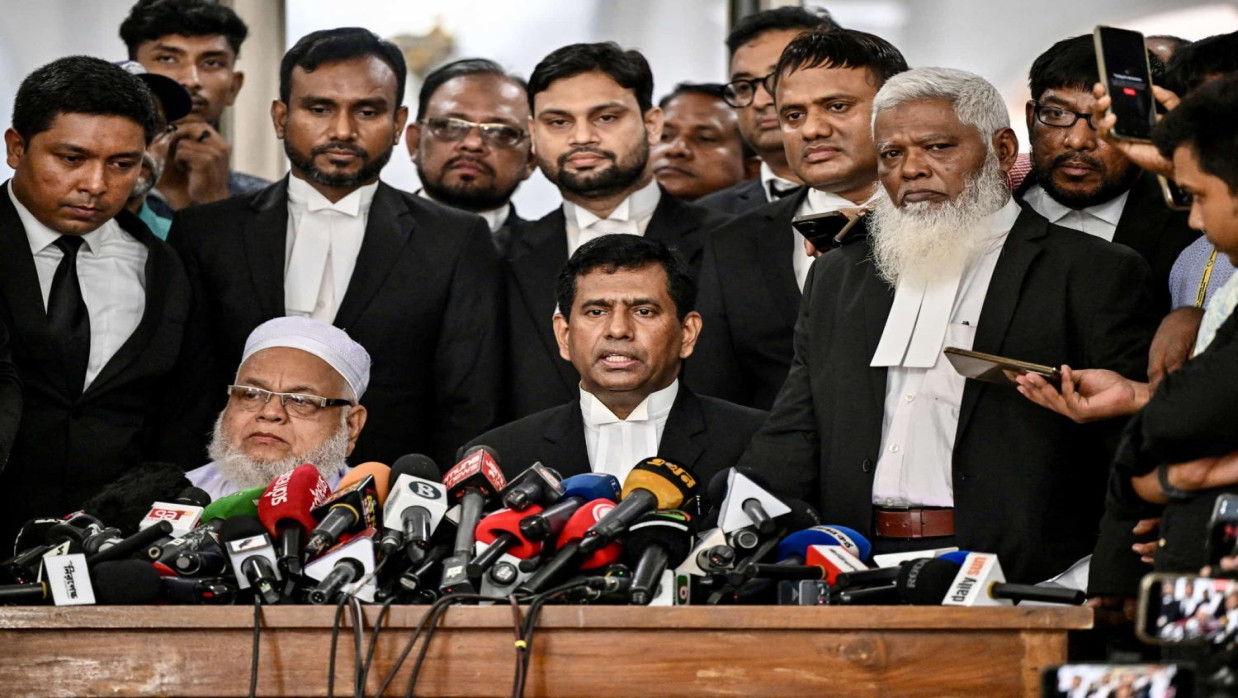
In late November, the Bangladesh High Commission in New Delhi delivered a letter to India’s Ministry of External Affairs (MEA) seeking the extradition of Hasina and Khan. Earlier that week, both had been sentenced to death in absentia by Bangladesh's International Crimes Tribunal (ICT) for their role in the deadly crackdown on a student-led uprising in July and August 2024 that is estimated to have killed nearly 1400 people. Hasina fled to India on 5 August that year and has been in Delhi in an undisclosed location. Khan, too, is believed to be in India and has given interviews to the Indian media.
The ICT’s verdict is ironic for Hasina. It was under her regime that the tribunal was set up in 2010 to prosecute atrocities committed during the 1971 Liberation War that led to the birth of the country. Verdicts delivered by the ICT resulted in the execution of several political adversaries of her Awami League party.
India and Bangladesh signed an Extradition Treaty in 2013, when Hasina was the prime minister and the United Progressive Alliance (UPA) headed by the Congress Party was in power in India. Over the years, the Treaty has mostly facilitated the transfer of several Indian insurgents arrested by Bangladeshi security force personnel to their Indian counterparts. However, the Treaty allows the extradition request to be refused if the offence is of a “political character”.

On 26 November, the MEA spokesperson commented that Dhaka’s request “is being examined as part of ongoing judicial and internal legal processes”. Dhaka’s previous requests have been ignored by New Delhi. This time too, New Delhi is likely to fall back on the escape clause of the Extradition Treaty so as not to surrender a close ally who has delivered on multiple fronts during her long stint in power. India would possibly try to draw support from the UN Secretary-General António Guterres, who expressed regret over the imposition of the death penalty. However, the UN statement has a caveat that described the verdict as an “important moment for the victims of the grave violations”. The MEA made no such statement, adhering to its routine line: “India has noted the verdict”.
India’s foreign policy approach toward its South Asian neighbours has historically oscillated between a dominant, “big brother” posture that is viewed as a regional hegemon, and a more conciliatory strategy focused on providing economic aid, developmental partnership, and meeting the various expectations of these smaller, sovereign nations. Bangladesh, since August 2024, has posed a uniquely new challenge, which has been compounded by India’s quandary of how to overcome its perceived loss of influence following Hasina’s ouster.
New Delhi’s refusal to acknowledge that a hugely popular protest dislodged an autocratic regime continues to be at the heart of the problem.
As a result, New Delhi’s refusal to acknowledge that a hugely popular protest dislodged an autocratic regime continues to be at the heart of the problem. India has been rather obdurate in not only protecting Hasina, but making her the central pillar of its Bangladesh policy. Curiously, by doing so, India seems to be violating its much-publicised pragmatic policy of dealing with the “government of the day”, which is so evident in its policy towards Afghanistan and Myanmar.
Since August 2024, New Delhi’s official statements on the security of Hindu minorities in Bangladesh and the attacks on Hindu temples have sought to project the country’s interim government as grossly incapable of governing and protecting its people. While Hindu Bangladeshi citizens have been welcomed to seek Indian citizenship, anti-immigrant drives conducted in several Indian states have rounded up Bangladeshi Muslim citizens and forcibly deported them. Indian ministers have repeatedly described Bangladeshis as “termites” and have warned Bangladesh’s Chief Adviser Muhammad Yunus about his “anti-India” posture.
These, along with other measures to pressure Dhaka, have had the opposite effect. The Yunus-led government has tried to lessen its dependence on India and has grown closer to Pakistan and China – a scenario that New Delhi dreads but has done little to prevent. A two-front war – simultaneous aggression from Pakistan and China – has already figured in India’s military calculations. By refusing to engage with Dhaka, New Delhi could be unveiling the far more challenging scenario of a three-front enmity.
The article appeared in the lowyinstitute

0 Comments
LEAVE A COMMENT
Your email address will not be published