

Image credit: Southasiajournal archives
A New Generation and a New Political Era
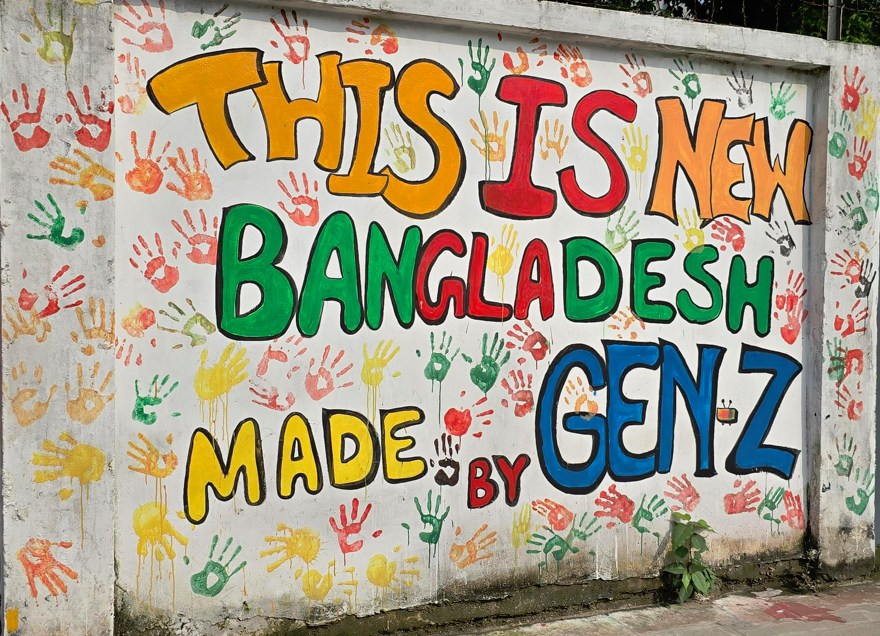
New politics are emerging in a region and across the world. It is the politics not of veteran revolutionaries or established politicians, but a new generation born into a world of crises, contradictions, and broken promises. Generation Z, raised in the digital age and living through the global shocks of the twenty-first-century economic turmoil, a pandemic, climate disasters, rising inequality, and political crises, has emerged as the most consequential political force of this era. They have known no true revolution, and yet they are the ones setting the world on fire from South Asia to Latin America, from Africa to the Middle East.
Generation Z’s political power is clear to see, and if the world had only paid attention to it, perhaps this moment could have been averted. But from Colombo to Dhaka to Kathmandu to Nairobi, Mexico City to Jakarta, the signs were there all along. Gen Z was protesting across the world, with a simple message: politicians have stolen our future. Across countries as diverse as these, the common thread uniting the youth is that corruption has hollowed out democracy, robbed opportunity, and entrenched an elite class of politicians and businessmen accountable to no one but themselves.
For years, Gen Z was mocked as apathetic, politically disengaged, or self-indulgent, dismissed by older politicians and thought leaders. Their activism was dismissed as performative hashtag activism. They were told to wait for their turn for the next election. The world has grossly misjudged Generation Z. They are not apathetic. They are disillusioned. They are not self-indulgent; they are impatient. Far from cynical, the world’s young are its fiercest believers in justice, equality, and transparency in countries where older generations have accepted corruption as the price of stability.
This transformation didn’t happen overnight. But as living costs soared, jobs disappeared, salaries stagnated, and prices continued to rise, these forces of disillusionment hardened into moral outrage. Young people are mobilizing with a speed, scale, and spontaneity that traditional institutions and political parties cannot match. Empowered with cell phones as megaphones and social media as their organizational backbone, youth now organize leaderless revolts with the speed of social movements, the scale of social media, and the spontaneity of a real-time viral outrage. The protests are horizontal, not hierarchical. They are leaderless, rapid, unpredictable, and emotionally driven. A public square that is empty at sunrise can host 50,000 or more by lunchtime.
What they want is simple: enough is enough.
Corruption and South Asia’s Youth-led Revolts
South Asia is one of the youngest regions in the world and one of the most corrupt. Transparency International’s latest Corruption Perceptions Index paints a bleak picture. Bangladesh scores 23 out of 100 and ranks 151st out of 180 countries, a further drop from 2023. Nepal scores only marginally better, ranking 107th with a score of 34. Even India, currently at 96th place with a score of 38, belies more institutional rot than reform.
What is most alarming is not the ranks but the trajectory: in 2024 and 2025, Bangladesh and Nepal both plummeted further. These are not subjective perceptions; these are objective indicators of systemic rot accelerating even as public demands are rising.
The result is nothing short of explosive. Corruption is no longer an abstract frustration; it is a lived reality for youth trying to enter the job market, pay for education, access fundamental justice, or start a business in a political economy monopolized by dynastic families, cronyism, and rent-seeking interests. When young people watch children of elites flaunt their wealth on Instagram—luxury cars, European vacations, high-end fashion—while millions are unemployed and inflation skyrockets, resentment hardens into fury.
Across South Asia, institutions of governance have been reduced to spectacles. Elections are frequent, but accountability is rare. Institutions are present, but few are independent. Development is a slogan, but inequality is rising. And nowhere are these hypocrisies called out more sharply than through the lens of social media by a Gen Z demographic with a clear view of how they are being lied to and taking umbrage at the audacity of it.
In Sri Lanka, Bangladesh, and Nepal, Generation Z is a perfect storm of economic, social, political, and digital forces pushing back against a region’s corrupt political culture, bringing its leaders to their knees.
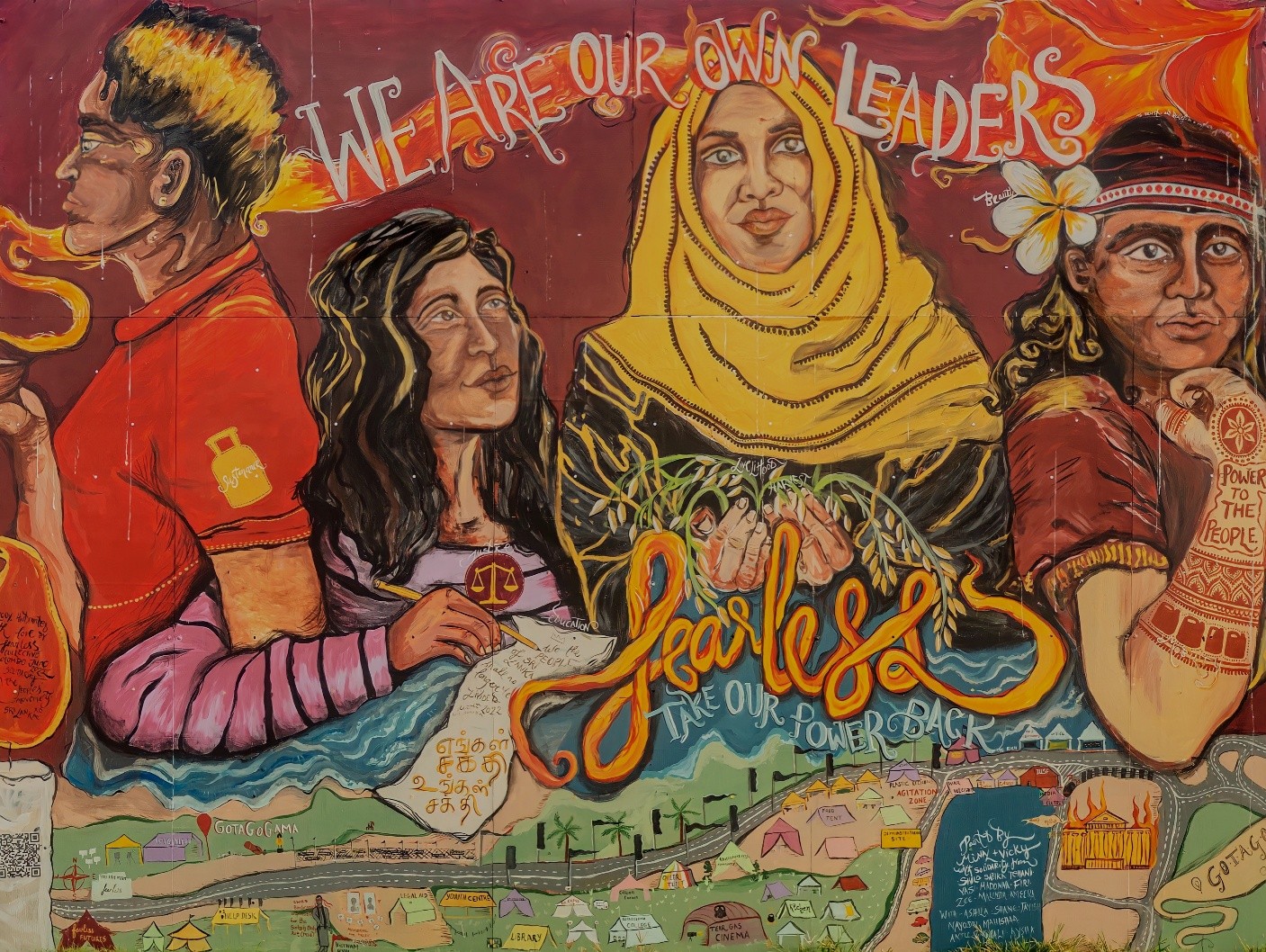
Mural painted as a Rapid Response by the Fearless Collective during the GotaGoGama protest in Galleface, Colombo, Sri Lanka. Courtesy of the Fearless Collective (June 2022).
Sri Lanka’s Aragalaya: The Blueprint for Youth-Led Revolt
Sri Lanka was among the first nations where Gen Z’s political power manifested in such a dramatic fashion. In 2022, Sri Lanka faced its worst economic crisis in modern history, with fuel shortages, inflation surging to over 50 percent, empty shelves, and a sovereign debt collapse that pushed many to the brink of starvation. Years of fiscal mismanagement, corruption, nepotism, and authoritarian excess by the Rajapaksa family had brought the country to a tipping point.
The spontaneous mass movement that erupted, called Aragalaya “The Struggle,” was unprecedented in its scale and the youthfulness of its participants. Street protests filled every major city, with the spontaneous protest community, called GotaGoGama, set up at the epicenter in front of the Presidential Secretariat. Organizing via digital platforms and instant messaging, young people brought entire cities to a standstill with sudden calls for mass protests.
The revolt was leaderless and horizontal, not vertical. A diverse group of young people, students, unemployed graduates, and young professionals formed the backbone of the mobilization. The demands were simple: accountability, transparency, and the resignation of a ruling family that had plundered the country. Within months, the world watched in disbelief as Prime Minister Mahinda Rajapaksa resigned and President Gotabaya Rajapaksa fled the country. A government that had dominated Sri Lankan politics for decades collapsed before our eyes amid a youth-led movement.
Two years later, the problems that ignited Aragalaya have not been fully resolved. The economy is not growing, corruption is still endemic, and Sri Lanka’s political elites have yet to relinquish power behind the scenes fully. What the experience of Aragalaya has shown is that while young people can bring down governments, they cannot rebuild systems overnight.
But they have also shown this: that no regime, no matter how powerful, no state, no matter how authoritarian, no family, no matter how dominant, is safe from the day when a generation rises up armed with nothing but smartphones, a purpose, and nothing left to lose.
Bangladesh 2024–2025: A Revolution Still in the Making
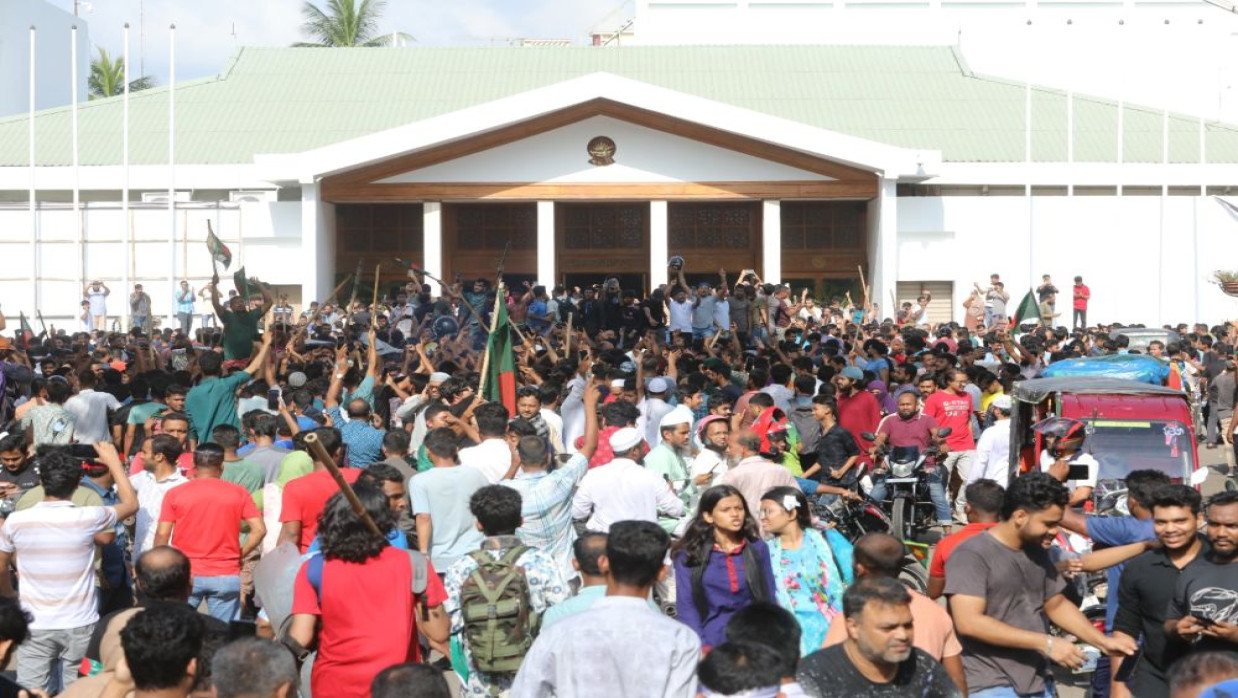
Bangladesh saw one of the most dramatic youth-led uprisings in recent history. It began as a student protest in Chattogram. It rapidly spread, engulfing the country as over a million people poured into the streets in the most significant protest movement Bangladesh had ever seen. Within weeks, the government that had ruled for fifteen years collapsed, Prime Minister Sheikh Hasina fled the country, and the International Crimes Tribunal sentenced her to death in absentia for crimes against humanity in suppressing the uprising.
For a time, it felt like Bangladesh might be on the cusp of a new beginning. But as the dust settled, it became clear that the old system was far from finished. A change in government did not mean a change in the system. Within a few weeks, the streets of Dhaka were ablaze, in chaos. Fires were set; police forces issued “shoot on sight” orders; explosions were heard as security forces clashed with protesters. Bangladesh’s CPI score dropped further.
The lesson is clear: toppling a leader is the easy part, destroying an entire system is far more difficult.
Bangladesh’s political culture has long been one of patronage, favoritism, and impunity. A change in leadership would not transform that overnight. The same is true in Nepal, and Sri Lanka, where the problem is not only political leaders but an entire culture of politics. Patronage, nepotism, cronyism, corruption. Generations of these problems cannot be fixed overnight.
Bangladesh’s youth revolution remains unfinished, its demands unmet, its aspirations unrealized, its anger far from spent.
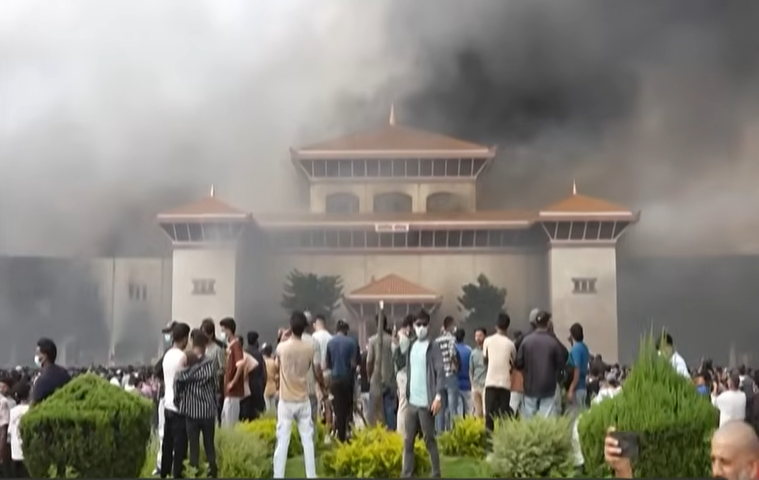
Image captured from a YouTube presentation
Nepal’s Youth Uprising and the Exodus of a Generation
Nepal saw youth-led protests in 2025 over similar structural failures. With youth unemployment over 20 percent, hundreds of thousands of young Nepalese have no choice but to leave the country for low-skilled jobs in the Gulf, Malaysia, or South Korea. Their remittances fuel Nepal’s economy, but the social and emotional costs are devastating for a generation to be separated from its families, homeland, and future.
On the other side are Nepal’s political elites living in comfort, flaunting wealth on social media, they cannot possibly be earning from official salaries. Luxury cars, foreign degrees for their children, mansions, and travel on international trips—symbols of political privilege on full display on TikTok, Facebook, and Instagram. For young Nepalese, these are the triggers for a lifetime of inequality and corruption.
No political ideology led the youth mobilizations in Nepal. They are an expression of lived experience. A system that is disconnected, that rewards loyalty, not merit; connections, not competence. And like their counterparts across South Asia, they use digital tools to organize resistance, mobilize protests, and hold up a mirror to hypocrisy, fraud, and political elites who have taken them for granted.
In all these countries, Bangladesh, Sri Lanka, Nepal, and across South Asia and the developing world, a corrupt political culture has been built up over so many years and generations that the entire system is in a state of decay. Take away the leaders, and the system remains.
The Nature of Gen Z Revolts
Generation Z’s political power has a distinct character. Their revolt is leaderless, making it difficult to infiltrate or negotiate. They are horizontally organized and networked digitally. They move as fast as a flash flood: unpredictable, rapidly mobilizing, spontaneous, and emotionally driven. For older generations, instability is a fear. For younger ones, it is their lived reality.
Inflation is up. Jobs are scarce. Food prices are rising. Student debt has never been higher. The climate crisis is a runaway train. The political system is corrupt and broken. The world Gen Z is inheriting is one of high uncertainty, risk, and insecurity. And for them, protest is not a rupture of stability; it is a demand for it.
But this is also their greatest weakness. Leaderless movements are strong at tearing down systems but far more fragile at building them up. Moral clarity can empower revolts, but governance and statecraft take patience, compromise, and institution-building, all of which are difficult in the age of instant communication and instant outrage.
The danger, then, is recurrent uprisings without structural transformation. Bangladesh’s violent protests in 2025 show the fragility of revolutions that can topple governments but achieve little systemic rebuilding in their wake.
The Hard Work Ahead: Reform or Ruin
The central lesson across Sri Lanka, Bangladesh, Nepal, and beyond is clear: Gen Z can break a system, but only sustained reform can rebuild a nation.
Real reform requires an independent judiciary, transparent procurement mechanisms, professionalized civil services, depoliticized law enforcement, and a free press, limits on dynastic politics, and accountability that reaches not only leaders but their networks.
These are not overnight changes; they require political courage and national consensus. The youth can supply the momentum, but institutions must provide the architecture.
Sheikh Hasina’s death sentence may be a symbolic turning point in Bangladesh’s political history, but it will not ease the frustrations of a generation demanding economic opportunity, fairness, and dignity. Gen Z wants a country where their future is not predetermined by political lineage or corrupt patronage. They want justice that is equal for all, not selective. They want economies that reward merit, not connections.
The world’s political elites ignore this at their peril.
A Century Defined by Youth
Across continents, from Latin America to Southeast Asia to Europe’s democracies now struggling with legitimacy crises, Gen Z is rising with a unified message: they will no longer tolerate corruption or broken political systems. They have found their voice, their method, and their power.
The question is no longer whether Gen Z will reshape their countries. They already are.


0 Comments
LEAVE A COMMENT
Your email address will not be published