
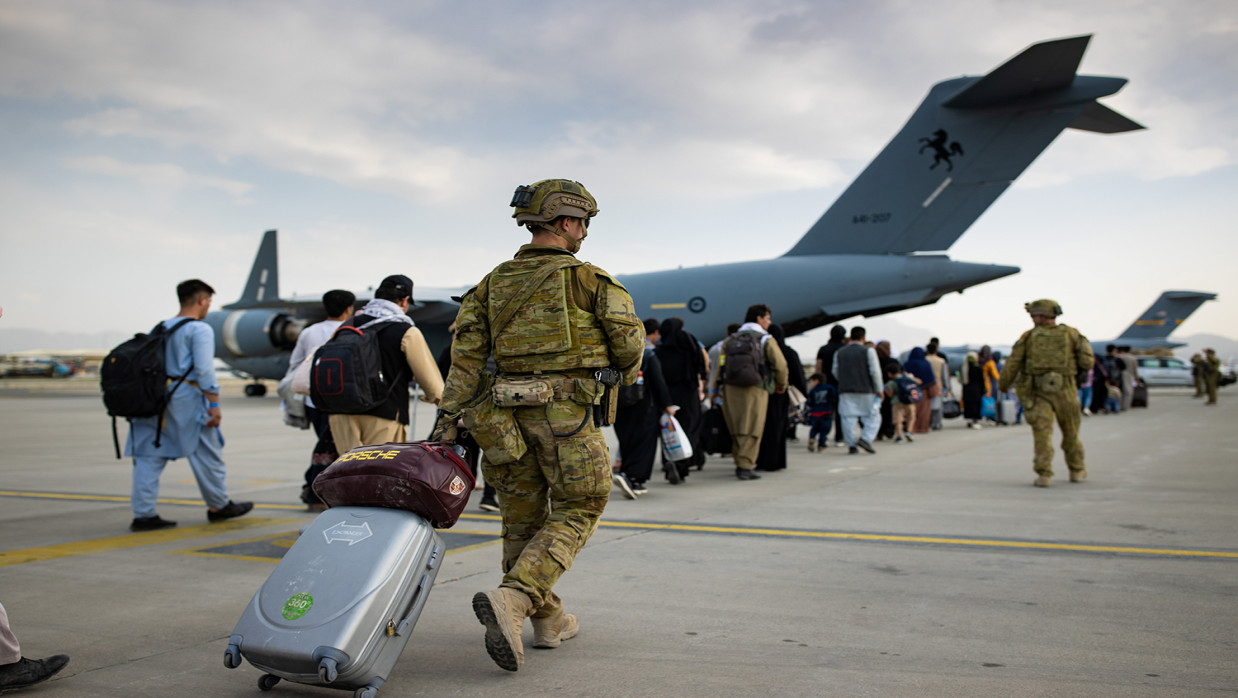
It has now been 25 years since the US (and allies) captured Kabul from the Taliban, and Afghanistan continues to oscillate between invasion, retribution, despotism and disintegration. November 2001 clearly indicated this pattern. On 13 November 2001, Kabul rose to a false dawn. With the Taliban driven out, the US-allied forces swept into the city on the back of months of US bombing. Songs echoed around the city for the first time in many years; people rejoiced at the ousting of the Taliban, and women were seen roaming the streets more freely. It seemed like the end of Taliban tyranny and the start of an end to the Taliban's stranglehold on Afghan lives.
However, Afghanistan was not freed from its oppressors - merely one set of warlords and their supporters supplanted the Taliban with the assistance of the US and took control of Afghanistan.
Twenty-five years later, the distinction between liberation and regime change remains central to understanding Afghanistan's tragedy.
The Return of the Warlords
The Northern Alliance was presented internationally as a coalition resisting Taliban extremism. However, several of its influential commanders had participated in the devastating factional struggles that followed the collapse of Afghanistan's communist government in 1992.
During the 1992-1996 conflict between various mujahideen warlord groups for Kabul, large swathes of the city were reduced to rubble, hundreds of thousands became refugees, and there were egregious abuses of civilian populations. Constant bombardment, abductions, rape, extortion, and targeting of specific ethnic groups were all endemic.
One of the worst incidents was the Afshar district killings of Hazaras in 1993. A number of the principal warlords were later implicated in human rights violations by Human Rights Watch in "Blood-Stained Hands".
It is in this context that the Taliban rose to power in 1994 from their base in Kandahar. While the Taliban would go on to impose extreme curtailment of many basic rights and freedoms, they were able to offer a measure of stability that won them adherents weary of the various factions.
Following the US invasion of 2001, many of these former warlords were given significant roles in Afghan governance. M.Q. Fahim took the position of Defense Minister, whilst Dostum, Ismail Khan, Atta Muhammad Noor and others gained major regional power or high-ranking political office.
Often the very warlords who had committed abuses against civilians continued to wield power under the new order.
The irony is that a newly democratic state espousing liberal values was propped up in no small part by men with checkered human rights records.
Liberation - imprisonment and vengeance
What began as a campaign to dismantle Al-Qaeda and oust the Taliban regime quickly evolved into a network of detentions, interrogations, and military strikes across Afghanistan, resulting in numerous civilian abuses.
Bounties placed on the heads of perceived Taliban/AQ members led to many false accusations being made, motivated by vendettas, sectarian/tribal hatred, greed, and rivalries.
US academic research (Seton Hall, 2006) concluded from public US data that a small minority of Guantanamo detainees had been taken into custody by the US military, with many handed over by Pakistani or Afghan counterparts.
This is of course important given that the latter groups stood to gain financially by falsely ascribing an individual as a member of AQ/Taliban.
There were also numerous allegations of prisoners of the Taliban regime being killed by Afghan allied forces after surrendering, particularly following the northern offensive and the transport of POWs to Sheberghan in crowded containers. Exact numbers killed remain contested, but the Dasht-e-Leili killings came to symbolize the lack of due diligence/accountability pursued by the Coalition.
Prisoner abuse also became notorious at the US-run Bagram detention center. Dilawar, a young Afghan civilian, was found dead after being tortured by US soldiers in December 2002, highlighting the extent of harm done to innocents held in the US detention system.
These abuses served to fuel anti-US / anti-Government sentiment amongst many Afghans and contributed to insurgent recruitment drives.
Corruption
In excess of USD 145bn has been spent by the US Government on reconstruction efforts in Afghanistan since 2001. This funding was meant to establish democratic institutions and security capabilities, develop infrastructure, and promote economic growth.
Some positive outcomes include increased literacy, access to medicine and medical treatment, increased female enrolment in tertiary education and the workplace, and a free press.
Nevertheless, the reconstruction program suffered from systemic corruption, political patronage, and inadequate oversight.
The SIGAR repeatedly flagged that overspending, inflated goals, and collusion with unscrupulous local strongmen had worked against the aims of the US intervention. Further, its findings demonstrated that endemic corruption in Afghanistan was compounded by reconstruction policy itself.
Luxurious mansions were visible across Sherpur, Kabul, occupied by a select circle of privileged figures. In this context, it should come as little surprise that the Kabul Bank scandal - involving ~USD 1 billion of illicit loans and other criminal activities - was eventually exposed. The scandal showed how such transparency could be elided at one of the key banks.
For ordinary Afghans, the contrast was unmistakable. International assistance enriched influential networks while unemployment, insecurity, and poverty remained widespread.
The Taliban exploited this disillusionment, presenting themselves as opponents of corruption even as their insurgency inflicted enormous suffering on civilians.
The Collapse of an Imported Political Order
The dramatic return of the Taliban in August 2021 exposed the fragility of the political system established after the American intervention.
President Ashraf Ghani fled Kabul, provincial administrations collapsed, and Afghan security forces disintegrated as American military support disappeared.
The fall was the consequence of reliance upon international contractors, incompetent command, endemic corruption, low troop morale, and the failure to keep the Afghan administration at the table during key US-Taliban talks.
None of this erased the gains made over the previous 20 years, but it showed the limits of what can be achieved by propping up state structures with external funding and military intervention.
Afghanistan's Unfinished Struggle
The return of the Taliban to power in Afghanistan has failed to deliver a broad-based political compromise for the country.
Access to education (secondary and above), jobs, and wider political space has continued to be curtailed for women.
A joint UNESCO-UNICEF report in November 2026 estimated that over 2.6m girls have been deprived of secondary education since 2021. It also reported that around 53% of primary-aged children were out of mainstream schooling.
These restrictions represent an enormous loss of human potential and threaten Afghanistan's long-term economic and social development.
Meanwhile, excluding former political and military opponents risks perpetuating the historical cycle of grievance and retaliation. Armed resistance groups remain active, although their capacity to challenge Taliban rule is limited.
History has repeatedly shown Afghanistan that winning alone does not lead to sustainable peace.
In 1992, the Mujahideen defeated the Soviets only for civil war to follow between rival groups. In 1996, the Taliban seized control and ruled by the iron fist. Following the 2001 US invasion, warlords re-emerged, and in 2021 the Taliban emerged victorious once more and took hold of the reins of power.
On each occasion, Afghanistan was purportedly "saved". However, no comprehensive and long-lasting solution emerged.
Now, two and a half decades since 13th November 2001, it is clear that "liberation" cannot be judged on the basis of toppling a regime, taking over the capital or defeating an insurgency. Only when a just and transparent system is put in place, and people have the right to freedom of expression and self-determination, can they consider themselves liberated.
Afghanistan's tragedy is not simply that foreign intervention failed or that successive governments betrayed their promises. It is that political power has repeatedly been treated as the spoils of conquest rather than a responsibility entrusted by the population.
Until that principle changes, Afghanistan risks remaining imprisoned in the very cycle of violence that successive generations of rulers have promised to end.


0 Comments
LEAVE A COMMENT
Your email address will not be published