

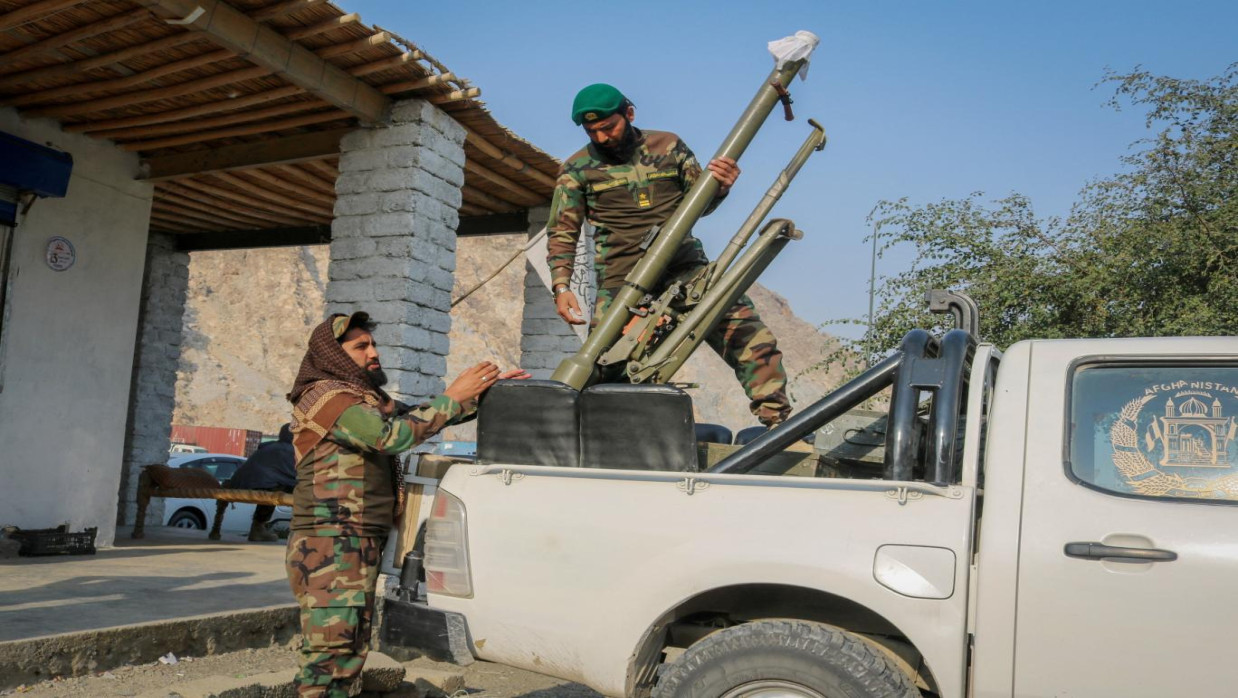
Pakistan’s recent attacks inside Afghanistan demonstrate its frustration with a diplomatic process that it believes has failed to ensure a tangible security gain. The process of religious mediation, tribal jirgas, high-level diplomatic missions, economic incentives and regional intermediaries to convince Afghanistan’s Taliban authorities to prevent militant groups operating on their soil has led to a military response. Islamabad appears to have hardened its position on the ineffectiveness of dialogue.
When the Taliban reclaimed power in August 2021, Pakistan adopted a policy of engagement. Unlike several countries that drew out their diplomatic missions, Islamabad retained its embassy in Kabul and advocated for continued international interaction with Afghanistan. Pakistani officials also claim the country helped facilitate the return of more than 90,000 diplomats, international personnel and other individuals during the transition.
These initial steps reflected Pakistan’s belief that a cooperative relationship with the Taliban government could bring regional stability and address security concerns. But the presence of Tehrik-e-Taliban Pakistan (TTP) and attacks inside Pakistan gradually undermined that position.
An Extensive Diplomatic Campaign
Islamabad’s engagement with Kabul went well beyond the usual diplomatic exchanges. In July 2022, an eight-member delegation of religious scholars led by Mufti Taqi Usmani visited Afghanistan to explore ways of reducing tensions and dealing with the TTP threat. A 17-member tribal jirga then sought to use traditional channels of dialogue. In February 2023, Defence Minister Khawaja Asif and intelligence chief Lieutenant General Nadeem Anjum led a high-level mission focused on security cooperation.
According to Pakistani government figures, subsequent engagement included four foreign-minister visits, two missions involving defence and intelligence leadership, five visits by special representatives, five secretary-level meetings and eight sessions of the Joint Coordination Committee. Pakistan also points to 225 meetings of border flags and 836 protest notes and 13 demarches issued.
These figures are based on Islamabad’s official position, but show the extent of its diplomatic campaign. Pakistan repeatedly sought to address its security concerns through political, military, religious and administrative channels, rather than just relying on coercive measures.
Economic engagement was another part of the strategy. Islamabad pursued trade facilitation and tariff concessions under the Early Harvest Programme to give bilateral relations a practical economic basis. The underlying assumption is that greater commercial ties and political engagement would provide incentives for cooperation on border security.
The search for a diplomatic solution continued even after major clashes in October 2025. Pakistan accepted mediation efforts from Qatar and Türkiye, with Doha and Istanbul hosting negotiations intended to reduce cross-border violence. China then facilitated further engagement between the two countries in Urumqi in 2026.
Across these initiatives, Pakistan’s principal demand remained unchanged the Taliban authorities should prevent militant organizations from using Afghan territory to attack Pakistan, dismantle their operational infrastructure and demonstrate verifiable progress.
The Security Question at the Centre of the Dispute
The main disagreement between Islamabad and Kabul is the presence and activities of the TTP in Afghanistan. United Nations reporting has repeatedly highlighted the group’s presence in the country and examined its relationship with the Taliban authorities. Islamabad has argued that militant sanctuaries across the border have enabled attacks against its civilians and security personnel.
Islamabad has also cited particular cases to support its contention that the Afghan conflict and Pakistan’s internal security situation are more interconnected. In January 2025, Pakistani forces killed a militant identified as Badruddin, also known as Yusuf, during an operation in Kulachi, Dera Ismail Khan. Pakistani reporting identified him as the son of the Taliban-appointed deputy governor of Afghanistan’s Badghis province and his affiliation with the TTP.
Pakistani security officials have also claimed that approximately 260 Afghan nationals have been identified among individuals killed while participating in terrorist activity inside Pakistan. Other official assessments suggest Afghan nationals are a substantial share of certain infiltration groups. These claims require independent verification and should be distinguished from independently established findings, but Islamabad uses them to argue that the threat is not limited to just a border dispute, but has wider regional and cross-border dimensions.
For Kabul, the allegations raise questions of sovereignty, responsibility and the limits of Pakistan’s military response. The Taliban authorities have denied harboring militants responsible for attacks in Pakistan and reject Islamabad’s justification for conducting strikes inside Afghanistan.
The result is a persistent impasse Pakistan demands demonstrable action against armed groups, while Kabul disputes the accusations and objects to the use of force on Afghan territory.
September 2026 and the Escalation of Military Pressure
The situation deteriorated further in September 2026. On September 18, an attack targeted the Old Police Lines complex in Kohat. According to the account cited by Pakistani authorities, attackers detonated explosives near a mosque before entering the compound. The report was of at least 31 people killed and more than 103 injured.
Three days later, Pakistan conducted strikes inside Afghanistan, saying it had targeted militant training facilities and killed more than 28 terrorists. Afghan authorities disputed Pakistan’s account and reported civilian casualties.
The confrontation again intensified on September 23, with Pakistani security sources citing the entry of eight drones from Afghanistan into Pakistani airspace near Kohat and Torkham. Pakistan said its forces had intercepted the drones, while the Taliban denied responsibility.
Pakistan struck ten locations inside Afghanistan that Islamabad said were associated with the launching or storage of the drones. Pakistani officials described the operation as a targeted response against identified sites. Afghan authorities again reported civilian casualties.
The conflicting accounts highlight the lack of a mutually acceptable mechanism for investigating cross-border incidents. Without independent verification, competing claims about responsibility, casualties and military targets have the potential to deepen mistrust and create more opportunities for escalation.
For Islamabad, the strikes are an attempt to deter attacks it believes have continued despite repeated diplomatic assurances. Pakistan increasingly presents its actions as a self-defence response against threats originating across the border. Kabul, on the other hand, views the strikes as violations of Afghan sovereignty and rejects the premise upon which Pakistan bases its military response.
Deterrence Cannot Replace a Political Settlement
Pakistan’s security concerns cannot be ignored simply because its military response is controversial. No state can indefinitely tolerate repeated attacks on its population and security forces while relying on assurances that do not provide demonstrable improvement. At the same time, military operations inside another country carry significant risks, including civilian casualties, retaliatory attacks, damage to bilateral relations and wider instability.
A sustainable policy must therefore combine credible deterrence with a renewed effort to establish enforceable security arrangements. Ceasefire announcements are insufficient if neither side can verify compliance or establish responsibility when incidents occur.
China, Qatar, Türkiye and other regional stakeholders can help facilitate a framework based on specific obligations, measurable benchmarks and regular assessments. This could include joint investigations into major cross-border incidents, credible monitoring of agreed security commitments and structured communication between relevant civilian and military authorities.
The Taliban authorities would have to demonstrate that Afghan territory is not being used by armed groups to organize or conduct attacks against Pakistan. Islamabad would benefit from a process that distinguishes verified threats from disputed allegations and minimizes the risk of unintended escalation. Independent monitoring and reliable channels for crisis communication can help both sides avoid treating every incident as a basis for a wider confrontation.
Regional engagement also matters because prolonged instability between Pakistan and Afghanistan can undermine trade, border management and economic cooperation. Continued confrontation can impose costs on border communities and disrupt the prospects for regional connectivity that both countries have reason to preserve.
From Diplomatic Activity to Verifiable Results
Pakistan’s present approach did not come about without a long period of engagement. Islamabad has retained diplomatic relations following the Taliban takeover, pursued religious and tribal mediation, dispatched senior delegations, offered economic incentives, participated in third-party negotiations and repeatedly lodged formal protests.
The key change is in Pakistan’s assessment of the effectiveness of that engagement. Its argument is that diplomatic activity has not provided sufficient, verifiable action against the militant threat.
That assessment is shaping the shift from dialogue towards deterrence. Yet the long history of negotiations also demonstrates that neither country can achieve lasting border security through military pressure alone. Force may disrupt particular facilities and impose immediate costs, but it cannot independently establish a lasting political understanding between neighbouring states.
The priority should be preventing the pattern of the current situation from becoming entrenched: militant attacks, cross-border strikes, retaliatory threats and another breakdown in negotiations. Each cycle makes compromise more difficult and increases the probability of civilian suffering.
Pakistan’s central demand is clear Afghan territory must not be used as a base for attacks against Pakistan and the challenge is to turn that into a verifiable regional security arrangement that both sides can be held accountable for implementing.
The ultimate measure of success will not be the number of diplomatic meetings held or military targets struck. It will be whether attacks decline, commitments become verifiable and the border becomes more secure. Deterrence may have become a central element of Islamabad’s policy, but stability will still rely on diplomacy that can produce concrete and enforceable results.


0 Comments
LEAVE A COMMENT
Your email address will not be published