

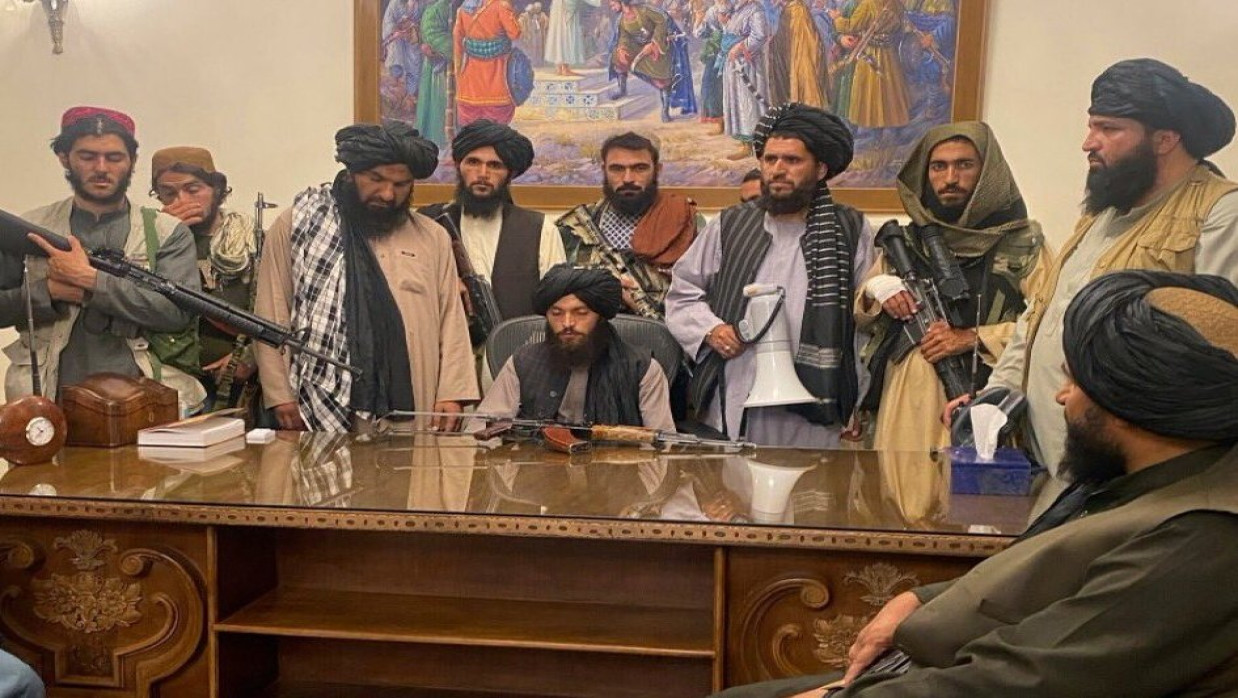
Five years after the Taliban returned to Kabul, Afghanistan presents a paradox. The country is no longer experiencing the nationwide war that defined much of the previous four decades. Roads once threatened by roadside bombs are more accessible, the central government’s authority reaches most districts, and large-scale fighting between the state and an insurgency has largely disappeared. Yet peace has not brought freedom, prosperity, or political reconciliation.
The Taliban have demonstrated that they can seize and hold power. They have not shown they can govern an economically viable, socially inclusive, and internationally accepted state. Their greatest challenges diplomatic isolation, economic stagnation, hostility with Pakistan, and mounting unrest in the north are increasingly consequences of their own policies.
Security Without Inclusion
The Taliban’s principal achievement since August 2021 has been the reduction in nationwide violence. Afghans in some of the country’s most war-ravaged districts can travel, cultivate land and conduct business without the constant threat of airstrikes, military raids or battles between government and insurgent forces.
The authorities have also strengthened customs collection, lowered some taxes, curbed official corruption and imposed greater administrative control over trade. Their campaign against poppy cultivation has produced a dramatic reduction in opium production. Roads and other infrastructure projects are visible in several provinces, while urban authorities have improved sanitation and removed open drug encampments from some cities.
These are not trivial accomplishments. After years of violent conflict, stability has tremendous value. But stability provided by one armed group at the expense of good governance can only go so far.
The Taliban government is still very much a government of the movement. It includes many officials who are subject to international sanctions. Women are almost completely excluded from senior positions in public institutions. Ethnic and political groups outside the Taliban movement have negligible representation. The government may be more centralized than its predecessor, but it is far from inclusive.
That exclusivity fosters a dangerous political disequilibrium. A government can quell an armed insurgency for years. But true stability will require the population to believe that the state is theirs. Too many Afghans, especially women, minorities, former-government employees, and residents of Afghanistan’s northern provinces, will struggle to see it that way.
The Erasure of Afghan Women
No policy has damaged Afghanistan’s future more severely than the Taliban’s treatment of women and girls. Afghanistan remains the only country where girls are systematically prohibited from receiving formal secondary and university education. Women’s access to employment, travel, public spaces and recreation has also been sharply restricted.
The stakes are much higher than individual freedom. By stopping girls from finishing school, the Taliban are erasing Afghanistan’s next generation of teachers, doctors, nurses, administrators and entrepreneurs. Afghanistan, which already faces a brain drain, is purposefully depriving itself of half its population’s ability to help rebuild the nation.
The restrictions also aggravate the healthcare emergency. Social rules in many Afghan communities require women to be treated by female medical professionals, yet the Taliban’s educational prohibitions are steadily cutting off the pipeline of women qualified to serve as doctors, nurses and midwives. This contradiction will cost lives for decades.
Taliban leaders sometimes claim that international objections reflect Western hostility toward Islamic government. That argument is unconvincing. Muslim-majority countries and respected Islamic scholars have also challenged the educational prohibitions, which have no equivalent elsewhere in the Muslim world.
The Taliban’s leadership, particularly its Kandahar-based inner circle, appears to regard compromise as a sign of weakness. In reality, allowing women to learn and work would strengthen Afghanistan economically, improve public health, and open the way to greater international engagement. Ideological rigidity has instead transformed the country into a diplomatic pariah.
Isolation and the Cost of Disengagement
Few governments have extended official recognition, though Kabul still receives diplomatic and trade support from neighbors and regional powers. Russia has recognized the Taliban government, and China, Iran, India, Türkiye, and Central Asian states have kept some form of diplomatic and commercial ties open.
Such engagement is motivated by self-interest. Afghanistan under any undemocratic government is better than Afghanistan gripped by another round of civil war or forfeiting its territory to militant groups that threaten its neighbors. However, international engagement has fallen short. Sanctions, frozen assets, and foreign banks' refusal to process Afghan transactions have hindered the economy.
The Taliban are responsible for the policies that have prevented recognition of their government. However, the international community should not use humanitarian suffering as a tool of coercion against the Afghan people. Ordinary Afghans deserve better than to be punished for the actions of a regime they did not vote for.
Disrupting aid flows is dealing another serious blow. Refugees International conducted a 6-month review of patients’ deaths based on interviews with 555 health care workers and records from over 320 health facilities across Afghanistan. The investigation confirmed at least 161 deaths directly linked to the discontinuation of health services after U.S. aid was halted. Many of these deaths occurred among women during pregnancy or childbirth. As of October 20th, over 420 health facilities had shut their doors or ceased providing services, leaving millions without access to care.
The withdrawal of U.S. troops rightfully ended a foreign war that was not sustainable. The sudden removal of vital health and humanitarian assistance is neither strategic nor moral. Humanitarian assistance can be provided directly to those in need through tightly regulated international organizations, and does not necessarily lend political credibility to the Taliban.
From Sponsor to Adversary
The most immediate external threat to Taliban rule comes from the deterioration of relations with Pakistan. Islamabad, once the movement’s principal sponsor, accuses the Kabul authorities of allowing Tehreek-e-Taliban Pakistan militants to operate from Afghan territory. The Afghan Taliban deny or minimize the accusation, but TTP attacks inside Pakistan have intensified since 2021.
Pakistan has responded through border restrictions, forced refugee returns and military strikes. Kabul has retaliated, producing increasingly dangerous exchanges between two heavily armed neighbors. What began as a dispute over militant sanctuaries has developed into a confrontation involving airstrikes, trade closures, water security and competing relations with India.
This conflict is especially damaging to Afghanistan. As a landlocked country, it has historically depended heavily on Pakistani ports and transit corridors. The Taliban had promoted Afghanistan as a bridge connecting Central Asia with South Asia through railways, energy pipelines and highways. Prolonged border closures have made that vision increasingly unrealistic.
Kabul is consequently looking toward Iran, China and Central Asia for alternatives. But tensions and trade restrictions affecting Iranian ports have exposed the vulnerability of those routes, too. Geography cannot be wished away: Afghanistan and Pakistan must eventually establish a working relationship.
The Taliban should ensure that Afghan soil is not used to launch attacks against Pakistan. Pakistan should understand that airstrikes, deportations and an economic blockade will only increase Afghan animosity, and will not lead to lasting stability. Escalation will also allow both nations to justify arming proxies against each other, thus restarting the kind of regional conflict Afghanistan has only just ended.
Northern Afghanistan’s Warning Signs
A second worry comes from the north. Resistance groups such as the National Resistance Front and Afghanistan Freedom Front are militarily inferior to the Taliban. Islamic State-Khorasan Province is also too weak to mount an offensive against Kabul. However, recent attacks in Badakhshan and elsewhere show the Taliban’s writ is not completely accepted.
Local grievances go beyond politics. Forced poppy eradication campaigns have taken away farmers’ livelihoods with no substitute provided. The expansion of mining has fueled resentment over who keeps the profits when politically connected businessmen acquire mines or central authorities claim them, leaving locals poor. Competition between Taliban commanders over mines, smuggling networks and power has further unsettled the region.
Badakhshan is strategically unique as it borders Pakistan, China and Central Asia. The Taliban see opportunities to connect to China through the Wakhan Corridor to diversify their relations and depend less on Pakistan. But roads and corridors won’t function if the local population doesn’t feel that their interests are respected.
The Taliban will likely retain control over Badakhshan. But the brief takeover of a district headquarters by a little-known opposition group may not herald the start of a resistance movement capable of threatening Taliban rule. However, it is symbolically significant: obedience does not equal legitimacy.
The Choice Before the Taliban
Six years into their rule, the Taliban have no immediate successor that can take them out. But this perception of strength should not breed continued intransigence. It should give them the confidence to change course.
For the Taliban, key issues for Afghans include: restoring education for girls and bringing women back into public and professional life; expanding political representation; providing credible guarantees about not allowing militant sanctuaries; and reaching a negotiated settlement with Pakistan. The international community can encourage change by responding to measurable benchmarks with gradual increases in economic engagement and ensuring humanitarian assistance is insulated from political squabbles.
The Taliban may have won the war. Now victory is their worst enemy. Until they understand that obedience does not equal legitimacy, and isolation does not equal independence, Afghanistan’s hard-won stability will remain fragile. Five years into Kabul’s defeat, the question is no longer if the Taliban will retain power. It is whether they can turn power into responsible governance before their self-inflicted crises consume Afghanistan's hard-earned peace.

0 Comments
LEAVE A COMMENT
Your email address will not be published