

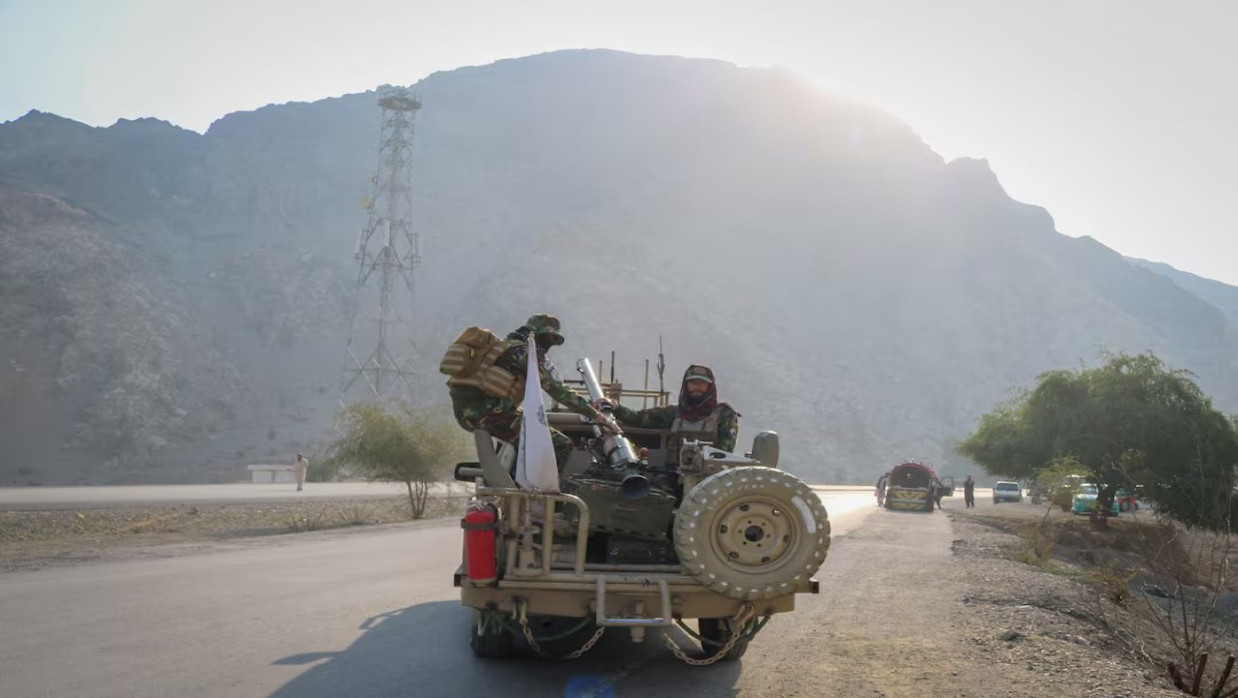
Badakhshan, Afghanistan's vast and mountainous province, was a center of resistance to the Taliban's rule during the 1990s. Despite the Taliban's numerous and intense military operations, the rebellious province remained under the control of the Northen Alliance, which was commanded by Ahmad Shah Massod. Once more, the Taliban is becoming increasingly frustrated by the resource-rich region. In recent weeks, Badakhshan, bordered by Tajikistan, China, and Pakistan, has experienced a surge in attacks. It is the opinion of experts that anti-Taliban armed groups are exploiting local grievances against the Taliban, disputes over resource control, and ethnic tensions. The Yaftali Sufla district center was attacked by Sepahiyan-e Mihan (Homeland Soldiers Front), a newly formed anti-Taliban resistance organization, on July 17. The attack group, which consisted of approximately 25 fighters, held the district center for several hours before retreating. The district center's temporary loss was confirmed by the Taliban. The Taliban Chief of Army Staff, Fasihuddin Fitrat, visited the Yaftali Sufla district to evaluate the Taliban's readiness and forces in the wake of the incursion. Afghan Freedom Front (AFF), the organization led by former Afghan Armed Forces Chief of General Staff Yasin Zia, initiated numerous targeted operations against Taliban units in the Zebak district of Badakhshan on July 23. At the same time, the National Resistance Front (NRF), which is led by Ahmad Massoud, claimed responsibility for an attack on a Taliban outpost in the Kuran wa Munjan district of Badakhshan province.
The temporary seizure of a district center, which was subsequently followed by sustained AFF operations and an NRF attack in other parts of the province, emphasizes the increasing significance of Badakhshan as a battleground between the Taliban and the armed resistance. To get a more profound understanding of the resistance against the Taliban's rule in Northern Afghanistan, I talked to Mr. Dawod Naji, head of the Political Committee of AFF. He told me that our forces captured several Taliban outposts in the recent operations, and despite counterattacks by much larger Taliban forces, our fighters defended the positions we had captured. Naji, in addition, stated that the AFF has evolved from clandestine warfare to front-line warfare and direct offensive operations against the Taliban. Regarding relations with other armed groups, especially the newly formed Sipah e Mihan, Mr. Naji said that we maintain meaningful contacts with all forces opposed to the Taliban because we are fighting for the same objective.
Taliban-owned policies in the North have led to an increase in the support of anti-Taliban groups. Collective punishment, arbitrary arrests, and heavy-handed security crackdowns that have targeted ethnic minority populations suspected of harboring anti-Taliban sympathies have exacerbated local resentment in the north. In addition, the Taliban is at odds with its own local commanders from non-Pashtun ethnic minorities (primarily Tajiks and Uzbeks) who have been incorporated into local structures. Open local infighting has been triggered by disputes over local resource control, such as gold mines in Badakhshan, and heavy-handed central disarmament policies. Taliban leaders have taken the recent developments in Badakhshan seriously, as they have lost confidence in their local forces. Therefore, the Taliban has mobilized a substantial number of forces from its strongholds, including the 219th Omar-e-Salis Division, which is currently stationed in Badakhshan Province, as well as other forces from the 207 Al-Farooq Corps and the newly established Hebati unit, which is led by Mawlawi Hamidullah Musafir. Moreover, the Taliban approached its allied groups to provide support in the North. In Nuristan Province, Abdul Aziz Haqqani of the Haqqani Network recently conveyed a meeting with representatives from Jamaat Ansarullah, the Islamic Movement of Uzbekistan (IMU), and Al-Qaeda. Haqqani, during this meeting, requested that these organizations provide their battle-hardened fighters to the Taliban forces in the North.
But the Taliban's path remains difficult, even with the mobilization of substantial forces in the restive regions of the North. Using motorcycles or pack animals, small, self-contained guerrilla bands can strike Taliban convoys and outposts in Afghanistan's mountains and valleys and then disperse. This is the exact strategy that drained Soviet and NATO forces. In addition to these tactics, anti-Taliban armed groups have had the advantage of high motivation, intimate knowledge of terrain, and residual loyalty from erstwhile Afghan National Security Force personnel. A significant number of commanders have received training from the United States or NATO, which provides them with a level of tactical sophistication that is uncommon in irregular forces. Concluding that the Taliban poses a significant threat is not entirely accurate. While these attacks have the potential to become a severe and enduring issue in Badakhshan and its surrounding regions, they do not currently pose a threat to Taliban authority on a national scale or indicate the province's imminent loss. The Taliban's adversaries have yet to demonstrate their ability to recruit on a large scale, maintain reliable supply lines, unify their diverse fronts, or administer territory after successfully capturing it. Additionally, the Taliban has considerable advantages in the areas of intelligence, personnel, transport, and heavy weapons. Although these attacks do not immediately pose a threat to the Taliban's rule, they have indeed succeeded in undermining the Taliban's "image of invincibility."

0 Comments
LEAVE A COMMENT
Your email address will not be published