

JAVED NOORANI LYNNE O’DONNELL
Afghanistan is giving away its mineral wealth. Through a pattern of deals that export value at the point of extraction, the country is surrendering control over what could – and should – be its greatest hope for a stable and prosperous future.
This is not accidental. Nor is it the inevitable result of geography, decades of war, or even the nature of Taliban rule. It is the outcome of contracts that prioritise immediate cash over long-term management.
Raw ore is being shipped out as Afghanistan signs away its most valuable assets on terms that lock in its own irrelevance.
This is not simply mismanagement. It is a transfer of value. Afghanistan is exporting its resources at the lowest end of the chain, while others – above all China – capture the processing, pricing and strategic leverage that follow.
In a sector defined by control, that is the difference between power and poverty.
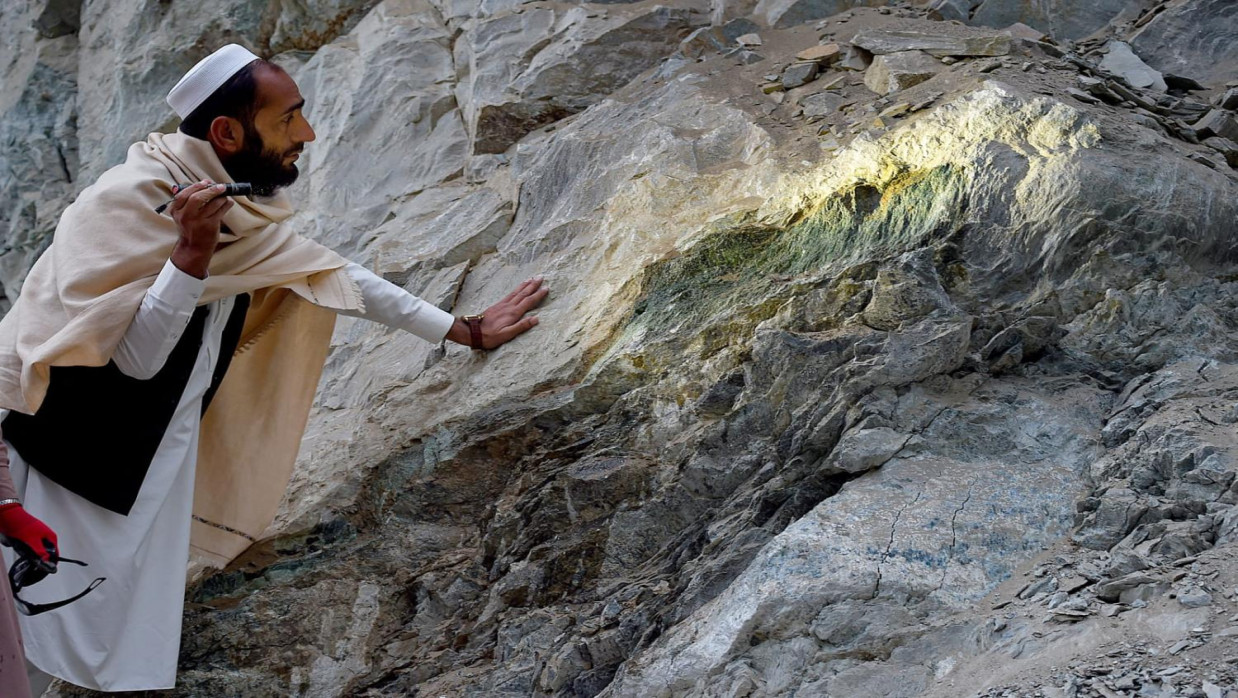
Beneath Afghanistan’s mountains sits one of the most concentrated reserves of critical minerals in the world: lithium, rare earths, copper, cobalt – the materials that power batteries, semiconductors, renewable energy and modern weapons.
Afghanistan is behaving as if it is selling gravel, not assets central to the global economy.
Geological surveys by the United States and Afghanistan’s own Ministry of Mines have confirmed nearly 90 occurrences, including more than 30 classified as “critical”.
In another setting, they would place Afghanistan at the centre of the 21st century resource economy. Instead, they are being treated as commodities to be moved quickly and monetised cheaply.
For critical minerals, value is created along the chain – processing, refining, pricing and supply. Lose that chain, and the resource itself matters far less. What is unfolding in Afghanistan is the quiet consolidation of a strategy defined elsewhere – and not in Afghanistan’s interests.
In the four-and-a-half years since returning to power, the Taliban authorities have issued hundreds of mining contracts covering zinc, lead, copper, antimony, and more, with opaque terms, minimal scrutiny, and a focus on immediate returns. Foreign companies – mainly Chinese, but also from Iran, Pakistan and Turkey – secure access, extract ore, and ship it out. Afghanistan is left with little more than environmental damage and marginal returns.
This is not new. Under the former republic, mining contracts were often pushed through under political pressure, with weak oversight and little regard for national benefit. Politicians used their influence to secure rights or protect illegal operations. Kickbacks were common.
That institutional weakness persists, but the stakes have changed.
Critical minerals now sit at the core of economic and military power. China recognised this earlier than most and has built its dominance accordingly. Over recent decades, Beijing has invested in mines abroad while consolidating processing capacity at home. Today, it controls the bulk of refining for the world’s key minerals.
When the United States restricted advanced semiconductor exports, China responded by limiting exports of the key ingredients, gallium and germanium – a reminder that supply chains can be weaponised.
Afghanistan, with world-class reserves, is not playing on those terms. Instead, it is trading away its only real leverage in short-term deals – brokered by a narrow elite – reinforcing China’s hold over processing and pricing while stripping the country of future wealth.
Consider what this looks like in practice. Antimony contracts signed without regard for global demand. Zinc and lead exported as ore rather than processed domestically. The stalled Aynak copper project, where a Chinese state company has failed to deliver on a world-class deposit yet still secures concessions. A lithium-bearing site in Herat, once deemed strategically sensitive, reissued under the guise of a salt mine.
The pattern is consistent: fragmentation, short-termism, and the absence of any coherent effort to link mineral wealth to economic strength or political leverage. Afghanistan is behaving as if it is selling gravel, not assets central to the global economy.
A strategy would mean control – over access, terms and, critically, where value is realised. Afghanistan exercises none of these.
Far from building capacity, these deals lock Afghanistan out of the parts of the market that matter. The global market rewards those who hold processing, technology and pricing power. Afghanistan has none of them.
What is lost is leverage: the ability to negotiate, build industry or choose partners. Short-term gain becomes long-term structural constraint. Afghanistan’s mineral wealth is being converted into dependency. In a sector defined by control, that is not development. It is surrender.
The article appeared in the lowyinstitute

0 Comments
LEAVE A COMMENT
Your email address will not be published