

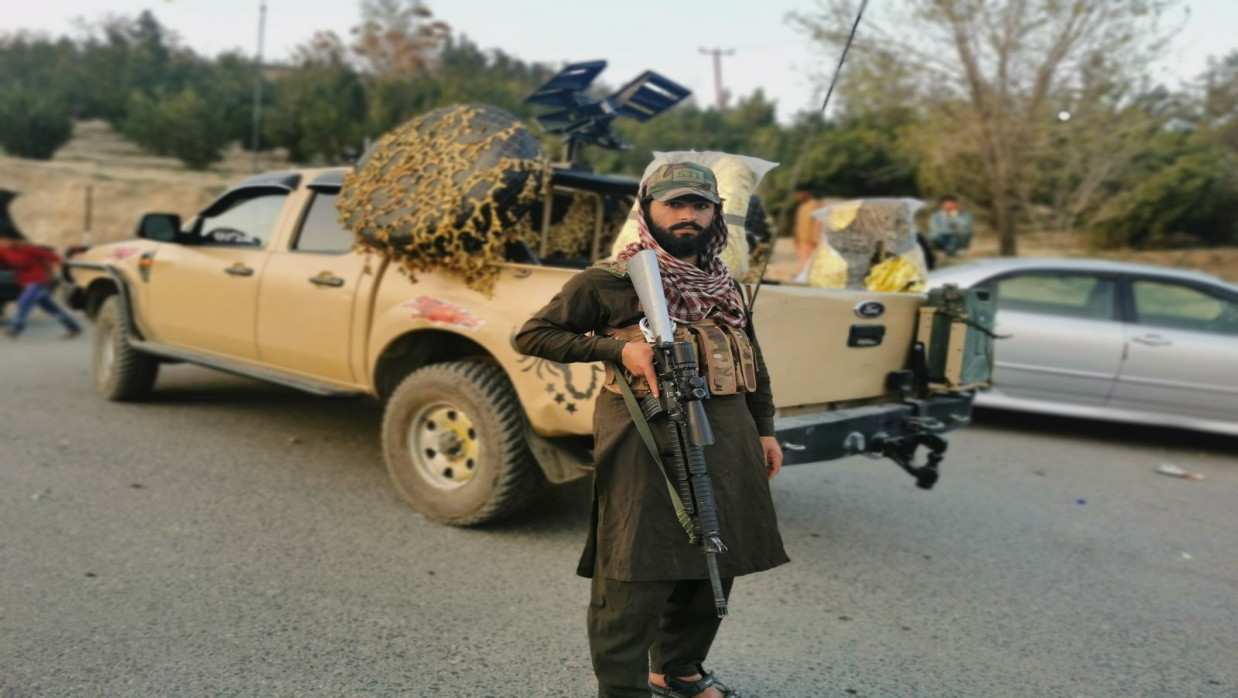
Modern states are formed on the promise to provide fundamental rights, including education, health-related facilities,s and security. It creates a bedrock of the social contract and establishes legitimacy. In Afghanistan, 90% of the population faces poverty and economic vulnerability. The youth literacy rate in 2025 stood at 62.78%, which has recorded a slight increase of 0.2% from 2024; however, it is significantly low given the small population of 45 million.
Religious freedom is systematically dismantled, Shia students are coerced to adopt Hanafism, which is the Islamic Emirate of Afghanistan’s (I.E.A) doctrinal code, or they face the risk of expulsion from the university. In Badakhshan, 50 individuals from the Ismaili community were forced to convert in 2025 through financial incentives, security guarantees, and employment offers. In addition, the I.E.A. has a narrow view of religious disagreement, often imposing penalties, including imprisonment and the death penalty, depending on the social status of the individuals, indicating class-based punishment and, indeed, a major fault line in the I.E.A.’s legal framework.
After the U.S. and allied forces’ withdrawal in August 2021, Mullah Haibatullah Akhundzada seized power by force and claimed authority as Amir ul Muminin, a title that clearly lacks legitimacy. Islam stresses inclusivity, consensus, accountability and justice; even the first caliph, Abu Bakkar Siddiq, established legitimacy through public acceptance. Contrary to this, the governance style is also coercive and concentrated in a close circle of Kandahar, comprising 20-25 key figures, which casts serious doubt on I.E.A’s decision-making process.
Afghanistan’s ethnic groups are very diverse, with Pashtuns accounting for 40% to 45% of the population, Tajiks 25% to 30%, Hazaras 9% to 15%, and Turkmen 10% to 13%. Despite a diverse population, 85% of key ministries, including Interior, Defence, Finance, and Justice, are administered solely by Pashtuns. In Addition, Rahbari Shura consists of 20-25 members and is dominated by 85%-95% Pashtuns. Moreover, 49 cabinets include only 2 Tajiks, 2 Uzbeks, 2 Baloch, and 1 Nuristani, with zero Hazara representation and zero female representation. The major loophole in the governance structure is that it lacks inclusivity: non-Pashtun officials hold symbolic roles, while the security institution, with over 200000 personnel, is dominated by one group, while other groups, such as Uzbeks, Tajiks, Hazaras, and Turkmen, are excluded from instrumental authority.
The Taliban regime, with political tools coupled with ideological control, controls every social aspect of life of its people. The Taliban regime is more totalitarian than the Islamic one, as over 100 decrees- religious rulings have been issued restricting women’s rights, including bans on their education, and due to such policy, 2.2 million girls have been affected. The repressive structure pushes the girls into early marriages, which curtails their basic rights. Abbas Stanakzai, a senior Taliban commander, spoke against these barbaric policies and advocated for women’s education and consultation. As a result, he was marginalized and arrested by the Hibatullah Akhundzada-led regime. He was removed from his position, and he is now widely reported to be living in de facto exile in the United Arab Emirates.
Due to these inappropriate policies and fractured imported institutions, the Taliban regime provided a vacuum for non-state actors, with around 23000 active terrorists residing in Afghanistan. Youth in search of a job join a militant organization to earn a living, which is indeed no less than a time bomb.
The closed, secluded, and unaccountable governance has not only made the country volatile but also the whole region. Lack of institutional oversight and restriction of public participation has transformed Afghanistan into a radical factory. Religion serves as a political tool; Sharia is to consolidate power within a closed circle to enforce obedience and suppress dissent rather than deliver justice and welfare. Minority communities, particularly Hazaras, face marginalization and sectarian pressure, and even their mosques and educational institutions have been particularly targeted in attacks.
Such absolute control is a clear violation of the social contract, even if the contract is not formed. However, the nature of the Taliban regime is de facto and is in contradiction to very basic principles of Islam.
Such policies are formed in a centralized order built on force, ethnic dominance, repression and ideological control, functioning as an authoritarian monarchy under the guise of religion. However, it will fracture as no state or regime can survive without consent and a social contract. Taliban and their supporters portray the prevailing situation as peace and security, but this resembles “peace of a graveyard”, silence maintained not through consent, and inclusiveness but through fear, repression and absence of space for dissent or criticism of policies not aligned with Taliban leadership.

0 Comments
LEAVE A COMMENT
Your email address will not be published