

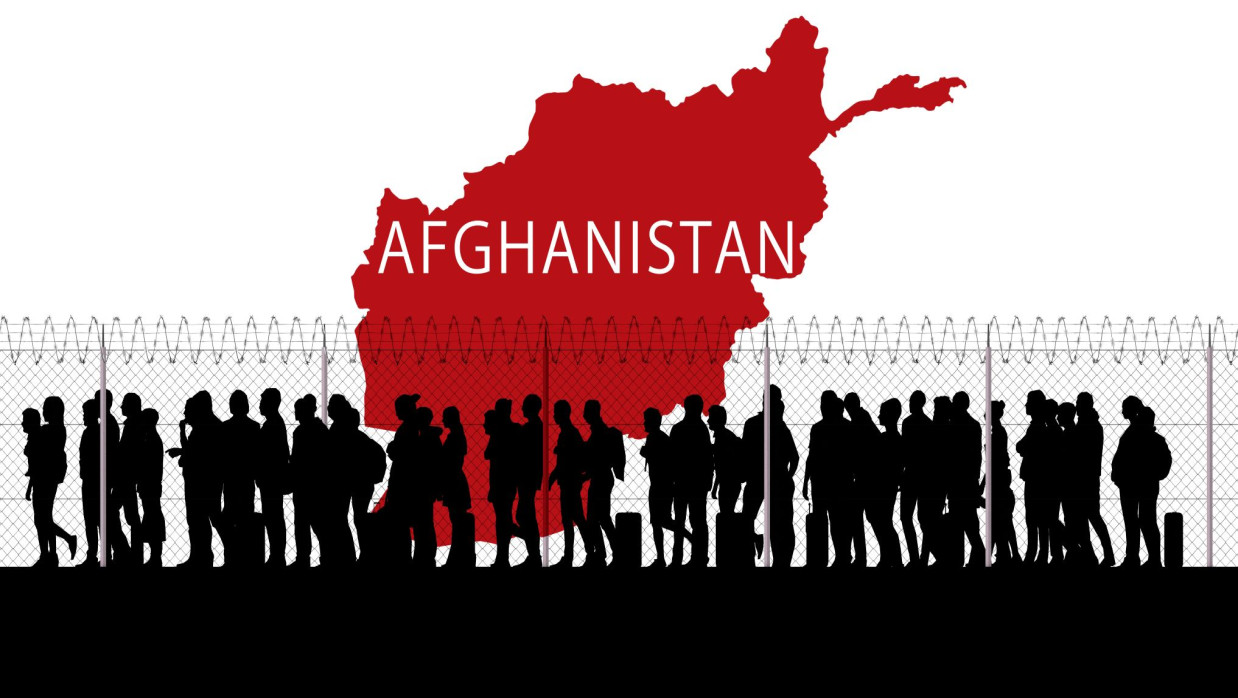
The United States Commission on International Religious Freedom (USCIRF) has officially recommended Afghanistan's designation as a "Country of Particular Concern" (CPC), citing severe and ongoing violations of religious freedoms under Taliban rule. The Commission’s designation underscores the systematic repression of religious minorities and the Taliban’s efforts to control and oppress the Afghan populace under the guise of religious piety. By weaponizing religion, the Taliban has created a regime that systematically undermines human rights, religious freedom, and social freedoms.
Taliban’s Authoritarian Rule
Under the Taliban’s authoritarian regime, religion has been distorted and weaponized to subjugate the people of Afghanistan. At the core of Taliban governance lies a twisted and perverse interpretation of Sharia law, one that seeks to suppress not only religious minorities but also Muslims who hold differing beliefs. Their authoritarianism is not based on the ideals of religious freedom or justice but rather on an ideological framework aimed at consolidating power and perpetuating oppression. The Taliban regime has positioned itself as a pious entity, but its actions are far removed from the teachings of Islam. Instead, the regime uses religion to legitimize its control over the Afghan population, using it as a tool to crush dissent and ensure subjugation.
The Taliban's newly introduced penal code has raised serious concerns about its compliance with international human rights standards, particularly concerning religious freedoms. This legal framework effectively denies the status of Muslim to anyone who does not follow the Hanafi school of thought, creating a system that places Muslims into different categories based on their adherence to a narrow and selective interpretation of Islam. This system is fundamentally at odds with the universality of Islamic teachings, which promote equality and justice for all followers of the faith.
The Taliban’s penal code enforces draconian measures, including corporal punishment and public executions, which are carried out without due process or legal safeguards. These punitive measures, deeply rooted in medieval tribal customs rather than Islamic principles, reflect the regime’s desire for control rather than an honest application of religious laws. Such punishments, including stoning, flogging, and public humiliation, are carried out as public spectacles, turning justice into a tool of terror rather than a means of social order. This authoritarian approach to justice reveals the Taliban's deep commitment to maintaining control through fear and violence rather than fairness and lawfulness.
Criminalization of Daily Life
The Taliban has extended its oppressive reach into virtually every aspect of daily life in Afghanistan. The regime has created a pervasive surveillance culture, monitored the private behaviors of citizens and imposed strict social norms. These regulations criminalize personal choices, such as the expression of religious beliefs outside of the narrow Sunni interpretation imposed by the Taliban. Non-Islamic religious practices are explicitly prohibited, and associations with "non-believers" are criminalized. This environment has led to systematic repression of minority religious communities, including Shia Muslims, Hindus, Sikhs, Ahmadiyyas, and Christians.
Religious minorities in Afghanistan face immense pressure to either convert to the dominant Sunni interpretation or endure persecution. Dissenting Muslims who do not adhere to the Taliban’s rigid interpretation of Sharia are similarly subjected to intimidation and punishment. This is not a matter of religious practice but of political control, as the Taliban seeks to erase any form of religious diversity in the country. In this atmosphere of repression, the concept of religious freedom is all but nonexistent, and the Taliban’s understanding of Islamic law is selectively applied to further their agenda of societal control.
Fate of Women and Girls
Perhaps one of the most egregious violations under the Taliban’s rule is its treatment of women and girls. The Taliban has imposed draconian measures that severely restrict the rights of women, barring them from participating in public life and severely limiting their freedom of movement. One of the most devastating policies has been the ban on education for girls above the age of 12. Under the Taliban’s interpretation of religious doctrine, women’s education is seen as unnecessary and even forbidden. This policy has effectively denied an entire generation of girls the opportunity to receive an education, depriving them of the basic human right to learn and develop.
Islamic teachings, however, grant women full rights to work, education, and movement. These principles are rooted in the Quran and the teachings of the Prophet Muhammad (PBUH), who advocated for the rights of women and their participation in society. The Taliban's interpretation of Sharia, which distorts these principles, has no basis in authentic Islamic teachings. The restrictions imposed on women are not a reflection of Islam, but rather a product of the Taliban's obscurantist mindset that seeks to control and repress women under the false guise of religious duty. The Taliban’s policies effectively enslave women, denying them the opportunity to contribute meaningfully to society and depriving them of their human dignity.
Radicalization of Educational Institutions
The Taliban has radicalized the country's madrassas (religious schools) to serve as vehicles for their ideological agenda. These institutions, once focused on providing basic religious education, are now being used to indoctrinate young minds into the Taliban's rigid and oppressive worldview. The regime’s so-called "morality law" institutionalizes this ideological stranglehold, enforcing strict behavioral codes and policing speech and public conduct. The Taliban’s education system serves not to enlighten but to control, shaping the next generation of Afghans to accept the status quo and perpetuate the regime's authoritarian rule.
In this context, education becomes a tool of repression rather than liberation. The focus is on obedience rather than critical thinking, with the goal of creating a society in which dissent is silenced, and conformity is enforced. This form of education has profound implications not only for the future of Afghanistan but for the broader Muslim world, as it distorts Islamic teachings and promotes a vision of society that is fundamentally at odds with the values of equality, justice, and human dignity.
Weaponization of Religion
The USCIRF’s designation of Afghanistan as a Country of Particular Concern underscores the fact that the Taliban has turned religion into a tool of oppression. Their use of religion to justify brutality, discrimination, and denial of basic human rights is a clear violation of religious freedom. Under the Taliban’s rule, Afghanistan has become a society in which religious freedoms are systematically denied, and the state uses faith as a pretext for its violent and authoritarian control.
The USCIRF's findings draw attention to the fact that the Taliban's actions do not reflect the true spirit of Islam. Rather, they represent an extreme and selective interpretation of Islamic law, one that seeks to justify human rights abuses and the repression of religious and political dissent. The Taliban's regime is not one of religious freedom, but of religious repression, where the very concept of faith is manipulated to serve the needs of the state rather than the needs of the people.

0 Comments
LEAVE A COMMENT
Your email address will not be published