

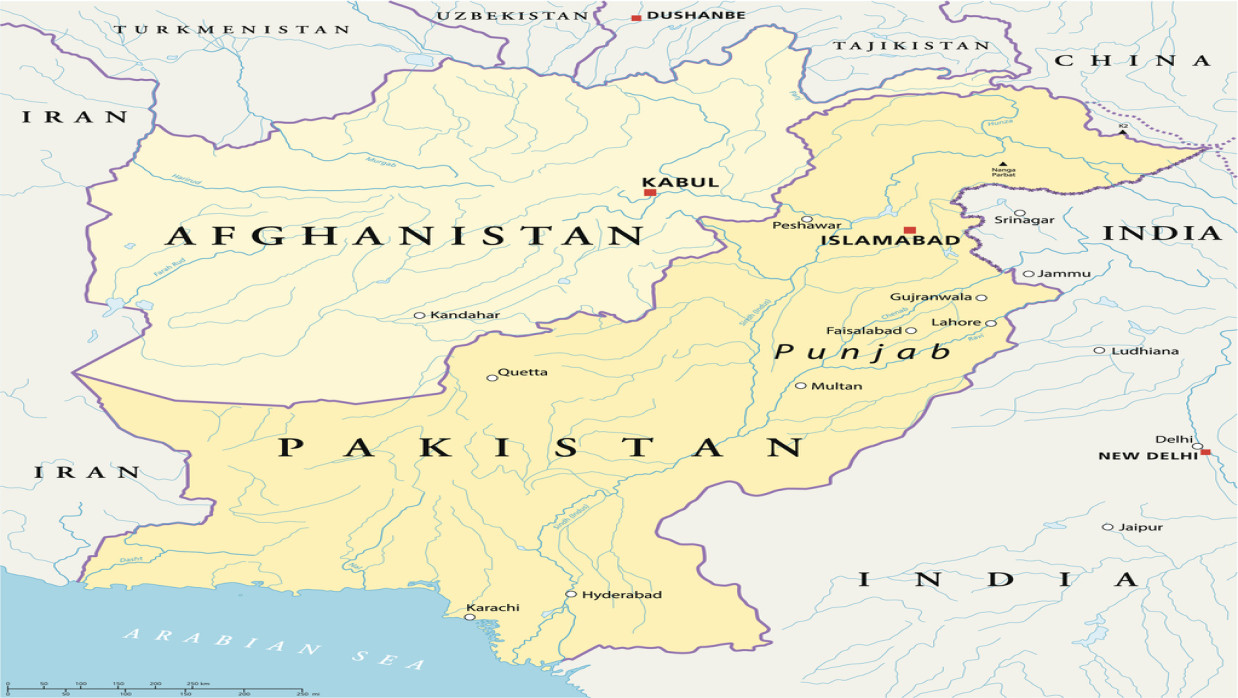
While Pakistan has historically been using coercive diplomacy against various regimes in Kabul, the new episode of Pakistan’s coercive diplomacy started with its surgical strike in Kabul and the eastern part of Afghanistan on October 9. However, this is not the only coercive tool Pakistan has used against the Taliban. The forcible repatriation of the Afghan refugees and the closing of the transit routes are other tools that Pakistan has used against the Taliban.
There is broad agreement that coercive diplomacy is a rational choice; I believe that Pakistan’s coercive diplomacy is the result of such calculations. Despite this, the evidence indicates that Pakistan is less likely to achieve its objectives through coercive diplomacy, underscoring the limitations of this approach and the need to reassess its effectiveness.
As a coercive tool, Pakistan closed its transit routes with Afghanistan in its ongoing conflict with the Taliban. The transit routes with Pakistan are critical for Afghanistan because Afghanistan relies heavily on these routes for its trade with India and the rest of the world. Afghanistan uses Karachi Port for its international trade and the land route for trade with India. Pakistan closed its transit routes with Afghanistan in October to pressure the Taliban.
The new episode of conflict between the Taliban and Pakistan started after Pakistan carried out a surgical strike in Kabul in October. This attack was followed by skirmishes over the Durand Line between the Taliban and Pakistan. However, after some calm in the fight and the failure in negotiation, Pakistan carried out several surgical strikes in Paktika, Khost, and Kunar provinces, in aerial attacks.
Taliban blamed Pakistan for these latest surgical attacks. Pakistan has denied the attacks, but it is widely believed that Pakistan carried out the strike. Although Qatar, Saudi Arabia, Turkey, and Iran have been engaged in efforts to find a permanent solution, the situation along the Durand Line remains unpredictable, which may concern audiences about regional stability.
Pakistan further turned up the screw and intensified the repatriation of the Afghan refugees after the conflict between the two countries gained greater momentum. Only in November, Pakistan repatriated around 241000 Afghan refugees. Before intensifying the repatriation, Pakistan developed a narrative of accusing Afghan refugees in Pakistan of their involvement in terrorist attacks in Pakistan. The decision to massively repatriate the Afghan refugees was to pressure the Taliban regime, which apparently was not considered to accommodate hundreds of thousands of refugees in the harsh winter. Afghan refugees have been living in Pakistan since 1980; they have established businesses and built lives there. This is by far the most intensive repatriation operation of the Afghan refugees by Pakistan. One can gauge the intensity of the operation from the fact that the refugees are repatriated in harsh winter, their houses are demolished simultaneously with the refugees' departure, they are not given time to wrap up their businesses, and the threat of force is accompanied by the fact that, in case the refugees do not leave Pakistan after the deadline they are given.
More importantly, Pakistan has been repatriating the Afghan refugees who possess valid refugee documents and has rejected the appeals of the international community to halt the deportation of Afghan refugees.
Pakistan has not accommodated all the requests for halting the repatriation, including the UNHCR’s(the United Nations High Commissioner for Refugees) concern about the repatriation of Afghan refugees with valid documents . UNHCR, in a statement, has said that since individuals with PoR(Proof of Registration) cards have long been recognized as refugees, forcing them to return contradicts Pakistan’s traditional humanitarian stance toward them and breaches the principle of non-refoulement.
Although it is not known how the Taliban will resettle the enormous number of repatriated Afghan refugees, the Taliban have not made any concessions to Pakistan as a result of this pressure. In addition, Pakistan has historically used the transit routes with Afghanistan as leverage to pressure Kabul. The Afghan governments have, in the past, mostly succumbed to this pressure.
It seems that these tactics of coercion, individually or collectively, have not forced the Taliban to comply, indicating their limited effectiveness. To support my argument, I draw on existing theoretical explanations, such as Jentleson and Whytock’s coercive diplomacy model, to evaluate Pakistan's approach and its likely failure. I classify the variables into two sets: those employed by Pakistan in coercive diplomacy and those related to the Taliban's capacity to deter such pressure.
The first variable used to evaluate the effectiveness of Pakistan’s coercive diplomacy is the proportionality. Proportionality is Pakistan’s demand for weightage relative to the needs it asks the Taliban to comply with. Although Pakistan’s needs have been changing in their intensity from time to time, the expulsion of the TTP from Afghanistan and guaranteeing Pakistan a security guarantee are two of the demands. Lately, these demands have morphed into a change in the Taliban regime. A careful observation of the demands versus the coercive diplomacy shows that none of these demands is easier to meet. In other words, the cost of Pakistan’s demands is higher than the cost of coercive diplomacy, expulsion of refugees, the surgical strikes by Pakistan, and the closure of the transit routes.
Reciprocity is another variable, meaning that both sides recognize that the rewards of cooperation depend on the target’s cooperation. The target must believe that they can obtain those rewards only by agreeing to and following the requests made of them. In this situation, Pakistan’s past policy towards Afghanistan is standing in the way of reciprocity. Taliban do not seem to trust Pakistan’s promises. This is the reason that the Taliban are asking for full guarantees of Pakistan’s non-intervention in Afghanistan, or at least not weaponizing the transit routes in the future.
Coercive credibility is the third variable, achieved when the coercing state successfully communicates to the target the costs of noncompliance. Pakistan has been less transparent about its coercive diplomacy in the past. It has denied any involvement in certain surgical operations it has previously performed. On the question of the refugees’ repatriation, Pakistan has multiple times backed away from its announcement of repatriating the Afghan refugees in the past. Similarly, Pakistan has violated its transit laws regarding transit routes to Afghanistan. These paradoxes have undermined Pakistan’s coercive credibility.
The second set of variables in this context concerns the target country’s capacity; specifically, it is the Taliban’s political and economic capacity. It seems that the Taliban are ready to take the risk. Taliban Deputy Prime Minister, Mula Biradar, asked the Afghan traders not to import any goods from Pakistan and wrap up their business deals in three months.
At the same time, the closure of the transit routes is not suitable for the Taliban politically and economically. However, the Taliban are after alternative routes. The Taliban believe that these routes will end Afghanistan’s dependency on Pakistan for transit in the long term.
The issue of transit had been a significant factor in Afghanistan-Pakistan relations. The respective Afghan governments have sought alternatives. President Ghani’s government made some tangible gains in finding alternative routes. While Ghani’s efforts to identify alternative routes were not very successful, they have changed the narrative that Pakistan’s transit routes are the only available ones.
While Pakistan has not publicly stated its intent to open its transit routes to Afghanistan, it has, however, made gestures toward doing so. Pakistan has publicly indicated that it is ready to open its borders so that the United Nations can deliver food supplies to Afghanistan.
As a part of its coercive diplomacy, Pakistan carried out a surgical strike in the second week of October. Pakistan claimed to have killed a TTP commander, Noor Wali Mehsud, in Kabul, but the claim proved to be false. This attracted condemnation, even within Pakistan, as a failure and challenged Pakistan’s ability to carry out such operations. Pakistan’s other strikes, which it denies claiming responsibility for, have also attracted condemnation from the international community. It is widely believed that the attacks have resulted in civilian casualties. UNAMA(United Nations Assistance Mission in Afghanistan) called for the protection of civilians.
Repatriating the Afghan refugee is a third component of Pakistan's coercive diplomacy. The Taliban seem to have considered refugees’ repatriation as a done deal. They do not appear to make concessions to the Pakistani side in their diplomatic efforts. So far, these developments demonstrate the Taliban’s resilience in the face of Pakistan’s coercive diplomacy.
Referring to Jentleson and Whytock’s model of coercive diplomacy, the model addresses the target countries’ elites but not the coercing state’s elites. In the case of our consideration, the elite's role in Pakistan is noticeable. Many Pakistani politicians, religious political parties, Pashtun nationalist parties, as well as mainstream political parties and business people have raised their voice against Pakistan’s coercive diplomacy. Afghanistan is not only a market for Pakistani goods but also offers the closest route to Central Asian markets. The traders in Khyber Pakhtunkhwa have criticized Pakistan for its use of the tool. Since Pakistani exports constitute a significant share of Pak-Afghan trade, the closure of transit will adversely affect Pakistani traders, particularly those in Khyber Pakhtunkhwa. It's because they cannot compete nationally with other Pakistani businessmen, and Afghanistan and the Central Asian markets are their only viable options. In a recent virtual meeting, traders from Afghanistan and Pakistan discussed the restoration of trade. There is no doubt that trade between the two states is not possible without opening the transit routes.
Whatever the reasons are, one can readily conclude that domestic dynamics, particularly among Pakistani elites, are partly responsible for the failure of Pakistan’s coercive diplomacy with Afghanistan.

0 Comments
LEAVE A COMMENT
Your email address will not be published