

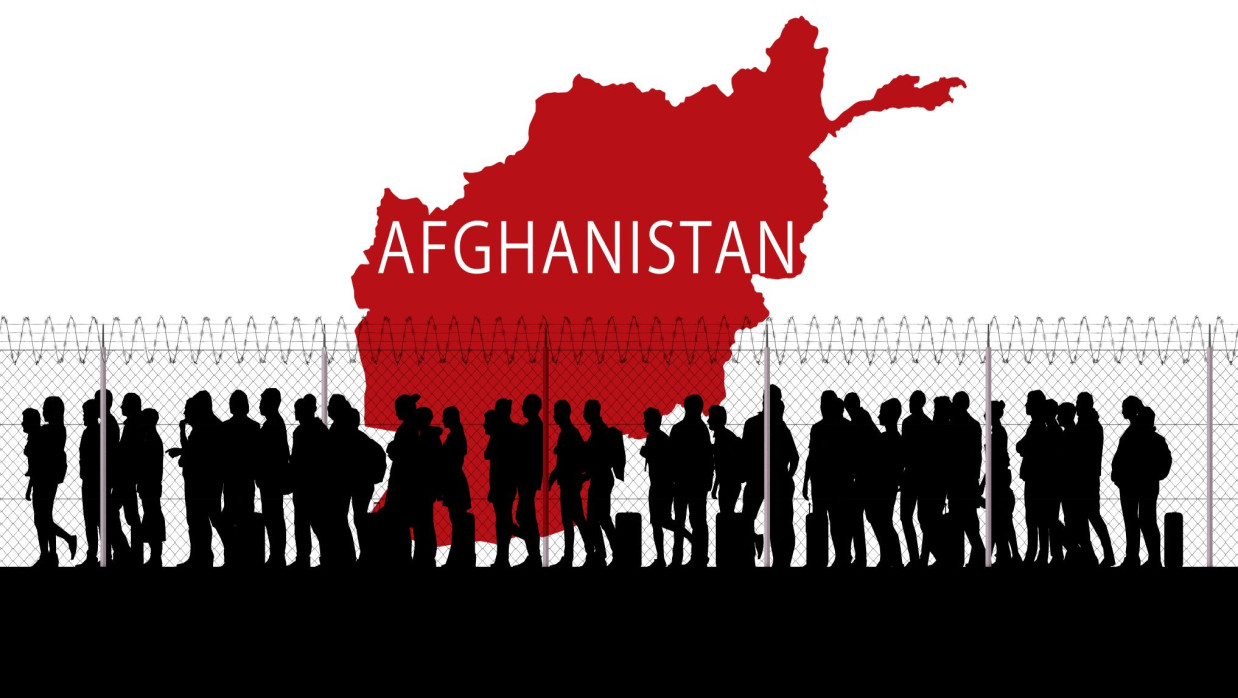
One of the first steps towards India's new policy regarding the Taliban and the Afghan government was the visit of Alhaj Nooruddin Azizi, the minister of Industry and Commerce of Afghanistan, to India. India had always been extremely firm against the Taliban in the past, seeing them as a unified threat and refusing to hold any formal talks with their leaders. For over twenty years the Indian governments have not only portrayed the Taliban as violent extremists but also as a source of instability in South Asia completely disregarding any dividing line that existed between the "good" and "bad" Taliban. However, this day India appears to be reversing its policy, changing a long-time red line into a strategic tool for political and economic gain.
Visit of Azizi is important for various reasons. He belongs to the area of Panjshir, which has always been the main place for fighting against the Taliban and has been a site of conflict during the Soviet occupation. By making contact with Azizi, India is trying to get access to the Taliban regime in Afghanistan in a covert manner while still allowing the option of strategic denial. New Delhi's involvement with people like Azizi shows that its previous stance of complete non-acceptance has now turned into a situation where ideology and opportunity are weighed against each other and selective engagement has replaced total non-acceptance.
This reshuffling is happening as the dynamics along the Pakistan-Afghanistan border are changing where old security worries still exist. Under these circumstances, India has been running a media campaign that depicts its dealings with Afghan officials as essential for the stability and trade of the region. Nevertheless, detractors suggest that this story completely ignores the history of Pakistan's peace and cooperation promotion at the border. Just as India lands up engaging with Taliban-affiliated factions purely for strategic and economic benefits, Pakistan still keeps security, human rights, and regional stability on top of its agenda, pointing to the dangers entailed in India's abrupt policy and selective engagement.
The earlier Indian doctrine expressed through 2007 and 2021 consistently refused to categorize the Taliban into factions. The then foreign minister Pranab Mukherjee in 2007 made it clear that the Taliban's ideology was violence and hence there could not be any distinction between “good” and “bad” elements. The Indian security establishment took this same stand on the issue, opposing the countries’ efforts to involve the Taliban in the peace process in Afghanistan. Even Prime Minister Narendra Modi, in 2015, described the idea of differentiating Taliban groups as a choice between terrorism and humanity in asking for the country’s moral support. During this time, India’s official speech represented the Taliban as a dangerous factor to democracy, human rights, and regional stability, therefore, engagement was neither morally nor strategically proper.
The year is now 2025 and the procedure for decision-making has gotten a makeover. India is already using the Taliban-led Afghanistan as a source of business, investment, and political influence due to Azizi's visit and the related diplomatic activities. The staff from the Taliban-connected government is getting recognition in India's political and economic spheres. This shows a practical and interest-based approach. The media, in this context, is interpreting the situation in a way that accentuates this transformation. It not only calls India the region's stabilizer but also relates the tale of the selective legitimization of Taliban officials, and depicts the outreach as a necessity for the securing of economic corridors and the containing of Pakistani influence.
This particular tactic triggers doubt regarding the strategical consistency. For more than a decade, India turned the Taliban narrative into a weapon to point out Pakistan as a supporter of terrorism. At this moment, India is talking to persons and groups that are part of the movement it formerly demonized. The international community's concerns about human rights, especially with respect to the Taliban's dealing with women and the curtailment of political rights, seem to be put on the back burner in favor of strategic and economic gains. The doctrinal inflexibility that characterized Indian foreign relations has given way to a pragmatic, comfort-based approach.
The transformation from a geopolitical point of view not only brought about challenges but also opened up a window for good things. On the one hand, India has a way to affect the situation in Afghanistan and keep the upper hand on the trade routes among the regions, and on the other hand, Pakistan can expose the contradictions in Indian policy, thus weakening India's claim to be a morally righteous power in the international arena. Furthermore, India’s shift illustrates the gradual acceptance of a general rule by countries: when vital interests are at stake, moral or ideological principles are less important than strategic pragmatism in most cases.
In conclusion, India's connection with the Taliban-associated Afghan authorities, symbolized by Azizi's trip, is a sign of a practical change in the country's policy. The nation is artfully managing its previously established non-negotiable points along with the new challenges that come with the changed world situation, and is portraying its involvement as a source of the stable and better economy for the entire region. This transformation might give India more power in Kabul, but it also reveals the struggle between moral ground and practical policies, showing that national interests can sweep away even the longest lasting doctrinal stillness when the situation states so.


0 Comments
LEAVE A COMMENT
Your email address will not be published