

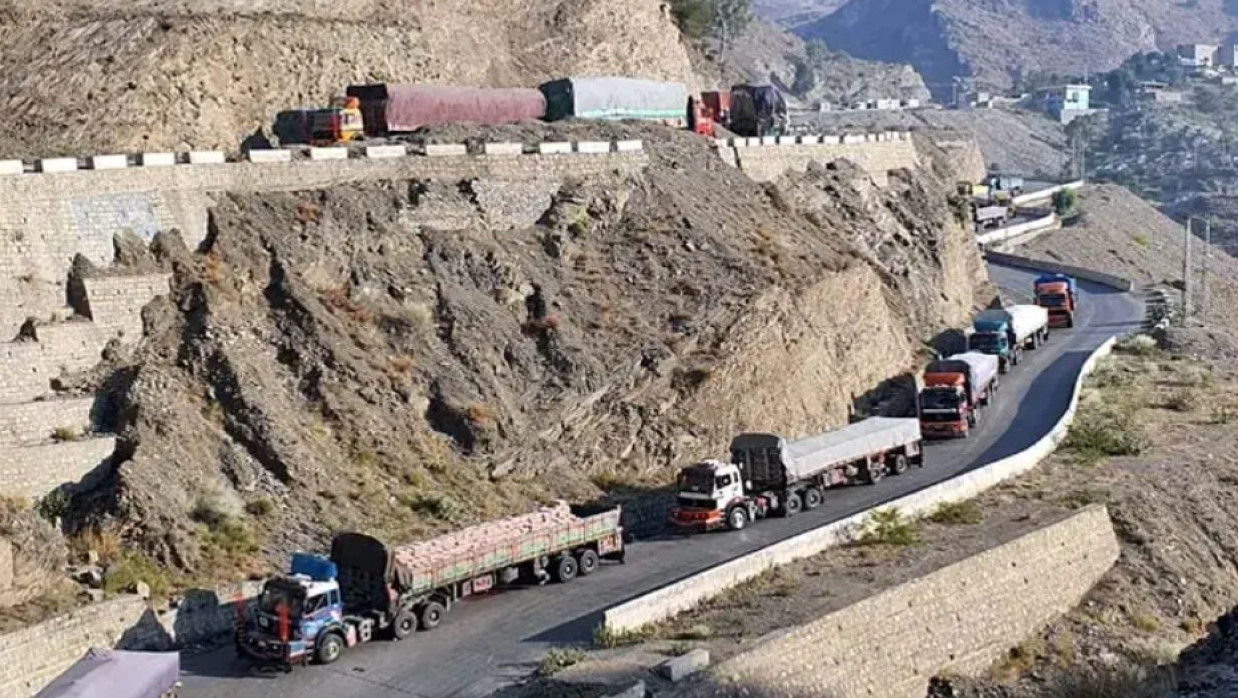
KARACHI: Following the closure of the Pakistan-Afghanistan border on Oct 11 amid rising tensions between the two countries, stakeholders have offered mixed views on its impact on trade, while analysts warn of more pressure on Pakistan’s exports if the deadlock persists.
At the same time, some analysts believe the closure may slow the influx of smuggled goods into Pakistan from Afghan territory.
Cement and coal
A cement manufacturer said imports of Afghan coal and cement exports to Afghanistan have come to a standstill. As a result, the price of Darra (local coal) has risen to Rs42,000-45,000 per tonne from Rs30,000-32,000, while Afghan coal — previously priced at Rs30,000-38,000 per tonne — is no longer available.
With cement makers in the southern zone already using imported coal, mills in the northern region, which had been relying heavily on Afghan coal, are now shifting to imports from South Africa, as well as Indonesia and Mozambique.
Coal, used as an alternative fuel for firing the kiln, is consumed in large quantities by the cement sector, which requires around four million tonnes a year.
Cement, pharma, fruit exporters count losses amid prolonged deadlock
The manufacturer ruled out using Iran as an alternative route for exporting cement or importing coal, citing the absence of banking channels between Pakistan and Iran and the impracticality of moving four million tonnes of coal through that route, while smuggling was also not possible on such a huge volume.
He said Afghanistan accounts for about seven per cent of Pakistan’s total cement exports.
According to Topline Securities, D.G. Khan Cement told investors in a corporate briefing that imported coal currently costs around $90-100 per tonne and that the company will continue to rely largely on imported coal, as Afghan coal is not being used due to the border situation.
Some cement makers have started importing RB2, a mid-range coal grade that balances price and quality.
Insight Research said the cement sector is among the most exposed to the border disruption because of its reliance on exports to Afghanistan and Afghan coal. From a sales perspective, Cherat Cement, Fauji Cement and Maple Leaf Cement are expected to be hit the hardest, with exports to Afghanistan contributing around 9.8pc, 5.8pc and 3.1pc of their revenues, respectively.
Medicines
Dr Kaiser Waheed, former chairman of the Pakistan Pharmaceutical Manufacturers Association (PPMA), said that out of Pakistan’s total exports of $1.8 billion to Afghanistan, including all merchandise, medicines account for about $187 million.
“The volume of medicine exports through informal channels is three times higher than the volume shipped through legal channels,” he claimed, adding that stakeholders in Khyber Pakhtunkhwa were the main beneficiaries as Afghan buyers travel to the province to procure and carry back goods.
Exporters are concerned over the build-up of consignments at their manufacturing units waiting for the border to reopen. If the closure persists, one option would be to divert medicines to local markets, but many of the products exported to Afghanistan are not used in Pakistan, he said.
According to Topline Securities, The Searle Pakistan said in a corporate briefing that the projected impact of a full-year border closure on its exports to Afghanistan would be around Rs2bn.
Insight Research noted that while both countries have experienced multiple border closures in recent years, the situation has escalated after Afghanistan announced a three-month ban on medicine imports from Pakistan.
It said exports to Afghanistan by some five listed pharmaceutical companies contribute between 1.9pc and 8.1pc of their revenues, with overall exposure for certain firms ranging from one per cent to as high as 45pc.
Former president of the Pakistan-Afghanistan Joint Chamber of Commerce and Industry (PAJCCI) Qazi Zahid Hussain said about 700 to 750 loaded containers are stranded at Chaman and 350 to 400 at Torkham, awaiting clearance into Afghanistan after the two-way trade closure.
He added that more than 9,000 containers carrying various items are stuck at different Pakistani ports waiting to be cleared for onward shipment to Afghanistan, including over 500 containers destined for Commonwealth of Independent States (CIS) countries, such as Armenia, Azerbaijan and Kazakhstan.
Vegetables and fruits
Waheed Ahmed, patron-in-chief of the All Pakistan Fruits and Vegetables Exporters, Importers and Merchants Association (PFVA), said Pakistan exports bananas, potatoes, kinnow and mangoes during the season to Afghanistan, while also using Afghan routes to reach CIS markets.
He said Pakistan’s exports of fruits and vegetables to Afghanistan and CIS countries amount to around $150m annually. At the same time, Pakistan imports tomatoes, onions, pomegranates, grapes and apricots from Afghanistan.
Following the halt in two-way trade, he said stakeholders were forced either to divert containers of perishable goods to domestic markets at distressed prices or destroy them when they spoiled.
Efforts are under way to send shipments to Afghanistan via Iran, and a meeting was held at the Ministry of National Food Security and Research last week to explore options, he said.
Exporters, however, require financial instruments from commercial banks if they are to use the Iran route, but there is currently a ban on issuing such instruments, he added.
PAJCCI president Junaid Makda, referring to projected kinnow exports, said the State Bank of Pakistan (SBP) on Nov 19 declined a request to exempt the financial instrument requirement for exports to Iran and CIS countries via Iran.
Mr Makda described the overall situation as alarming, noting that many truck drivers have been stranded in Afghanistan for weeks and some vehicles have come under attack. The drivers, he said, face food shortages, cash constraints and worsening living conditions.
Karachi Welfare Fruits Association President Abdul Qadeem Agha said pomegranates are now arriving mainly from Iran instead of Afghanistan, with wholesale prices rising to Rs4,000-4,500 per 10kg carton from Rs2,000-2,500 before the suspension of Pak-Afghan trade. Supplies from Quetta and parts of Balochistan have dried up, he added.
He said Iranian red apples and grapes are also finding their way into the market, with wholesale prices at Rs2,000-3,000 per 10kg carton. Around 15-20 containers of various Iranian fruits are currently arriving daily at the wholesale market, he added.
Ghee, cooking oil, flour
Pakistan Vanaspati Manufacturers Association (PVMA) Chairman Sheikh Umer Rehan said that before the suspension of two-way trade, some exporters were sending 6,000-8,000 tonnes of ghee per month to Afghanistan through formal channels, while exports of cooking oil were negligible.
Aamir Abdullah, former chairman of the Pakistan Flour Mills Association (PFMA) Sindh zone, said that only a very nominal quantity of flour varieties had been moving from Pakistan to Afghanistan over the past three to four years.
He said Pakistan does not export wheat to Afghanistan, which now procures most of its grain from Russia, Turkmenistan and Kazakhstan.
“In reality, we have lost the Afghan market for wheat and flour products, as well as the foreign exchange earnings,” he said.
The article appeared in the dawn
0 Comments
LEAVE A COMMENT
Your email address will not be published