

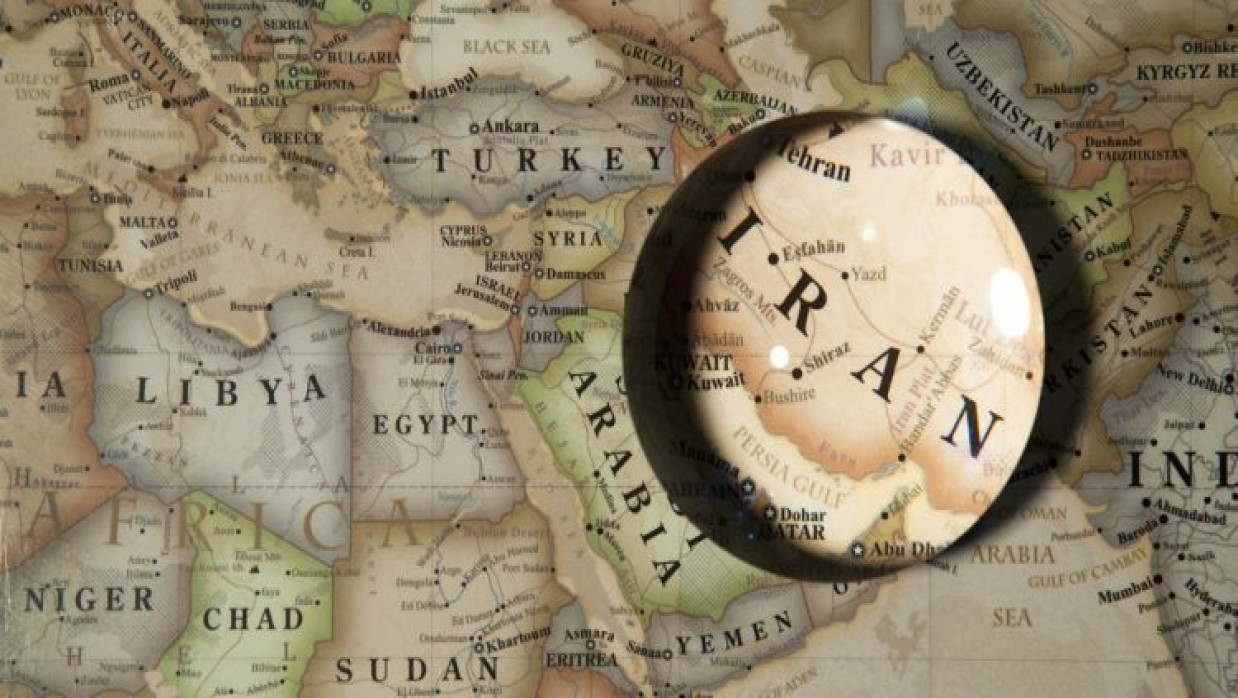
For decades, Iran has sought to reduce the military presence and political influence of the United States in the Middle East. Tehran’s leaders have frequently described American bases in the Persian Gulf as sources of instability, instruments of coercion, and obstacles to the emergence of an independent regional security order. Yet Iran’s recent attacks against Arab Gulf states may have produced precisely the opposite result: instead of weakening Washington’s regional role, they have reinforced the Gulf monarchies’ dependence on American protection.
The Failure of Forward Defense
Iran’s traditional security doctrine rested on “forward defense,” building influence through allied governments and armed movements beyond its borders so that threats could be confronted before reaching Iranian territory. Tehran viewed its partnerships in Lebanon, Syria, Iraq and Yemen as strategic depth against Israel and the United States.
But what Tehran saw as deterrence, Arab rulers often saw as a land-grabbing agenda aimed at achieving Iranian supremacy in the region. Iran-aligned militias' missile and drone developments further heightened those anxieties. Gulf nations dramatically increased their spending on Western arms, intelligence-sharing and missile-defense capabilities as a result.
The recent Iranian attacks against Gulf states that host or support American forces seemed designed to show that the U.S. presence brings instability instead of safety. Tehran apparently wants Arab governments to realize that permitting U.S. strikes from their soil only invites retribution and that cooperation with Iran would be wise.
This approach overlooks entrenched regional suspicions. States confronted with an acute threat do not typically start by distancing themselves from their most reliable security guarantor. They usually demand more guarantees, more arms and tighter security partnerships. While Iran’s strikes showed that America’s security umbrella is not impenetrable, they also underscored for Gulf leaders that there are few viable substitutes.
China is now the Gulf's biggest trading partner and has also increased its diplomatic engagement with the region, such as brokering the 2023 Saudi-Iranian rapprochement. However, China does not possess the regional military footprint or seem to have the will to displace the United States as the Gulf's security provider. While Beijing might welcome diplomatic mediation efforts, China does not appear keen on shouldering the burden and costs of defending the Gulf states.
Deterrence, Diplomacy and the Gulf Response
The Gulf response is unlikely to be a simple return to unquestioned American dependence. Recent attacks have also exposed the dangers of becoming entangled in conflicts initiated by outside powers. Gulf leaders will therefore continue pursuing a diversified strategy: maintaining American security ties, developing indigenous defense capabilities, engaging China economically and keeping diplomatic channels open with Tehran.
Take the United Arab Emirates. Concerns about Iran were a major factor in Abu Dhabi’s decision to normalize with Israel under the Abraham Accords and deepen its security cooperation with Jerusalem. Yet the UAE has also sought to repair relations with Tehran and protect its own economic interests. It has pursued a policy of deterrence and dialogue, rather than privileging one at the expense of the other.
Qatar's behavior has been similar. Even though it was attacked during the conflict, Doha has not cozied up to Tehran and abandoned its relationship with Washington. Rather, Qatar has sought greater security guarantees and maintained its role as mediator. This indicates that Iranian pressure could actually increase American value even if Gulf states are frustrated with Washington.
The irony is all the more significant because the Trump administration's national-security strategy has focused on pushing regional partners to do more for themselves. Burden-sharing and a Middle East defined by local states playing a larger role in sustaining order top the list of goals in the 2025 U.S. National Security Strategy. Iran would stand to gain from this shift if it positioned itself as a constructive stakeholder in regional security. By increasing pressure on its neighbors, the U.S. only incentivizes them to keep America involved and bolster coalitions that aim to check Iran.
Pakistan’s Increasingly Difficult Position
Pakistan is starting to play a significant role in this evolving landscape. Pakistan signed a Strategic Mutual Defense Agreement with Saudi Arabia in September 2025; Kuwait also ratified a new and expansive defense- cooperation agreement with Pakistan last month. Conversations have also reportedly taken place about broadening security cooperation between Pakistan and Kuwait, but specifics are still being negotiated.
At the same time, Pakistan has attempted to facilitate communication between Tehran and Washington. China may support Islamabad’s diplomatic role, but it would be premature to conclude that Pakistan’s mediation is directed from Beijing. Pakistan has its own reasons for preventing escalation: it shares a long border with Iran, depends heavily on Gulf economic partnerships and remittances, and cannot afford a wider regional war.
Continued Iranian pressure on Gulf states could therefore place Islamabad in an increasingly uncomfortable position. Pakistan wants constructive relations with Iran, but it also has longstanding defense, economic and human connections with Saudi Arabia and other Gulf monarchies. If those states face sustained Iranian coercion, Pakistan may be drawn more firmly into arrangements designed to reassure them. Over time, Iranian attacks could also weaken public sympathy for Iran within Pakistan.
From Coercion to Shared Prosperity
Iran has shown time and again it can weather sanctions, flex its regional muscles and restrict shipping through the Strait of Hormuz. Continuing to do so serves little purpose these days. Posturing against ships, energy infrastructure and regional nations only encourages them to prepare to defend themselves.
Iran's anti-Israel stance hasn't bought it any friends either. While Iran has tried to position itself as a leader of an Arab-Palestinian struggle against Israel, as long as Iran is perceived by Arab governments to threaten their very existence, they will always put their national interests over pan-Palestinian solidarity. Moreover, Tehran's actions have actually driven some Arabs into Israel's arms.
A less adversarial approach would not ask Iran to give up legitimate defensive postures or interests. It would trade coercive leverage for reassurance, economic interdependence and functional cooperation. Iran and the Gulf states have strong interests in common, including maritime security, energy stability, commerce and regional integration.
Should Tehran really want a Middle East free of foreign influence, it will need to persuade its neighbors that Iranian might will not be turned on them. Confidence and self-interest, not the constant threat of coercion, earn you lasting influence. And continual displays of force don't teach your neighbors to cede; they teach them to arm.


0 Comments
LEAVE A COMMENT
Your email address will not be published