

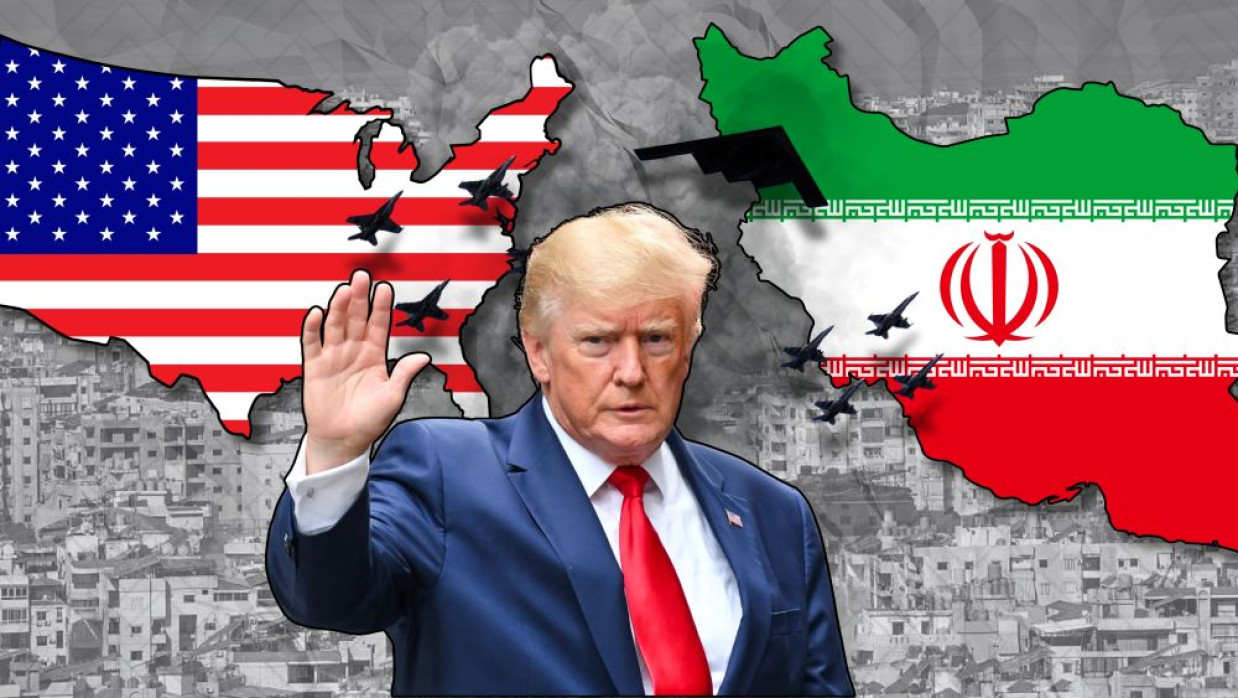
If global media was at command of superpower, President Donald Trump would have probably taken little time to convince the world about credibility of US-Israel war against Iran. Trump is certainly giving substantial importance to communication strategies. However, the power of communication is not enjoyed just by him. The Iran-war may also be viewed as an eye-opener to its role at various levels. Trump himself doesn’t seem too confident of which tool may help US hold stronger ground against Iran, war-strikes or diplomacy? During recent international gatherings, Trump expressed quite bluntly about being disappointed at not being supported by US allies against Iran. He probably expected western allies and also several Arab countries to join US in war against Iran. But his own strategic calculations on this front have failed him. On sidelines of NATO Summit, asserting that US-Iran Memorandum of Understanding (MoU) was “over,” Trump suggested that negotiations could continue. MoU was inked on June 17 to end war.
Till United States and Israel decided to begin war against Iran, the gulf between several Arab countries and Iran seemed fairly obvious. Undeniably, during the course of the war, when Iran chose to strike against few of these nations, on account of their being US bases, they did react diplomatically. Yet, United States’ attempt to involve them in its conflict with Iran failed. They chose to maintain their distance. They also were fairly agitated at being drawn to feel the impact of a conflict, they were not in favor of and also not prepared for. If Trump assumed that Iran-war would instantly compel its rivals in the region to abide by US dictates, he was proved wrong. If the war also aimed to increase the gulf between Iran and its neighbors, this doesn’t seem to be the impact.
The massive gathering for the funeral of Iran’s Supreme leader Ayatollah Ali Khamenei appears to have further shattered illusions entertained by Trump. Stunned by crowd of millions crying at his funeral, Trump said that he thought Iranians hated Khamenei. This comment also suggests that his moves against Iran have probably been based on his limited information about the country, it’s people, the government and a lot more. Trump had apparently expected Iranians to welcome and support US strikes against Iran. He probably looked forward to their going all out, in support of US strikes, to overthrow their leaders. Symbolically, the funeral also send a strong message of “unity” among Iranians. The diplomatic message behind decision of several Arab countries, particularly Saudi Arabia and Qatar, to officially attend the funeral of Iran’s supreme leader cannot be missed. They attended the funeral of the supreme leader assassinated on the first day of US-Israel strikes against Iran. They gave greater importance to their presence at the funeral and perhaps none to what superpower viewed the same as.
Equally significant is substantial coverage given by Arab media to funeral procession. The issue is not just of there being a Shia population in all Arab countries, which cannot be ignored. More significantly, it symbolizes some mark of support for Iranians displaying their unity in the funeral procession. Besides, these countries probably didn’t want to stand out by not participating in the funeral and not according it coverage.
Trump was not prepared for such a massive funeral gathering. He chose to initiate war against Iran on Feb 28 probably more by Israeli Prime Minister Benjamin Netanyahu’s assumption that Iran would be defeated in a few days. From day one, his Iran-strategy has been pushed by diplomatic illusions, which haven’t held weight for too long. He opted for the war without taking either regional or western allies into confidence. He apparently hoped to spell a great surprise for them by emerging as a major winner, on whom depended the fate of Iran, its reserves and perhaps Hormuz also.
Refusing to be convinced by Iranians crying at Khamenei’s funeral, he deliberated on their tears being “fake.” Trump’s views about Iran have rested primarily on his own opinion and not what they actually may be. This is suggestive of a communication gap having prevailed from the beginning between his assumptions and actual standing of Iran. This has led to his moves basically rest on his own opinion, even if they be based on false and/or manipulated information.
However convinced Trump and his close associates may have been about necessity of US-Israel strikes against Iran, they erred on one key front. This refers to role of media. True, there was a phase, around two-three decades ago, when greater part of the world was easily convinced by what the superpower promoted. That was also the phase when so many outlets of media had not emerged in numerous countries. As a result, there prevailed the trend to be easily convinced by what western media gave importance to. Thus, it may be recalled when United States talked about spreading Arab Spring in the interest of democracy, this was then barely questioned. But it didn’t take long for critics to paint Arab Spring as Arab Winter and question as to how could democracy be promoted by external powers, that too with use of weapons. Over the years, as impact of media started assuming greater significance in various regions, western media ceased to have the commanding influence it earlier had. During this period, decisive shift is visible in role of media as well as commanding power of US as a superpower. As suggested earlier, the latter was barely questioned during phase of Arab Spring. The same may be said about what was promoted by western media. In contrast, US-Israel war against Iran has not been spared criticism.
People’s awareness about Iran-war is not limited to what the US media spreads and/or Trump states. Regional as well as numerous global/national sources of information are playing their part in questioning the war. These have played a revolutionary role in not blindly believing and/or being convinced particularly by United States’ war-moves. But Trump apparently has still not accepted this hard fact.
Role of media as well as power of communication can no longer be ignored by rulers, whether democratic or not. People in general have not supported US-Israel war against Iran. If Trump is hopeful, that latest exchange between US and Iran will prompt at least a few Arab countries to join the war, chances are limited, at least at present. Diplomatic caution being exercised by Arab rulers cannot be ignored. While they have not refrained from criticizing Iran’s strikes and its control of Hormuz, they have not gone overboard in supporting US and Israel. They cannot afford to ignore people’s voice and power of media, which is no longer confined to their own domains. Guided by competition, media cannot ignore what appeals more to people, the majority of whom are against war. Trump does have command over media but to a degree. There is no guarantee that it will prevail over people’s voice and vote, which media cannot ignore!


0 Comments
LEAVE A COMMENT
Your email address will not be published