

Introduction: A Nuclear Pivot State Under Stress
Pakistan's strategic location gives it a central role in the modern international order. Home to over 240 million people and hosting one of the fastest-growing nuclear weapons programs in the world, Pakistan straddles South Asia, the Middle East, and Central Asia. Beyond bestowing intrinsic value on it, this location compounds many of the perilous trends Pakistan faces today. Whether domestic political fragmentation, economic uncertainty, climate change, or great-power tensions, Pakistan is a critical state that, if allowed to collapse, would have grave implications for global security. For that reason, Pakistan has been called a "ticking time bomb" for regional stability by many analysts.
Pakistan's burgeoning relationship with Saudi Arabia is a geopolitical shockwave that will have ramifications throughout the Middle East. In 2025, Pakistan and Saudi Arabia unveiled a landmark Strategic Mutual Defense Agreement, which was swiftly enacted by the arrival of the first Pakistani troop deployment to Saudi Arabia in January 2026. However, this partnership extends far beyond.
Pakistan and Saudi Arabia have maintained a close military relationship for over 60 years, owing to vast economic ties and a mutual distrust of Iran. To comprehend the full impact of this alliance, we'll need to analyze Pakistan's economy, Saudi Arabia's defense initiatives, military bilaterality, both states' nuclear ambiguity, and much more.
Pakistan's Economic Woes and Strategic Dependency
Pakistan has suffered from chronic deficits and a weak economy with repeated episodes of crises. Although Pakistan has never defaulted, thanks to occasional IMF bailouts, it has never been able to permanently reform its economy. It has endured periods of unbearable austerity through government spending restrictions, thereby constraining growth. Reserves are often subject to rapid depletion if imports rise, and exports have failed to keep pace with those of competitors such as Bangladesh and Vietnam. Rising food prices have eroded middle- and lower-class incomes, placing Pakistan at risk of social unrest. Youth unemployment also poses a major problem in the future as the country's population rapidly grows. Weather events such as the recent floods have caused trillions of dollars of damage that Pakistan was unable to afford. The flooding also reduced the amount of crops exported. The damage from these floods could potentially lead to greater domestic migration in the future. Political discord between the civilian government and military, questions over the fairness of elections, and perceived policy U-turns have hindered investor confidence. Therefore, Pakistan relies on foreign partnerships to keep its economy afloat. As Pakistan continues to have tense relations with India, it will likely look to China and Saudi Arabia for economic support. In July 2026, Saudi Arabia committed to extending its deposits in Pakistan and investing $8 billion in the Pakistani economy. Considering Pakistan's chronic current account deficits, Saudi investment should be viewed less as generosity and more as an insurance policy to maintain Islamabad's favor toward Riyadh's security objectives.
Saudi Arabia's Defense Systems and Strategic Transformation
As Western powers have traditionally protected Saudi Arabia, it has diversified its security alliances over the last decade and focused on building its military forces. In particular, Saudi Arabia has learned from attacks on Saudi oil fields and other critical infrastructure and realized that just relying on American protection is not enough to deter enemies due to a lack of credibility. As such, Saudi Arabia has sought to improve its air defenses by purchasing Patriot missiles, THAAD missile batteries, and radar systems, and has begun strengthening ties with militaries in the Muslim world to bolster them. Pakistan supplied LY-80 and FM-90 surface-to-air missile batteries to Saudi Arabia in 2026, which were integrated into Saudi Arabia's air defense system. This modernization includes Saudi Arabia's Air Force, which can currently deploy fighter jets such as the F-15 and Eurofighter Typhoon for airstrikes.
Pakistan's Contribution to Saudi Arabia's Security Architecture
Pakistan and Saudi Arabia's defense ties date back many decades, before any similar official alliance. When Saudi Arabia first sought military trainers and advisers during the early stages of the Cold War, it received political support from Western countries. Still, it lacked trainers until Pakistan was invited to assist. Pakistani officers assisted in training Saudi nationals who would go on to establish the Royal Saudi Air Force, and they continued training them during the early years. Pakistan then signed a defense cooperation agreement with Saudi Arabia in 1967, which allowed Pakistanis to maintain a military presence in the country. In the following years, Pakistani forces helped guard key oil facilities in Saudi Arabia's Eastern Province and provided training for Saudi military units.
Pakistan also sent forces to protect Saudi Arabia against the perceived threat of Iraqi aggression during the Gulf War in 1991. Another cornerstone that cemented military cooperation was the establishment of the Saudi-Pakistan Armed Forces Organization in 1982. It remains one of Saudi Arabia's oldest military alliances as of 2000.
In May 2026, Saudi Arabia invited thousands of Pakistani soldiers and fighter jets from the Pakistani Air Force to help defend the kingdom. Approximately 13,000 Pakistani soldiers, along with Patriot air defense batteries, were deployed, as well as several Pakistani F-16 Fighting Falcons. Pakistan agreed to provide missile-defense support by connecting its air-defense grid with the Saudi grid following recent attacks on Saudi oil facilities. Pakistani officials reiterated that Islamabad's commitment to Saudi Arabia extended beyond trainers and teachers.
Saudi Arabia's Contribution to Pakistan's Stability
Saudi Arabia has been supporting Pakistan on many levels, including economic, diplomatic, and military assistance. Saudi Arabia has helped Pakistan during times of balance-of-payments crises by supplying oil on deferred payment terms. Thus helping Pakistan in saving its foreign currency reserves. Saudi deposits in the Central Bank of Pakistan have also helped the PKR when it faced devaluation.
Millions of Pakistanis working in Saudi Arabia send back remittances, which are one of Pakistan's major sources of foreign exchange. Saudi development assistance has helped Pakistan complete several infrastructure projects and finance energy projects.
It is also believed that Saudi Arabia helped Pakistan build up its nuclear arsenal when Pakistan was secretly developing nuclear weapons after 1972. Although there has been no official statement from Saudi Arabia on this matter, such claims have continued to emerge.
Saudi Arabia once again helped Pakistan by providing a package of around $8 billion in 2026. When Saudi Arabia rolled over its deposits and provided financial aid to Pakistan, this helped Pakistan avoid macroeconomic uncertainty and also cemented hopes that Pakistan would continue its involvement in the alliance.
The Strategic Mutual Defense Agreement of 2025
The bilateral Strategic Mutual Defense Partnership, signed by Saudi Crown Prince Mohammed bin Salman and Prime Minister Shehbaz Sharif, marks a new chapter in the deepening ties between Saudi Arabia and Pakistan. This includes a clause stating that each nation will regard an attack against the other as an attack against itself, which means a form of collective defense pact now exists in the Muslim world.
Pakistan's leaders immediately dismissed the notion that the agreement implied a nuclear-security guarantee to Saudi Arabia. But confusion over the reference to "all military means" left analysts questioning whether any assurances had been offered. The agreement's text was not made publicly available, nor was it presented to Parliament.
Either way, the new agreement alters the strategic calculus as Saudi Arabia now knows it has someone to turn to should it feel threatened.
China's Shadow Role in the Saudi–Pakistan Axis
China has increased its influence in Pakistan through the China–Pakistan Economic Corridor (CPEC), which has become one of the indirect connections between Saudi Arabia and Pakistan. China seeks access to the Arabian Sea via Gwadar Port in Pakistan and wants pipelines through Pakistan so it does not have to transit the Strait of Malacca. China also supplies a large amount of Pakistan's military hardware. Therefore, Pakistan's sale of missile defense systems to Saudi Arabia has allowed Chinese military equipment to enter Gulf countries indirectly. However, Chinese tolerance is starting to wear thin on Pakistan after China faced attacks on its workers in Pakistan. China wants to continue its partnership with Pakistan, but it will not take on the role that Saudi Arabia wants if war were to break out.
The Nuclear Dimension and Strategic Ambiguity
Pakistan's nuclear capability is undoubtedly the central feature of its ties with Saudi Arabia. While there is no concrete proof of nuclear-sharing understandings, widespread belief about the existence of some form of tacit deterrence bargain shapes security dynamics in the region.
Iran must consider Saudi options to seek Pakistani nuclear umbrella eventually; Israel worries about a wider Islamic bomb alliance; and the United States faces renewed challenges to its long-held nonproliferation goals in the Middle East.
Pakistan's nuclear status thus serves as both a strategic asset and a diplomatic tool, as well as a cause of concern for other countries fearful of nuclear proliferation.
Iran's Strategic Calculus in Response to the Alliance
If Iran were to attack Pakistani military installations in Saudi Arabia, it could activate the mutual-defense provisions of the Pakistan–Saudi Strategic Mutual Defense Agreement, potentially escalating the conflict into a direct interstate confrontation. Instead, Iran has continued to target Saudi Arabia economically and indirectly rather than militarily.
Iran also shares a border with Pakistan, further complicating this relationship. There have been Baloch insurgencies on both sides of the Pakistan-Iran border. Iran cannot afford to get into conflict with Pakistan and destabilize its border. Therefore, while Iran has sent deterrent messages to Saudi Arabia about their newfound partnership with Pakistan, it has stopped short of escalation.
Pakistan Between Competing Strategic Pressures
Pakistan walks a fine line between balancing the demands and expectations of China, Saudi Arabia, Iran, and the United States. China wants Pakistan to provide security along its new economic corridors that run through Pakistan and to gain access to the Arabian Sea via Pakistan's port of Gwadar. Saudi Arabia wants Pakistan to serve as a reliable security partner and counter Iranian influence in the region. Iran wants peace along its border with Pakistan and a regional balance of power that is tilted in Tehran's favor. Pakistan–United States relations are based on giving Pakistan logistical support and pushing a pro-American counterterrorism agenda.
No matter how Pakistan leans, it risks alienating one or more of these partners. The complication of managing these relationships can lead Pakistan to reassure one country while appearing to antagonize the other. It's a foreign policy tightrope not dissimilar to the entanglements that led to past great-power conflicts.
Internal Political Instability and Nuclear Risk
Pakistan's nuclear arsenal is thought to rely on highly centralized controls that will remain credible even during a crisis. Civil-military relations, disputed polls, activist courts, and economic turbulence have recently challenged state institutions.
Political divisions aren't new to Pakistan. In 1971, East Pakistan broke away to become Bangladesh overnight. The situation today is far from that extreme, but ongoing political volatility is alarming.
Nuclear weapons and political instability touching the chain of command are among the greatest dangers the world faces.
Toward an Emerging Islamic Security Framework
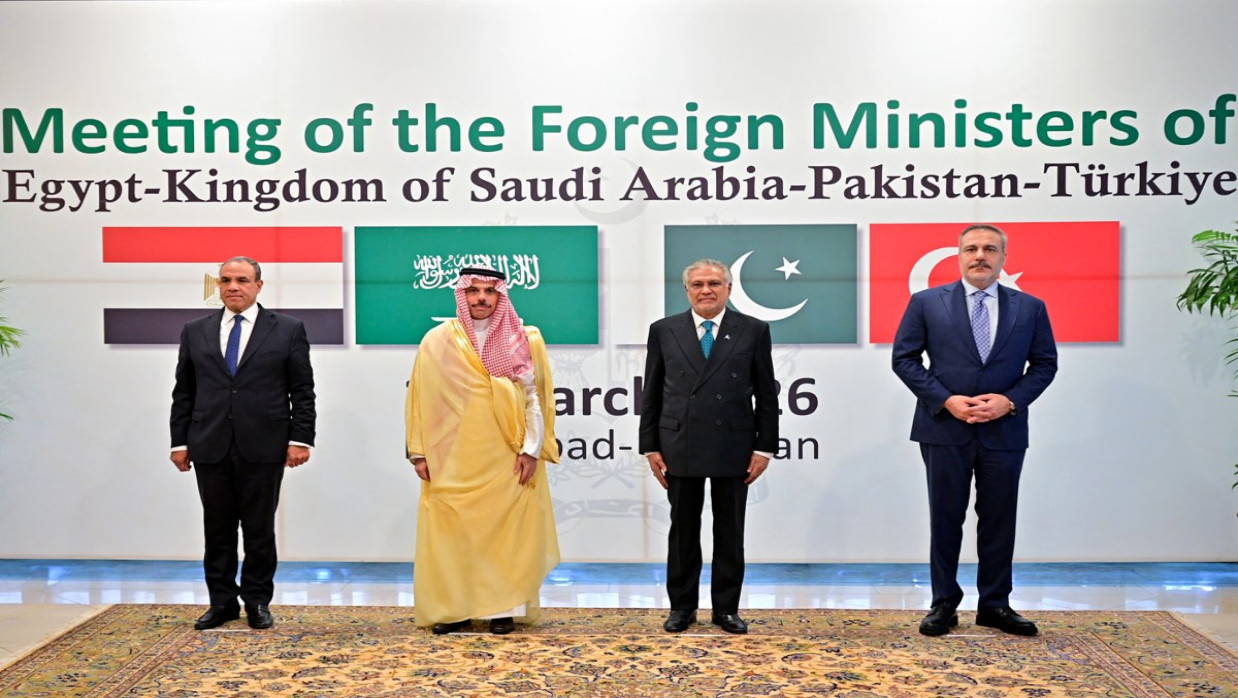
Observers have cited the Strategic Mutual Defense Agreement as opening the door to the formation of a broader Muslim NATO, with Saudi Arabia and Pakistan as the treaty's core members and possibly Turkey as well. This defensive alliance could give Muslim nations "the ability to defend themselves rather than rely on blanket guarantees from other countries". While there are political schisms among Muslim nations, relations between Saudi Arabia and Pakistan seem to be trending toward greater defense integration.
Consequences for Iran's Regional Position
Iran will have to factor into its calculations how Saudi escalatory moves against it might include the nuclear umbrella of an outside patron like Pakistan. Nuclear ambiguity also increases the risk of miscalculation in deterrence because Riyadh and Tehran may have to consider a wider range of retaliatory and escalatory options. This risk of miscalculation and the hesitation that stems from nuclear ambiguity could incentivize Iran to use proxy forces as a tool of pressure against the kingdom. It also does not help that Iran may see this pact as the beginning of a wider Saudi-Pakistan-Turkey partnership that could act together to balance against Iran.
Global Implications of Pakistan's Strategic Position
Pakistan straddles several theaters of geopolitical competition, and its possession of nuclear weapons puts it at the heart of what could become a proliferation cascade. More importantly, Pakistan isn't a future problem but a current source of instability that needs to be managed.
There is no concert to address a crisis if Pakistan spirals into significant destabilization. What's more, different countries will have different goals as they assess their interests. As such, now is the time to ensure we do everything we can to avoid reaching that point.
Conclusion: A Strategic Axis Reshaping Regional Security
Pakistan is Saudi Arabia's external balancer. For Riyadh, Pakistan offers economics. On missile defense, both states have linked air defense networks. Pakistani soldiers will be stationed in Saudi Arabia, potentially offering it a nuclear hedge. China gains an indirect foothold in the Gulf through the sale of military equipment. Iran must now be more careful in its actions, as it can no longer be sure how Riyadh will react. And the US now has security relationships in the region that don't exist beneath them on the pedestal.
Perhaps Pakistan is where the international power drama meets geopolitics. Pakistan will remain significant to regional security in South Asia and the Middle East for the foreseeable future.


0 Comments
LEAVE A COMMENT
Your email address will not be published