

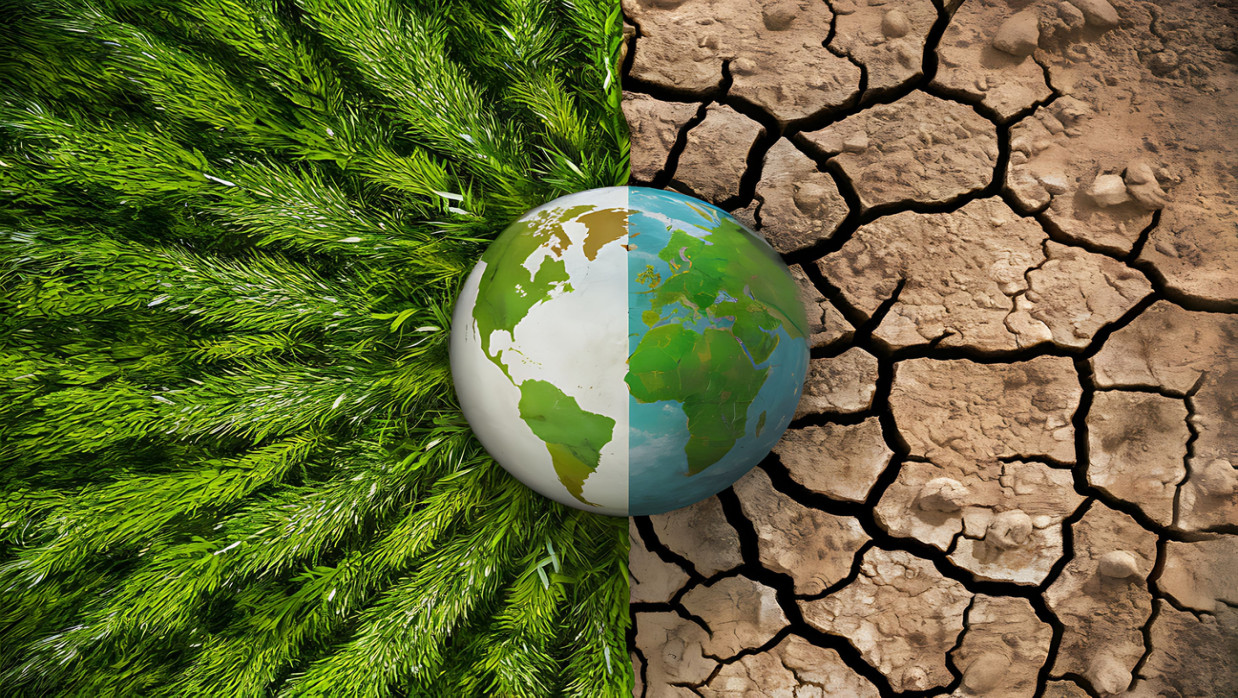
Climate change has increasingly become a defining factor in global security debates, not merely as an environmental issue but as a significant driver of human migration and geopolitical instability. The growing frequency and intensity of environmental disruptions-ranging from droughts and floods to rising sea levels and ecosystem collapse are forcing millions to leave their homes. As these environmental pressures mount, climate-induced migration has emerged as a central issue for policymakers concerned with international security. Understanding the interplay between climate stressors, migration dynamics, and global stability is essential for developing effective, long-term responses.
Climate-induced migration occurs through two broad mechanisms: sudden-onset disasters and slow-onset environmental degradation. Sudden events such as cyclones, floods, wildfires, and heatwaves can displace communities overnight, pushing populations into temporary shelters or across borders, in contrast, slow-onset processes such as desertification, salinization of agricultural land, water scarcity, and sea-level rise-erode livelihoods gradually, pushing communities to migrate out of necessity rather than choice. The United Nations estimates that by 2050, climate change could displace more than 200 million people globally, a number that highlights the urgency of coordinated international action. The security implications of climate migration are broad and interconnected. One key dimension is resource competition. As arable land diminishes and water resources shrink, communities increasingly compete over scarce resources. Historical patterns already illustrate how drought and environmental degradation in regions such as the Sahel have contributed to conflict between farmers and pastoralists. Climate change intensifies such tensions, increasing the likelihood of local conflicts escalating into broader regional instability. These pressures also strain the security apparatus of states struggling to manage competing needs.
Migration flows can also destabilize borders and weaken state capacity. Countries experiencing large-scale inflows of displaced populations often face administrative and security challenges: insufficient humanitarian infrastructure, overburdened social services, and rising political tensions. Fragile states, in particular, may face significant risks as climate migration interacts with existing governance weaknesses. In certain cases, overwhelmed governments may lose control over portions of their territory, creating openings for extremist groups, criminal networks, and insurgencies to gain influence. This dynamic is already evident in the Sahel region, where climate-induced displacement intersects with violent extremism and fragile governance.
Urbanization presents another security challenge. Climate migrants frequently move from rural areas to urban centers in search of employment, stability, and services. However, rapid and unplanned urbanization leads to overcrowding, informal settlements, and pressure on basic infrastructure. These conditions often produce socioeconomic inequalities, unemployment, and increased crime rates. In some countries, climate migrants-lacking resources and integration support-become vulnerable to exploitation, trafficking, and recruitment by criminal or extremist
networks. As cities expand beyond their governance capacity, internal security risks rise accordingly.
At the international level, climate migration can heighten geopolitical tensions. For example, rising sea levels in Bangladesh displace hundreds of thousands annually, many of whom migrate internally but some cross into India. This movement has fueled political debate, border securitization, and heightened diplomatic tensions between the two countries. Similarly, shared river basins in Asia, Africa, and the Middle East are already sites of contention, with climate-induced water shortages threatening to escalate disputes over water rights. These pressures may escalate if climate patterns continue to worsen without cooperative management strategies.
One critical challenge in addressing climate migration is the absence of legal recognition for climate-displaced people within international law. The 1951 Refugee Convention defines refugees as individuals fleeing persecution, not environmental disasters. As a result, millions displaced by climate change do not receive legal protections afforded to political refugees. This gap leaves people vulnerable to exploitation, unsafe migration routes, and lack of access to asylum procedures. The absence of a clear legal framework also complicates international cooperation, creating uncertainty for states responding to climate-induced migration.
Regional examples underscore the significance of climate migration for international security. In South Asia, Bangladesh's vulnerability to cyclones, flooding, and sea-level rise has created large-scale displacement. India, sharing a long and politically sensitive border, faces migration pressures that affect security policy. In Africa's Horn and Sahel regions, climate change interacts with poverty, food insecurity, and governance failures to fuel displacement, conflict, and extremism. These regions illustrate how climate migration is not merely a humanitarian issue but a strategic concern with global security implications.
Addressing the security risks associated with climate-induced migration requires comprehensive, multi-level strategies. First, countries must invest in climate adaptation and resilience-building initiatives. Improved water management systems, drought-resistant agriculture, coastal defenses, and sustainable land use policies can reduce displacement pressures. Second, early warning systems for dimate disasters must be strengthened to minimize sudden displacement and support timely evacuations. Third, international legal frameworks need to evolve to recognize and protect dimate-displaced populations. Developing new protocols or amendments that include climate refugees would help ensure safer, more orderly migration.
Regional cooperation is also essential. Shared ecosystems, such as river basins and coastal zones, require coordinated management to prevent resource-based conflicts. Humanitarian assistance must be integrated with long-term development plans to support both displaced populations and host communities . Finally, climate change considerations should be embedded in national defense strategies , diplomatic policies and international development programs.
In conclusion, climate-induced migration represents one of the most complex and urgent challenges facing the international community. As environmental pressures intensify, migration
flows will continue to rise, reshaping demographic patterns and influencing global security dynamics. While migration can serve as an adaptation strategy, unmanaged climate migration risks escalating resource conflicts, political instability, humanitarian crises, and geopolitical tensions. A proactive, cooperative, and inclusive approach is essential to safeguard human security and promote global stability in an era of accelerating climate change.


0 Comments
LEAVE A COMMENT
Your email address will not be published