

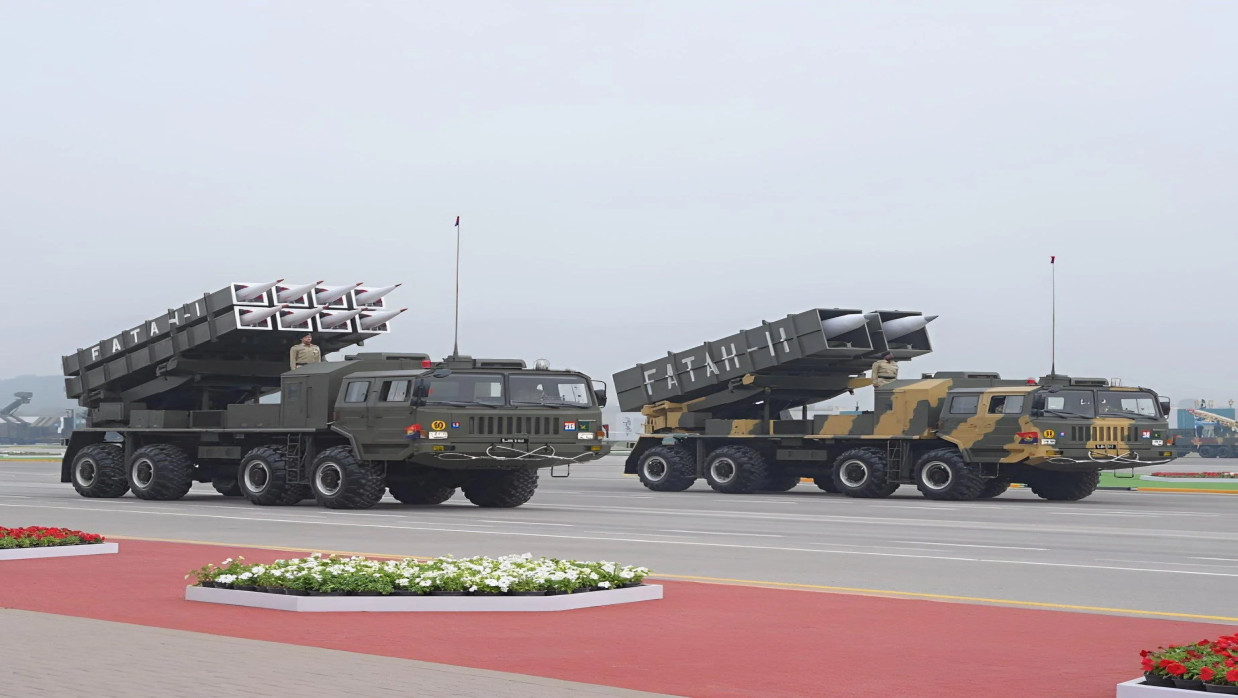
Pakistan’s successful test of the Fatah-2 extended-range missile marks another step in the country’s efforts to strengthen its conventional deterrence and improve its precision-strike capabilities. At a time when South Asia remains burdened by strategic mistrust, military modernisation and an increasingly competitive regional security environment, the development reflects Islamabad’s determination to enhance its defence preparedness. However, the significance of the Fatah-2 extends beyond the successful launch of another indigenous weapon system. It highlights Pakistan’s evolving approach to conventional warfare, where precision, mobility and technological sophistication are becoming as important as numerical strength.
According to the Inter-Services Public Relations (ISPR), the Fatah-2 ER incorporates advanced navigation systems and modern avionics, enabling it to engage targets with high precision. Its extended range is intended to enhance the Pakistan Army’s ability to strike targets deeper within an adversary’s operational space. The military has also highlighted the missile’s trajectory and manoeuvrability as features that could complicate interception by opposing air and missile defence systems. While the actual effectiveness of these capabilities depends on operational conditions and independent technical assessments, the reported developments indicate a clear emphasis on improving Pakistan’s conventional strike options.
The Fatah series is part of Pakistan’s indigenous missile development programme, designed to strengthen operational readiness and reduce reliance on external suppliers. Indigenous defence production carries strategic importance for a country operating under economic constraints and facing uncertainties in international arms markets. Domestic development can improve supply-chain resilience, facilitate technological learning and provide greater flexibility in maintaining and upgrading military equipment. The participation of Pakistani scientists and engineers in the programme also reflects the growing importance of national technological capacity in modern defence planning.
The test is particularly significant in the context of Pakistan’s evolving conventional deterrence posture. The brief but intense military confrontation between Pakistan and India in May 2025 underscored the risks associated with rapid escalation between two nuclear-armed neighbours. It also reinforced the importance of credible conventional capabilities that can respond to emerging threats without immediately creating pressure to cross the nuclear threshold. In this environment, precision-strike systems may provide additional military options, potentially strengthening deterrence by increasing the costs an adversary would have to consider before undertaking hostile action.
The establishment of the Army Rocket Force Command in 2025 further illustrates Pakistan’s interest in improving the coordination and readiness of its conventional missile capabilities. A dedicated command structure can help streamline operational planning, training and the integration of missile systems into broader military strategy. The distinction between conventional missile forces and nuclear command arrangements is equally important. Maintaining clear institutional separation, reliable command-and-control procedures and effective safeguards can reduce ambiguity during a crisis, particularly when conventional and nuclear-capable delivery systems operate within the same regional environment.
Nevertheless, missile modernisation should not be assessed solely through the range, speed or technical sophistication of individual systems. Its strategic value ultimately depends on how effectively these capabilities contribute to deterrence, crisis stability and the prevention of conflict. Extended-range weapons may strengthen Pakistan’s ability to hold strategically significant targets at risk, but they can also intensify threat perceptions in India. If either side interprets defensive modernisation as preparation for offensive action, the resulting security dilemma could encourage further arms competition. The challenge, therefore, is to strengthen credible deterrence without creating incentives for pre-emption or unnecessary escalation.
The development of the Fatah-2 also comes amid a broader transformation in warfare, in which precision-guided munitions, unmanned systems, electronic warfare and increasingly sophisticated air-defence networks are reshaping military calculations. The recent test of the Fatah-4 extended-range cruise missile, which the military said validated improved accuracy, suggests that Pakistan is pursuing a broader effort to diversify and enhance its conventional strike capabilities. Such diversification can complicate an adversary’s defensive planning, but it also requires sustained investment in training, intelligence, surveillance, targeting and command systems. A missile’s effectiveness depends not only on its technical design but also on the quality of the operational architecture supporting it.
For Pakistan, the central task is to align military modernisation with national economic capacity and a coherent security strategy. Indigenous defence production can contribute to technological development, but long-term success requires investment in research, skilled human resources and industrial infrastructure. Equally, military preparedness must complement diplomacy and regional engagement rather than displace them.
The Fatah-2 test is thus an important development in Pakistan’s conventional deterrence trajectory. Its significance lies in the potential to improve precision engagement, extend operational reach and expand the range of military options available to national planners. Yet the ultimate measure of success will not be the missile’s range alone. It will be whether these capabilities strengthen deterrence, preserve strategic stability and help prevent future conflict in an already volatile region. For Pakistan, a credible defence posture must remain firmly connected to its broader objective: safeguarding national security while avoiding an arms competition that neither South Asian country can afford.


0 Comments
LEAVE A COMMENT
Your email address will not be published