

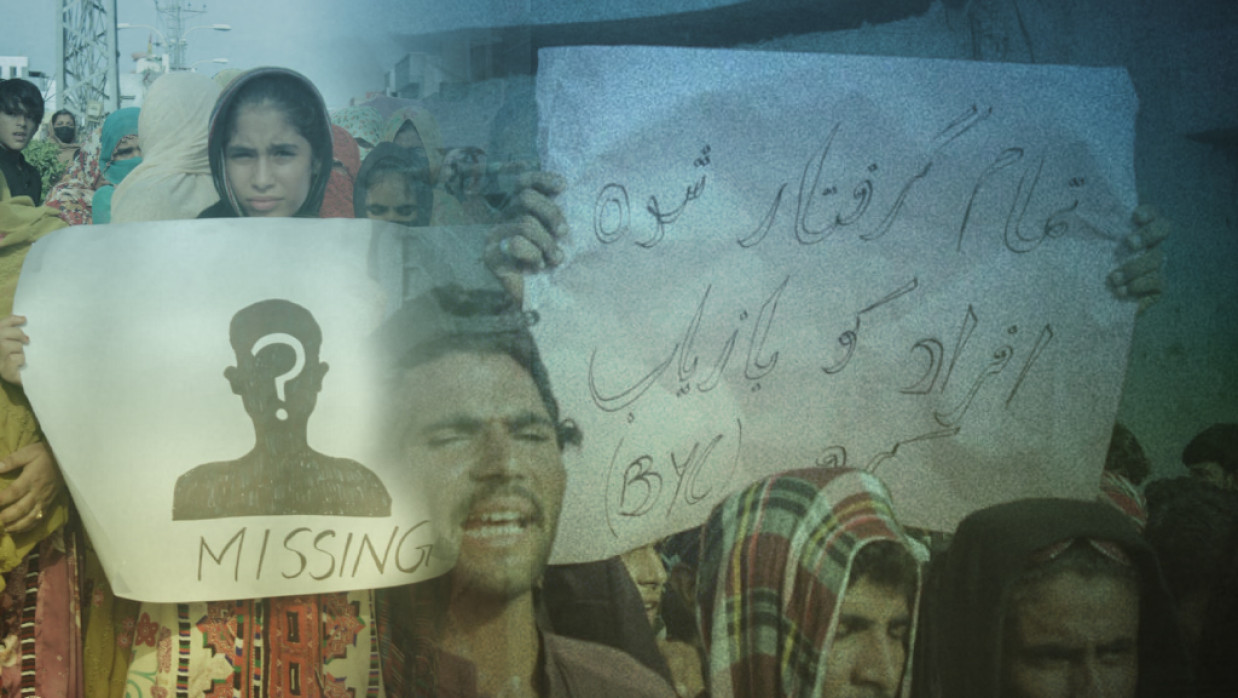
The debate over missing persons in Balochistan has become one of the most contested dimensions of Pakistan’s internal security discourse. It sits at the intersection of counterterrorism, human rights, separatist politics and the state’s responsibility to maintain public order. While allegations of enforced disappearances deserve serious scrutiny, the broader security environment in which these cases emerge must also be examined. Neither selective political narratives nor blanket denials can provide a credible path towards resolving this complex issue.
The case of Shabbir Baloch, former information secretary of the Baloch Students Organisation-Azad (BSO-Azad), illustrates this challenge. He was reportedly detained on 4 October 2016 during a security operation in Gwarkop, Kech district, after which his whereabouts became the subject of sustained public concern. Amnesty International raised the case in an urgent action issued that month, citing information from his family and friends about his reported arrest alongside seven other individuals. His case has since remained a prominent reference point in campaigns concerning missing persons in Balochistan.
However, examining this issue solely through the identity of a student activist or the claims of a political organisation offers an incomplete understanding of the province’s security environment. Balochistan has experienced attacks against security personnel, civilians, educational institutions and infrastructure by militant separatist organisations. These attacks have imposed a substantial human and economic cost, while attempts to recruit young people into violent movements pose a serious challenge to social stability and development.
The political landscape surrounding BSO-Azad also requires careful examination. The organisation has been associated with separatist politics and was banned by Pakistan in 2013. Its ideological position, political activities and alleged connections with militant networks form part of the wider debate over the relationship between separatist mobilisation and armed violence. Nevertheless, allegations against an organisation cannot automatically establish the involvement of every member in terrorism. Any claim concerning an individual’s participation in recruitment, facilitation or violent activity must be supported by credible evidence and assessed through a lawful process.
This distinction matters because the struggle against terrorism is strengthened, rather than weakened, by adherence to the rule of law. Security agencies have a legitimate responsibility to investigate suspected militant activity, prevent attacks and disrupt recruitment networks. Yet suspicion cannot substitute for evidence, and security operations must remain consistent with legal safeguards. Where individuals are detained, their families should be able to establish their whereabouts through recognised legal channels, while allegations of unlawful detention should be independently investigated.
The same standard of scrutiny should apply to political campaigns surrounding missing persons. Advocacy groups, student organisations and diaspora networks have a right to raise concerns and seek information. At the same time, their claims should be assessed against verifiable evidence, and the political use of individual cases should not prevent a wider examination of militant violence. Civilian victims of bombings, targeted killings and attacks on infrastructure deserve equal recognition. Their suffering must not disappear from public debate simply because it complicates a particular political narrative.
Official figures demonstrate both the scale of the issue and the importance of transparent case resolution. In October 2025, the government reported that the Commission of Inquiry on Enforced Disappearances had received 10,636 cases nationwide since March 2011, disposed of 8,986 and retained 1,650 under investigation. These figures indicate substantial case processing, but administrative disposal alone does not answer every question about accountability, the circumstances of a disappearance or the satisfaction of affected families. The quality and transparency of investigations matter as much as the number of cases closed.
Pakistan therefore needs a two-pronged approach. First, counterterrorism efforts must remain firm against organisations that plan or carry out violence, regardless of their political slogans or claimed objectives. Evidence-based investigations, effective prosecution and protection for vulnerable communities are essential. Second, every unresolved missing-person case must receive a credible investigation, with accessible information for families, judicial oversight where required and accountability wherever unlawful conduct is established.
Balochistan’s long-term stability cannot rest on security measures alone. Employment, education, political participation, accountable governance and equitable development are equally important in reducing the appeal of violent movements. Young people must have meaningful opportunities to pursue political aspirations through peaceful and constitutional channels without fear of unlawful punishment.
Ultimately, the missing-persons debate should not become a contest in which human rights and national security are presented as mutually exclusive. Terrorism must not be excused in the name of political resistance, and unlawful detention must not be excused in the name of counterterrorism. A credible national response requires evidence rather than insinuation, accountability rather than impunity, and equal concern for all victims of violence.
Balochistan needs neither selective outrage nor unquestioning denial. It needs a security policy that protects citizens, a justice system that establishes facts, and a political environment in which peaceful dissent remains possible. That is the more durable route towards defeating militancy, rebuilding public confidence and strengthening Pakistan’s national cohesion.


0 Comments
LEAVE A COMMENT
Your email address will not be published