

Pakistan’s energy security has traditionally been discussed in terms of securing reliable sources of oil and gas. Yet energy security is equally dependent on the infrastructure through which energy is imported, stored, transported and distributed. From this perspective, the federal government’s feasibility study for an integrated “Oil City” at Hub in Balochistan represents a potentially important shift in Pakistan’s energy architecture. If successfully developed, the project could transform Hub from an industrial locality into a strategic petroleum logistics node while strengthening the country’s energy resilience and deepening Balochistan’s integration into the national economy.
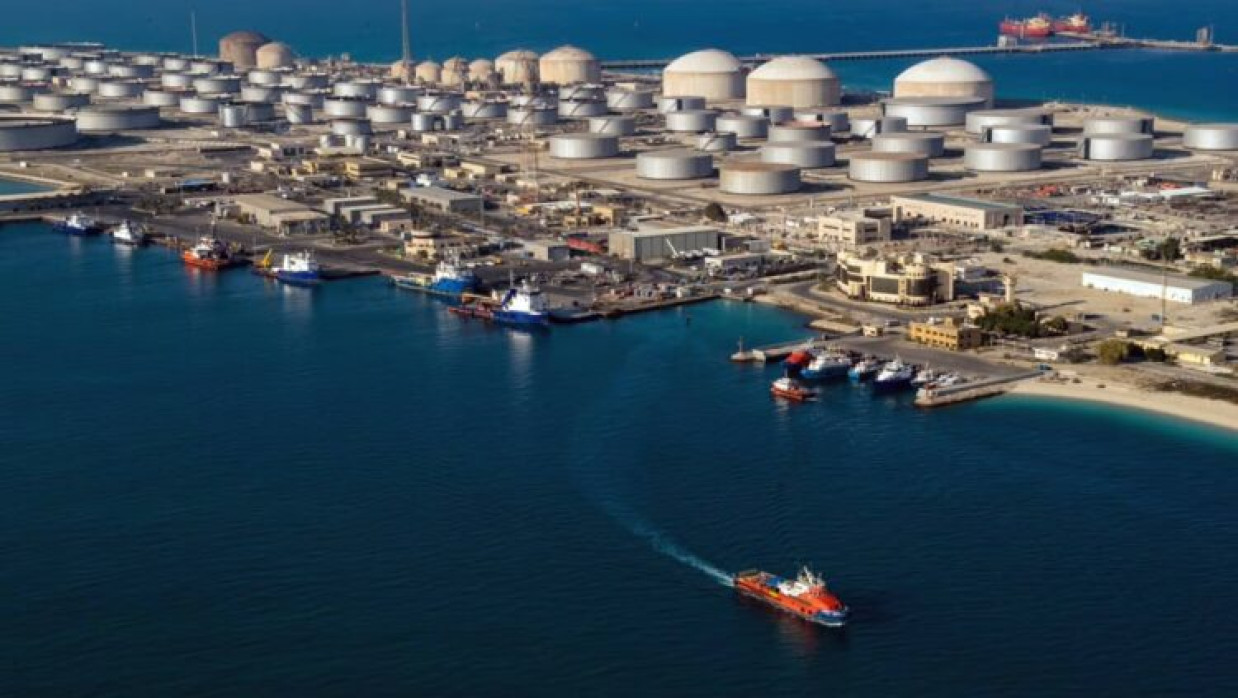
The proposed Oil City envisages an offshore Single Point Mooring (SPM), crude-oil and petroleum-product pipelines, and large-scale bonded storage facilities. Its strategic rationale is straightforward: diversify Pakistan’s petroleum import infrastructure and reduce excessive dependence on existing maritime facilities at Karachi and Port Qasim. An offshore SPM would enable larger tankers to discharge cargo without relying exclusively on conventional port infrastructure. This could improve vessel-handling capacity, reduce logistical bottlenecks and provide greater flexibility in managing petroleum imports.
The significance of the project, however, lies less in any individual component than in their proposed integration. Infrastructure becomes strategically valuable when terminals, pipelines, storage facilities, refineries and distribution networks function as an interconnected system. The Hub project could establish precisely such an energy logistics chain. Under the reported proposal, one pipeline would transport crude towards Keamari and Karachi’s refining infrastructure, while another would move petroleum products towards Port Qasim and connect with the White Oil Pipeline network.
Such integration could strengthen the redundancy of Pakistan’s petroleum supply chain. At present, disruptions at major ports, terminals or transportation corridors can have consequences well beyond the immediate point of failure. Additional import and distribution infrastructure would provide alternative routing capacity and potentially improve the system’s ability to absorb maritime, logistical or geopolitical shocks. In an environment of volatile global energy markets and increasingly uncertain maritime supply chains, infrastructure redundancy is itself an element of national energy security.
The proposed connection with the White Oil Pipeline is particularly important. The approximately 786-kilometre pipeline provides a major mechanism for transporting petroleum products from the coastal region towards inland markets, with reported current capacity of around eight million tonnes annually and potential expansion toward 12 million tonnes. Integrating Hub with this existing network would allow the proposed Oil City to function as part of a national distribution architecture rather than as an isolated petroleum terminal.
The bonded-storage component adds another strategic layer. Large storage facilities could enhance inventory management and provide greater flexibility in petroleum trading and distribution, subject to customs, regulatory and safety requirements. If international energy companies, including Gulf-based investors, participate in such infrastructure, Hub could gradually acquire characteristics of a regional petroleum logistics and trading node. This would represent a qualitative change in the economic function of the area—from merely receiving and moving petroleum to facilitating storage, redistribution and potentially commercial trading.
For Balochistan, the implications could extend beyond energy security. Hub occupies a geographically advantageous position: it is close to Pakistan’s largest commercial metropolis and maritime infrastructure while being located within Balochistan. This proximity could enable the province to capture economic activity generated by one of the country’s most strategically important supply chains.
The economic multiplier effects could be substantial if the project progresses beyond feasibility. Construction would create demand for engineering, transportation, equipment supply and skilled labour. Once operational, the complex could generate employment in logistics, warehousing, maintenance, pipeline operations, maritime services, safety management and technical support. Secondary industries could emerge around the petroleum ecosystem, creating opportunities for local businesses and service providers.
This dimension is particularly relevant to Balochistan’s broader development trajectory. Gwadar has become associated with maritime connectivity and CPEC, while Hub could potentially emerge as an energy and industrial logistics node. Together, such infrastructure could diversify the province’s economic base and strengthen its functional connectivity with Pakistan’s national industrial and commercial centres.
Nevertheless, the project should not be treated as automatically transformative simply because of its scale. The feasibility stage is critical precisely because large energy infrastructure carries considerable financial, environmental and operational risks. Technical assessments must establish the viability of the offshore terminal and pipeline network; environmental studies must examine impacts on the coastal ecosystem; commercial analysis must determine whether projected throughput can generate adequate returns; and financing arrangements must ensure that the project does not create unsustainable fiscal liabilities.
Safety and regulatory architecture will be equally important. Petroleum terminals, offshore moorings, pipelines and large storage facilities require rigorous standards covering fire prevention, spill response, maritime safety, pipeline integrity and emergency preparedness. A strategic energy facility cannot be evaluated purely through the lens of construction cost and economic returns.
Ultimately, the proposed Hub Oil City presents an opportunity to reconfigure Pakistan’s energy geography. Its value would lie in connecting offshore imports with refining, storage and distribution infrastructure while simultaneously creating an economic gateway for Balochistan. If technical, environmental, commercial and regulatory challenges are adequately addressed, Hub could evolve into a strategic petroleum logistics hub linking Balochistan’s coastline with Pakistan’s wider energy economy. The real measure of its success, however, will not be the construction of tanks, pipelines or terminals, but whether the project produces a more resilient energy system and embeds Balochistan more deeply within Pakistan’s economic architecture.


0 Comments
LEAVE A COMMENT
Your email address will not be published