

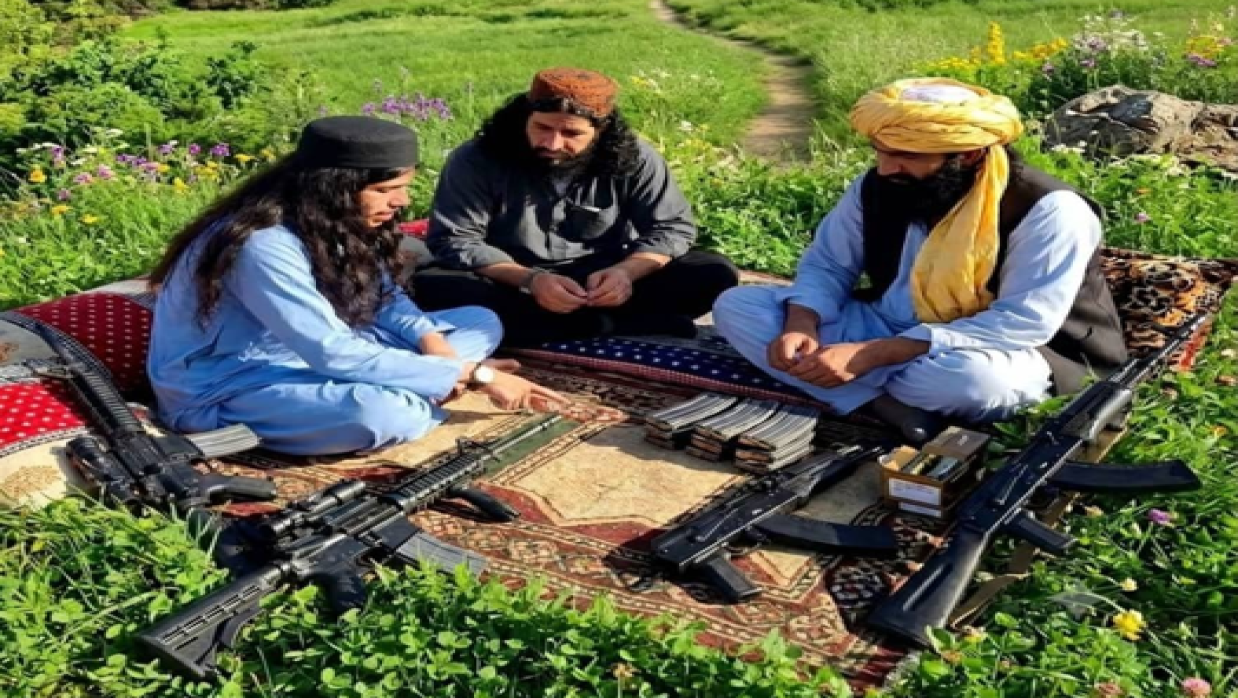
Five years after the Taliban returned to power, Afghanistan is no longer defined by the nationwide war that consumed it for two decades. The Taliban controls the country, large-scale fighting has receded, and Kabul insists that Afghan territory will not be used to threaten other states. Yet a different security problem is taking shape.
The latest findings of the UN Security Council’s Analytical Support and Sanctions Monitoring Team point to the continued activity and adaptation of the Tehreek-e-Taliban Pakistan (TTP), Islamic State Khorasan Province (ISKP), Al-Qaeda and its South Asian affiliate, Al-Qaeda in the Indian Subcontinent (AQIS).
The most worrying conclusion is not that these organizations have formed a unified alliance. They have not. It is that groups with different ideologies and objectives appear able to operate in an environment where training, weapons, logistics and facilitation networks can overlap.
Afghanistan’s terrorism problem is therefore larger than the survival of any single organization.
The TTP exposes Kabul’s credibility problem
No relationship illustrates the contradiction in Taliban counter-terrorism policy more clearly than its handling of the TTP.
Pakistan has repeatedly accused the TTP of using Afghan territory to support attacks across the border. Kabul denies harbouring terrorist organizations, but the latest UN findings reinforce concerns about continued TTP activity and Taliban support for the group.
The TTP is also evolving. It has announced new divisions covering Balochistan, central Pakistan, Kashmir and Gilgit. Its announcement of a so-called “TTP Air Force” division also suggests adaptation to a security environment increasingly shaped by drones.
The organization has launched “Operation Khyber,” calling for intensified attacks against Pakistani security forces and civilians. The UN report records a vehicle-borne explosive attack in Bajaur that killed 11 security personnel and a child, with the TTP claiming responsibility.
The Taliban’s response reveals the limitations of its approach. Around 2,000 TTP fighters and family members were reportedly relocated deeper inside Afghanistan, while Taliban leader Hibatullah Akhundzada reportedly warned the organization to stop attacking Pakistan or risk losing Taliban support.
But relocation is not dismantlement. Moving militants away from the border does not eliminate their leadership, weapons, financing or operational networks.
This is at the heart of the Islamabad-Kabul dispute. The Taliban views sovereignty primarily as control over Afghan territory and resistance to external demands. Pakistan argues that sovereignty also carries responsibility: if Kabul controls Afghanistan, it must prevent that territory from being used to attack neighbouring states.
A wider militant ecosystem
The threat extends beyond the TTP. ISKP has suffered significant setbacks from counter-terrorism operations by Pakistan and the Taliban. Yet the UN Monitoring Team describes the organization as being in a “rebuilding phase” while retaining the capacity for high-profile mass-casualty attacks.
The report describes movement towards northern Afghanistan and dispersed training across the Afghanistan-Pakistan border region. ISKP reportedly possesses drones, night-vision and thermal-imaging equipment and provides training in urban combat and drone operations.
Such technological adaptation matters. Drones, surveillance technology and modern communications can significantly increase the operational reach of relatively small militant groups.
More significantly, one Member State reported that ISKP and the Balochistan Liberation Army (BLA) shared facilitation networks for logistical provision.
This should not be interpreted as evidence of a formal alliance. ISKP and the BLA have fundamentally different objectives. But that is precisely why the finding matters: militant organizations do not need a common ideology to use overlapping logistical routes, weapons markets, trainers or facilitators.
Al-Qaeda adds another layer. Its As-Sahab Media has reportedly expressed explicit support for TTP operations against Pakistan. One Member State also reported that Al-Qaeda trainers in Afghanistan trained BLA fighters alongside TTP members.
That remains Member State reporting rather than an independently established UN determination. Nevertheless, it raises questions about shared militant environments in which otherwise distinct organizations can acquire training and operational expertise.
AQIS remains relevant as well. The UN findings describe it as forming the backbone of Ittihad-ul-Mujahideen Pakistan, reportedly responsible for attacks against Pakistani security forces in Bannu.
Al-Qaeda’s regional significance may therefore increasingly lie in ideological support, training, networking and the transfer of expertise rather than directly conducting spectacular attacks.
An Afghan problem with regional consequences
The danger is magnified by the circulation of advanced military equipment. The Monitoring Team reports that abundant weaponry has enabled Taliban authorities to transfer equipment to the TTP and other groups. Combined with militant access to drones and night-vision technology, this can increase their operational capabilities.
Pakistan is currently the most directly exposed. Its civilians and security personnel continue to bear the cost of TTP attacks, while its counter-terrorism operations have contributed to setbacks suffered by ISKP.
But reducing the problem to another Islamabad-Kabul dispute misses the larger strategic picture.
Central Asian governments have reason to watch militant movement towards northern Afghanistan. China has security and investment interests across Afghanistan and Pakistan, while Iran faces border and extremist threats. Turkiye has diplomatic, economic and strategic interests stretching from Pakistan and Afghanistan into Central Asia.
For Ankara, instability in Afghanistan is therefore not simply a distant South Asian problem. Turkiye has expanded its ties across Central Asia while supporting regional connectivity and maintaining engagement with Afghanistan and Pakistan. The concern is not only terrorism itself but its potential to undermine the connectivity, trade and political stability on which Turkiye’s expanding regional engagement depends.
Regional connectivity is equally vulnerable. Trade corridors, energy projects and infrastructure investment require secure borders and predictable political environments. Persistent militant sanctuaries can discourage investment and weaken regional integration.
Five years after taking Kabul, the Taliban has demonstrated that it can control territory. What it has not demonstrated convincingly is that territorial control can be translated into responsibility for what happens within it.
Humanitarian assistance to ordinary Afghans should continue, but diplomatic normalization and deeper economic engagement should be linked to verifiable counter-terrorism measures, including dismantling militant infrastructure, restricting financing and movement, and preventing weapons transfers.
The greatest danger is no longer simply that the TTP, ISKP or Al-Qaeda survives. It is that Afghanistan becomes an enabling environment where distinct militant organizations can draw on intersecting networks of weapons, training, logistics and expertise.
If Kabul cannot - or will not - dismantle that ecosystem, the consequences will extend beyond Pakistan and Afghanistan. Five years after the Taliban returned to power, its defining security test is no longer whether it can control Afghanistan, but whether it can prevent the territory it controls from enabling threats far beyond South Asia.


0 Comments
LEAVE A COMMENT
Your email address will not be published