

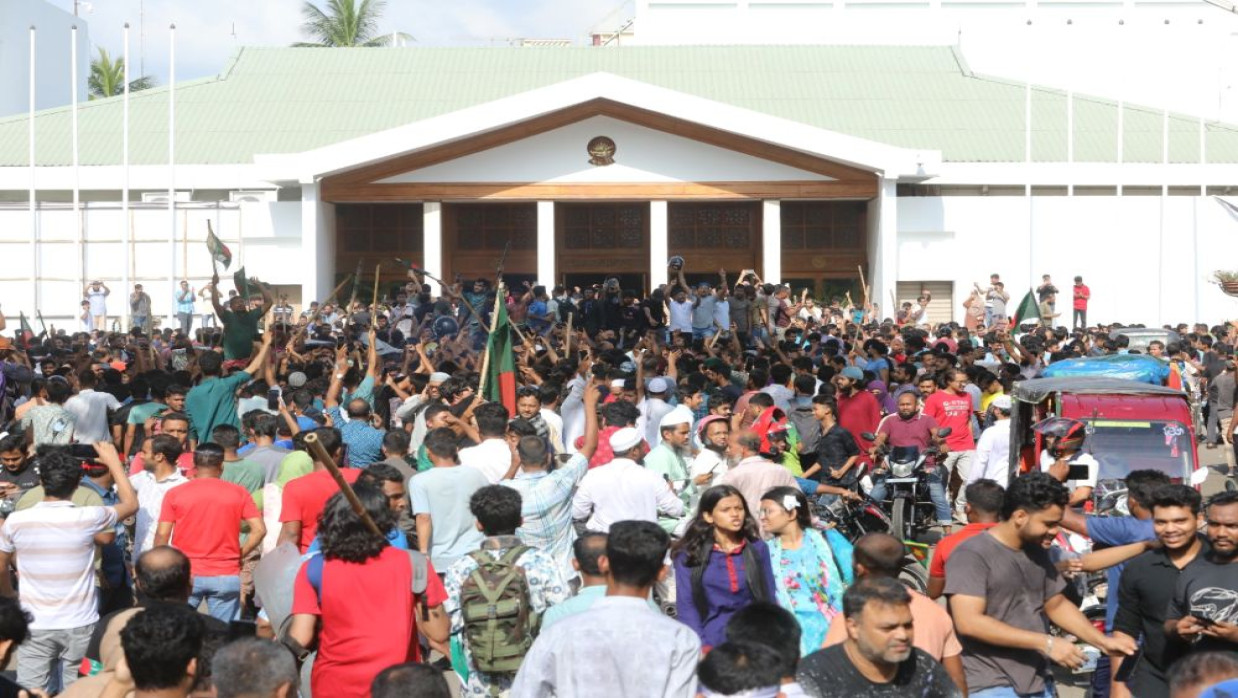
Youth across South Asia have mobilized to become a political heavyweight. Student protests helped topple Sheikh Hasina’s government in Bangladesh in 2024. Sri Lanka’s Aragalaya youth movement drove President Gotabaya Rajapaksa from power in 2022. Nepal too has seen its youth mobilize against corruption and political inertia multiple times. Yet in Pakistan, where similar perils persist, the youth have failed to lead any such nationwide revolt.
Political analyst Michael Kugelman argues that Pakistan does not lack public anger. Rather, repression, social fragmentation and the institutional destruction of student politics have prevented discontent from developing into a unified national movement.
Anger Without National Mobilization
The underlying conditions for protest are clearly present. Pakistan’s young population faces unemployment, inflation, limited educational opportunities and diminishing social mobility. Many citizens are frustrated by corruption, elite privilege, political interference and the weakness of democratic institutions. Social media has further exposed young Pakistanis to political debates and protest movements elsewhere.
Nevertheless, public dissatisfaction alone does not produce a revolution. A successful national movement requires organizations, leadership, communication networks and a unifying demand capable of transcending class, ethnic and provincial boundaries. These are precisely the elements Pakistan currently lacks.
The country has no shortage of resistance movements. The Lawyers’ Movement mobilized citizens against General Pervez Musharraf’s government. The Pashtun Tahafuz Movement has campaigned against disappearances, extrajudicial killings and insecurity in Pashtun areas. Baloch activists have organized major marches demanding accountability for missing persons. Farmers, workers, religious groups and supporters of Pakistan Tehreek-e-Insaf have also demonstrated in large numbers.
Still, they tend to be divided along geographic, ethnic, ideological or partisan lines. A movement active in Balochistan can struggle to find solidarity in Punjab. Pashtunistan issues might not find support in Sindh. Urban middle-class protesters might struggle to find rapport with rural laborers. Localized outrage rarely transforms into a united fight for nationwide political change.
The Architecture of Repression
Pakistan’s oppressive political environment is another challenge. The state has wide-ranging tools at its disposal to inhibit mobilization, from preventive arrests to bans on public gatherings to internet blackouts to press crackdowns to anti-terrorism legislation. PTM was officially banned in October 2024; Baloch activists have been arrested and charged with heinous crimes. (Amnesty International)
Both serve as a message to anyone looking to mobilize on a larger scale. (Amnesty International) The power players within Pakistan’s security apparatus are another way Pakistan stands out from some of its neighbors. Political parties, TV channels, NGOs, and even social media websites have red lines that can become a lot smaller when instability strikes. Demonstrators are not just up against a democratically elected government. They’re up against a powerful security network that knows how to quell dissent and has been perfecting that craft for decades.
The Lost Tradition of Student Politics
Perhaps the most consequential factor is the destruction of independent student unions. General Zia-ul-Haq banned them in 1984, weakening the institutions through which generations of young Pakistanis had learned political organization, negotiation and collective action. Although attempts have been made to revive campus representation, unions have never been restored meaningfully across the country. (Pakistan Institute of Development Economics)
Universities ought to be places where students discuss national issues, build alliances and develop democratic leaders. In their absence, campus politics has been based around informal cliques linked to traditional parties or religious movements. Pakistan thus has a huge youth population without any national democratic infrastructure through which to channel their grievances into organized pressure.
Pakistan's apparent calm is not peace. Anger is fermenting. But it's divided and brutally stifled. Whether the country will someday see a repeat of Bangladesh's revolution depends on whether its divided movements can learn to communicate, and whether young Pakistanis can rebuild the institutions needed to turn protest into democratic force on a national scale.


0 Comments
LEAVE A COMMENT
Your email address will not be published