

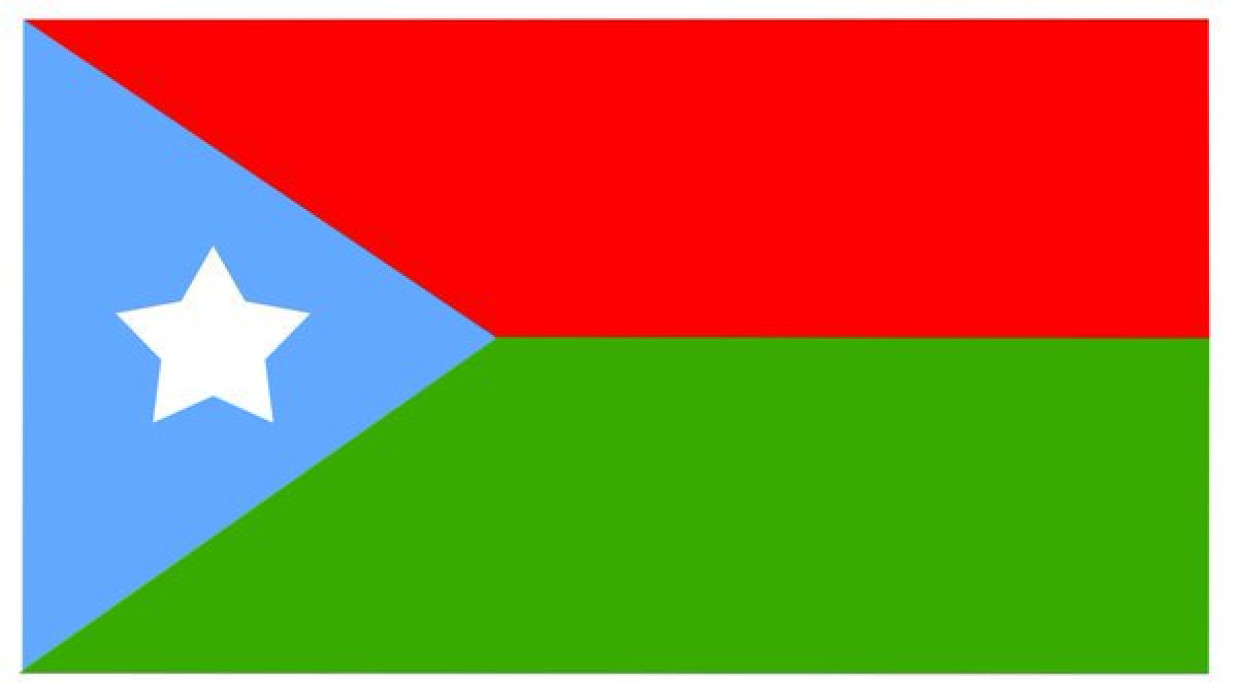
A “Republic” Declared Online
Recent social-media posts claiming that Balochistan has declared independence from Pakistan have generated considerable excitement in sections of the Indian media. Hashtags referring to a “Republic of Balochistan” have circulated alongside assertions that separatist forces control most of the province, have established a government and possess their own flag, anthem and currency. Some Baloch activists outside Pakistan have also appealed for international recognition and Indian assistance.
Yet no credible evidence indicates that an independent Baloch state has been established. Pakistan continues to administer the province, maintain military installations there and control its cities, ports, highways and principal economic facilities. No foreign government or international organization has recognized a “Republic of Balochistan.”
The online declaration should therefore be understood primarily as a political campaign intended to attract attention to Baloch nationalism not as confirmation of a change in sovereignty. Nevertheless, dismissing the entire matter as an Indian fabrication would be equally misleading. The social-media narrative exaggerates reality, but the political grievances, violence and alienation underlying the Baloch conflict are genuine.
A Province of Strategic Importance
Balochistan occupies approximately 44 percent of Pakistan’s territory but contains only a small proportion of its population. The 2023 census recorded about 14.9 million people in the province, whose population includes Baloch, Brahui, Pashtun, Hazara and other communities. It borders Afghanistan and Iran and possesses a long Arabian Sea coastline. Its strategic assets include Gwadar Port, natural-gas fields and substantial deposits of copper, gold, coal and other minerals. Pakistan Bureau of Statistics
Despite this natural wealth, Balochistan has remained one of Pakistan’s least-developed regions. Many communities suffer from inadequate access to education, healthcare, clean water, employment and modern infrastructure. Baloch nationalists argue that the federal government and outside corporations have extracted the province’s resources while returning an insufficient share of the benefits to its inhabitants.
Gwadar sits right at the center of that tension. The port city is being touted by Pakistan and China as a key feature of the China-Pakistan Economic Corridor with trade capacity that could transform the region. But some locals say they have been left high and dry by the construction boom: they lack freshwater, have lost access to fishing grounds, and feel excluded from major decisions about development in their own backyard. Investment can breed marginalization when it isn't accompanied by dialogue.
The Historical Roots of Alienation
One cannot understand the conflict merely as modern Indian-Pakistani hostility. Hostility towards Pakistan began with the controversy of how the princely state of Kalat acceded to Pakistan in 1948. Pakistan believes that Kalat legally and permanently joined Pakistan. Baloch nationalist accounts view this accession as forced. Multiple armed rebellions ensued, including revolts in the late 1940s, 1950s, 1960s and most notably in the 1970s.
The present phase of insurgency gathered momentum after 2000. The 2006 death of veteran tribal leader Nawab Akbar Bugti during a military operation became a rallying point for nationalist anger. Since then, armed organizations have attacked security forces, infrastructure, Chinese interests and workers from other Pakistani provinces.
Alongside the insurgency has emerged a largely peaceful civil movement led by students, lawyers, families of missing persons and organizations such as the Baloch Yakjehti Committee (BYC), meaning Baloch Solidarity Committee, led prominently by physician and activist Dr. Mahrang Baloch. These activists demand information about relatives allegedly subjected to enforced disappearance, an end to extrajudicial killings and greater political and economic rights.
Rights groups have consistently alleged abuses against Pakistan's security and intelligence forces. According to Amnesty International, enforced disappearances continue to be one of the country's most pressing human rights issues. The organization added that Baloch activists had been subject to arrests, restrictions, and other forms of intimidation. While Amnesty International Pakistan has established formal channels to probe missing-person cases, many families have criticized it for not providing justice.
Militancy Cannot Be Romanticized
Recognition of legitimate grievances does not justify attacks on civilians. The Baloch Liberation Army and related organizations have conducted bombings, assassinations, kidnappings and attacks on passengers, laborers, teachers and Chinese nationals. These operations have inflicted suffering not only on the Pakistani state but also on ordinary people with no responsibility for government policy.
An indication of the insurgents' growing foothold was the hijacking of passenger train Jaffar Express on March 20 and 25. After the derailment of the train by BLA militants, the train was hijacked for hostage rescue by the military. Dozens were killed. The incident drew international condemnation. Following incidents involving deadly attacks, the United States officially declared BLA and its affiliate Majeed Brigade foreign terrorist organizations. U.S. Department of State. This also means that such organizations will never gain democratic legitimacy simply by branding themselves as national-liberation movements. Targeting civilians for murder, segregating passengers by ethnicity, or attacking workers because they hail from another province contradicts national self- determination itself.
Hence, there is a need to differentiate between Baloch politics and Baloch militancy. A mother searching for her missing son, a student asking for provincial rights, and an armed insurgent blowing up a passenger train are not engaging in the same politics. Pakistan will increasingly treat legitimate dissent as a security issue, encouraging angry youths to take up guns. Separatist propaganda that glorifies every militant attack only endangers peaceful Baloch activists.
Why Balochistan Is Not East Pakistan
Comparisons with Bangladesh’s emergence in 1971 are politically attractive but historically weak. East Pakistan possessed a clear Bengali majority, a common language, a large population and a territorially coherent homeland. Bengalis constituted the majority of Pakistan’s total population, yet they believed that political and military power remained concentrated in West Pakistan.
The Awami League had secured an absolute majority in Pakistan's 1970 general election. The refusal to hand over power to Sheikh Mujibur Rahman thus sparked off not just a regional conflict but a constitutional crisis. The Pakistan Army's crackdown in March 1971, war crimes and genocide, the influx of millions of refugees into India and the ensuing war turned that crisis into Bangladesh's war of independence.
Balochistan’s circumstances are markedly different. It is geographically connected to Pakistan’s other provinces rather than being separated by more than a thousand miles of Indian territory. Its population is ethnically and linguistically diverse, with substantial Pashtun and Brahui communities alongside Baloch speakers. Baloch people themselves are also distributed across Pakistan, Iran and Afghanistan.
Firstly, no Baloch separatist group has ever proven voter support anywhere near the Awami League’s popularity in 1970. Neither a diaspora manifesto nor a popular hashtag confirms that the majority of people support separatism. While limited political engagement and the lack of a legitimate referendum make it difficult to gauge just how much support separatists have, assertions that militants have the support of 85 percent of the population remain unsubstantiated.
Secondly, the international community is far different. Pakistan is now a nuclear state with far more capable armed forces and robust strategic ties, especially with China. Whereas East Pakistan bordered India, allowing direct intervention, Balochistan does not share a border with India, making that far less likely. China would also not take kindly to any movement jeopardizing the security of Gwadar Port and its interests in the region.
The lesson of Bangladesh should not be that India can mechanically reproduce 1971. Its more relevant lesson is that military force cannot indefinitely compensate for political exclusion, economic inequality and the denial of representative government.
India, Afghanistan and the Proxy-War Allegations
Pakistan accuses India of providing financial and military aid to Baloch separatists. The issue gained prominence after Indian national Kulbhushan Jadhav was apprehended by Pakistan in 2016. Islamabad claims he was caught while carrying out espionage and terrorist activities. India claims Jadhav was a retired naval officer kidnapped from Iran. Pakistan also claims militants are traveling to Afghanistan safe havens to stage attacks within Pakistan. Kabul and New Delhi both deny aiding the BLA. To date, open-source evidence has failed to determine the extent of foreign support. Allegations of arms caches, cross-border calls, or alleged spy contacts should be investigated, but they should not be assumed verified.
India has every reason to want to highlight instability in Balochistan. For starters, unrest in Balochistan allows India to push back against Pakistani diplomatic efforts on Kashmir in international forums, undermines CPEC, and demonstrates Pakistan's instability. To these ends, Indian media often offers sympathetic coverage that at times borders on activism.
Blaming India for everything, however, lets Pakistani authorities discount internal factors that drive militancy. Outside forces can exacerbate a conflict they didn't start. India wasn't responsible for Balochistan's prior history of political disenfranchisement, unequal resource distribution, or enforced disappearances. Proxy conflicts don't absolve domestic repression. Acknowledging that both can occur doesn't make you a sinister apologist.
Accusations that India and Israel are collaborating to slice off a “Greater Balochistan” from both Pakistan and Iran also merit particularly high proof. For now, those theories remain just that: theories. Tehran and New Delhi haven’t officially backed a geopolitical blueprint to redefine Pakistan and Iran’s mutual borders. Reading an Indo-Israeli conspiracy into every piece of neighborhood turmoil turns geopolitical analysis into counter-propaganda.
A Political Problem Requiring a Political Settlement
Pakistan has the right and responsibility to protect civilians, infrastructure and territorial integrity. Yet an exclusively military response is unlikely to resolve the Baloch conflict. Every disappearance, unlawful detention or collective punishment strengthens the separatists’ narrative that peaceful participation within Pakistan is impossible.
Such a deal would include transparent investigations into missing-person cases, accountability for past abuses, and safeguards for peaceful political activity as well as increased provincial autonomy over natural resources. Local populations need to see tangible benefits from Gwadar, mining concessions and energy projects. And Baloch leaders need to have a seat at the table when it comes to decisions over land, livelihoods, security and development. In return, militant groups should cease attacks on civilians and realize that political legitimacy will not be won through ethnic murder and hostage-taking. Pakistan’s neighbors need to stop bankrolling militias as proxies in this conflict, and Pakistan should allow independent media and human-rights groups to do their work so that fact-driven analysis can counter purveyors of competing propaganda.
Balochistan is not going to be the next Bangladesh. That doesn’t mean Pakistan can ignore Balochistan forever. Social-media fantasies of independence can be fleeting; long-standing grievances cannot. The danger is not that Baloch separatism will suddenly redraw Pakistan’s map. Rather, continued repression, militancy and foreign interference could prevent Balochistan from developing into the peaceful, prosperous and democratically governed province its people desire.


0 Comments
LEAVE A COMMENT
Your email address will not be published