

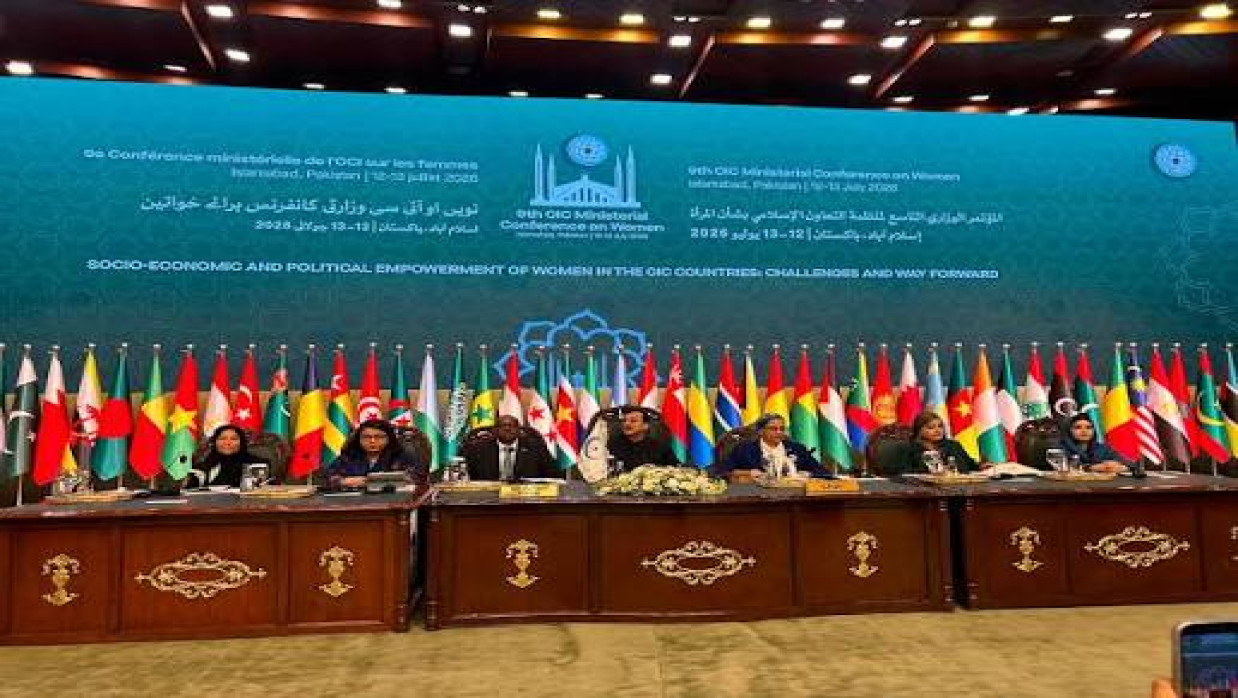
The 9th OIC ministerial conference on women, held in Islamabad on 12–13 July 2026, feels like more than just a high-level diplomatic meeting, it is kinda a sign of Pakistan’s rising influence in shaping discussions that matter for the future of the Muslim world. Because Pakistan invited ministers and senior representatives from across the Organisation of Islamic Cooperation (OIC), it has shown not only strong diplomatic trust but also a real push toward women empowerment, within a wider setting of sustainable development and Islamic solidarity… kind of together.
In a world that’s getting ever more linked up, international diplomacy is kind of not only about security talks or political quarrels anymore. Now the conversations also drift into education, economic growth, healthcare, technology, climate resilience, and women’s involvement, and in practice these things are turning into the backbone of both global cooperation and regional coordination. The Islamabad conference sort of points to that shift, by placing women right in the center of the development agenda, and it openly notes that real, durable prosperity doesn’t really happen unless every person in society is allowed to participate in national progress in a meaningful way.
Pakistan’s choice to host this important ministerial meeting shows that it’s confident enough to act as a link, a bridge between different parts of the Muslim world. The OIC gathers countries from South Asia, the Middle East, Central Asia, Africa, and Europe. Each group has its own lived experiences, and also its own development priorities, so Islamabad ends up being a place where governments can talk through workable ideas, trade practical solutions, and spot challenges they all share. At the end, the goal is to build stronger collaboration on those policies that improve daily life for millions of women and families across member states.
The weight of this conference reaches past the symbolic diplomacy, a bit more, you know. Ministerial meetings give governments a space to try and sync strategies, check what ongoing initiatives are actually doing, and spot those spots where joint action can lead to better outcomes than when each country works on its own, separately. And whether the topic is girls education, maternal healthcare, women entrepreneurship, vocational training digital inclusion, or money and financial access, OIC members gain from trading experiences that already turned into good results in other places.
Pakistan, this conference also gives a moment to underline its own movement forward when it comes to widening opportunities for women. Across the country, women keep contributing in education, medicine, science, law, business, agriculture, sports, entrepreneurship, and public administration. Of course, every society still meets obstacles, but international forums like this one help countries present initiatives that worked while also absorbing lessons from other people s experience. That back and forth supports stronger policymaking and encourages hands-on cooperation instead of only theoretical talks.
The conference also makes Pakistan ’s diplomatic links stronger with other OIC members, like it sort of helps all around. In general, high-level visits naturally create room for bilateral talks that cover many matters beyond what’s on the official agenda. Ministers and senior officials can go through trade, investment, joint plans for higher education, cultural exchanges, tourism, technology transfers, humanitarian cooperation, and the broader picture of regional security. These interactions often end up setting the foundations for later agreements that end up helping the participating countries, long after the conference itself is done.
Another key effect is Pakistan ’s rising reputation as a solid host for big international events. Pulling off a conference with delegates coming from across the Muslim world needs careful preparation and good coordination, plus strong security measures, and also professional logistics, not just “winging it”. When Pakistan delivers such an event smoothly, it boosts international trust in Pakistan ’s institutional ability, and it also increases the chances of hosting further OIC meetings, as well as conferences with other international organizations, too.
The economic effect of hosting international conferences shouldnt be underestimated, because once foreign delegations, journalists, diplomats, and the rest of support staff arrive, they start buying a lot of everyday things. Demand for hotels, transport, restaurants, aviation services, conference venues, and local businesses tends to rise. Even if it is short term, these activities still help the local economy keep moving while Pakistan’s hospitality sector and tourism potential get seen, by real international visitors. And when experiences are positive, people often come back later, not just for business travel but for investment visits, or even academic exchanges.
As important, is how much the conference shapes Pakistan’s international image. Nations can build influence using economic strength or military capability, sure, but also through constructive diplomacy and careful international engagement. When Pakistan makes room for dialogue on women’s development, social progress, and cooperation across Muslim nations it projects a willingness to lead conversations that actually end in meaningful results. That, in turn, strengthens its reputation as a responsible stakeholder, one committed to regional stability and the kind of collective advancement that everyone can benefit from.
The conference also shows how the OIC itself is shifting its own priorities, a bit, step by step. Alongside handling political matters that touch member states, the organization is more and more realizing that long-range stability rests on sturdier educational frameworks, economic chances, innovation, healthcare, and social inclusion. Women’s empowerment sits at the center of each of these aims, because lasting development can’t really happen when half of society runs into obstacles when trying to take part. If you broaden educational access, widen professional opportunities, and open leadership roles for women, then it usually ends up reinforcing households, local communities, and also the national economies across the Muslim world.
The conference’s biggest win is the way it highlights unity, through cooperation. The Muslim world is notably varied, by language, by custom, by geography, and by how developed the economies are. Still, member states keep sharing similar hopes for peace, prosperity, dignity, and sustainable momentum. Events like the OIC Ministerial Conference on Women help reminding participating countries that a lot of difficult issues can be handled more effectively together, with mutual regard and with the passing of know-how.
As Pakistan hosts this landmark gathering in Islamabad, it kind of reinforces a broader diplomatic message, that meaningful leadership is shown not just through words but also by making space for dialogue, partnership, and a shared forward momentum. When Pakistan brings together representatives from across the OIC to discuss women empowerment and inclusive development, it strengthens both its own diplomatic profile and the overall spirit of cooperation that basically defines the organization.
The 9th OIC Ministerial Conference on Women, will likely be remembered not only as another international meeting, but as a notable step toward deeper collaboration among Muslim nations. It underlines Pakistan’s dedication to inclusive development, it also highlights the strengthening of Islamic solidarity , and it contributes toward a coming time where women can take an even larger role in shaping the prosperity, resilience, and progress of the Ummah.


0 Comments
LEAVE A COMMENT
Your email address will not be published