

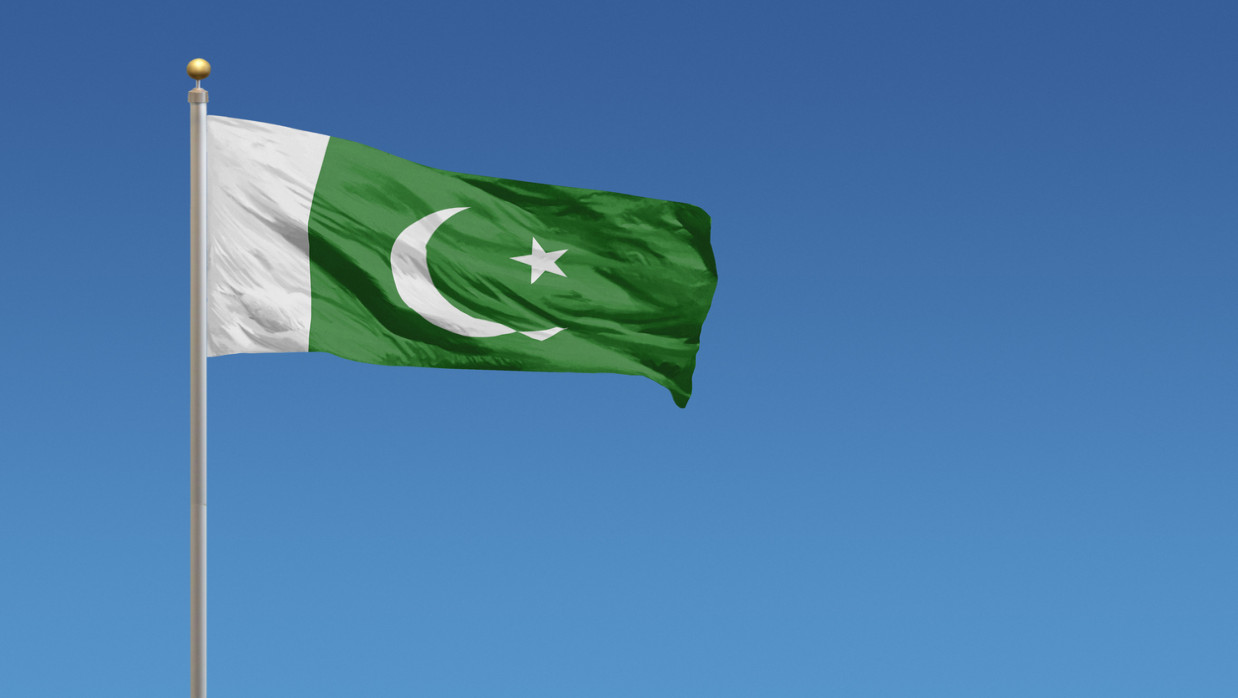
Countries tell stories about themselves through symbols, like, monuments national days, school curricula, military traditions, and even the names given to military equipment. All these pieces show how a state reads its past and tries to frame its future. In Pakistan’s case, an increasingly visible push has been growing across the last decade, aiming to stress the country’s deep pre-Islamic civilizational legacy, especially the Indus Valley Civilization, Gandhara, Taxila, and other very ancient cultural traditions that lived well before Islam arrived.
This evolution has broadened Pakistan’s historical narrative rather than just replaced its Islamic identity. Still, it also sparked this sort of interesting talk among historians’ strategic analysts, and cultural observers: how can Pakistan celebrate thousands of years of indigenous history, while many of its strategic assets keep carrying names that are drawn mostly from Islamic history and well-known Muslim rulers?
This question isn’t about refusing one identity to choose another. It’s more about how a modern country weaves these different layers of lived history, into one coherent national story, that actually holds together.
Pakistan geography sort of stretches across one of the oldest hubs of human civilization. The Indus Valley Civilization, going back more than four thousand years, grew into really advanced city layouts, trade pathways, water management systems and also social organization. After that, the same land kinda became home to Gandhara, Taxila, Buddhist scholarship, Jain traditions, Hindu realms, and the dynasties run by figures like Chandragupta Maurya, Ashoka and Kanishka. In other words, these earlier cultures built the cultural and intellectual base ground for South Asia.
Successive Pakistani governments have been more and more putting weight on this heritage. Archaeological preservation, global exhibitions, tourism drives and cultural diplomacy have kept pointing at Mohenjo-daro, Harappa, Taxila, and various Buddhist archaeological locations as part of what Pakistan has contributed to world civilization. And the overall message is that Pakistan should be seen as the guardian of a common human legacy, not just something that started with a set of events beginning in the eighth century.
This broader historical outlook has also got some acknowledgement from senior political leaders, though it can feel a bit contested at first. Defence Minister Khawaja Asif recently said that Pakistan’s history did not begin with Islam and that figures like Ashoka, Chandragupta Maurya, and Kanishka as well as Buddhist and Jain traditions, are part of what the country inherited. In a way, these remarks show an ever more inclusive grasp of Pakistan’s civilizational identity, even if people argue about where to draw the lines.
At the same time, Pakistan’s military traditions still lean quite a lot on Islamic history, especially when it comes to how major weapon systems are named. Ballistic missiles such as Abdali, Ghaznavi, Ghauri, Babur, and Taimoor, basically commemorate well known Muslim rulers tied to different phases of Islamic expansion. Meanwhile, other strategic systems use religious or historical Islamic wording too, including Hatf, Anza, Zulfiqar, Al-Khalid, Al-Zarrar, and the Ra'ad cruise missile.
These naming conventions emerged in a particular historical context. During the Cold War, and the decades that followed, Pakistan’s national security doctrine was pretty much shaped by ideological cohesion, Islamic symbolism, and the need to keep unity intact during stretches of regional instability. The military nomenclature mirrored those strategic and political realities more than it was an attempt to reduce earlier civilizations, or anything like that.
Indeed, the habit of drawing upon historical military figures is hardly new to Pakistan. Plenty of other states do similar things, they use names tied to national heroes, legendary commanders, mythological characters, or even important events from the past, basically to inspire confidence, continuity, and an institutional sort of tradition. Military nomenclature often ends up reflecting organizational heritage just as much as it reflects national identity, if not more.
However, Pakistan’s evolving cultural diplomacy adds another side to all this, sort of, it introduces a new dimension. In Islamabad’s view, as it more and more pushes the Indus Valley Civilization and Gandhara art, plus its Buddhist heritage and archaeological tourism toward international audiences, the outside story is starting to feel wider than the old, traditional strategic symbolism.
This doesn’t really mean Pakistan must start swapping out the existing military names, no, not necessarily. Instead, it could be a chance to loosen up the set of historical references that stand in for Pakistan’s national story. In the future, defence projects, scientific programmes, satellites, infrastructure initiatives or educational institutions could borrow from the country’s many epochs and references from within today’s borders—ancient cities, scholars, philosophers, engineers, and other cultural achievements that originally took shape in Pakistan’s present-day territory.
This kind of approach would kinda underline the notion that Pakistan’s identity is at once Islamic and civilizational, sorta taking in every chapter of the land’s long memory, without making extra, unnecessary split ups between the different historical periods, like it has to be that way.
The very same idea carries over into national discourse, more generally too. Nations with long histories usually don’t define themselves through one single era only. Egypt, for example, remembers both the Pharaohs and Islamic Cairo, and it doesn’t act like those things clash. Iran pays respect to Persepolis alongside its Islamic heritage; Türkiye really absorbs the legacies of both Anatolian civilizations and the Ottoman Empire. China also folds thousands of years of dynastic history into its modern self-understanding. Pakistan, similarly, has a particular chance to show itself as the inheritor of several civilizational traditions, and together those threads enrich its national character in a more coherent way.
Recent military operations also show, kind of indirectly, how symbolism keeps on mattering in national security messaging. The title Operation Bunyan-un-Marsoos, which was carried out under the leadership of Field Marshal Asim Munir, used Islamic historical references meant to signal resilience, cohesion, and national resolve. Honestly, this kind of symbolism lands well in Pakistan's society and within the armed forces too, it still feels like a key ingredient in how institutions see themselves.
Yet, symbolic continuity doesn’t have to stop anyone from doing symbolic expansion. National narratives tend to feel the most persuasive when they weave in the full range of a country’s heritage, not just one narrow historical moment. Notably, acknowledging ancient civilizations doesn’t dilute Pakistan’s Islamic identity; likewise, protecting Islamic military traditions doesn’t reduce the significance of Mohenjo-daro, Taxila or Gandhara. Both directions can sit together, almost like they’re sharing the same room, inside a confident national framework.
Honestly, the whole debate around military nomenclature ends up being less about swapping labels, and more about widening the view, kinda. In Pakistan’s case, its most notable historical edge is exactly that unusually consistent thread across millennia, not some sudden rupture. Think of the planners of the Indus Valley cities and then the scholars of Taxila, then again, the Buddhist monasteries in Gandhara. And after that, the intellectual habits that grew under Islamic civilization, all of it layered in a way that shaped the cultural landscape we still see today.
A settled national identity doesn’t have to mean choosing between these inheritances only. Rather, it acknowledges that Pakistan is positioned at a crossroads of civilizations, where the total, accumulated legacy actually strengthens its international reputation. If Pakistan keeps honoring its Islamic traditions while also giving proper weight to its ancient civilizational roots, it can offer a more vivid, more self-assured and historically whole story to both its people and the wider world, without over simplifying the past.
In the twenty first century, strategic influence doesn’t only lean on military capability, it also rests on cultural confidence. Pakistan has one of the oldest civilizational landscapes you can find anywhere. When you really take in every chapter of that history, it becomes more than a story, it’s an opening to reinforce national unity, build trust abroad, and show a steadier image that comes from both faith and lived history, not just one side of it.

0 Comments
LEAVE A COMMENT
Your email address will not be published