

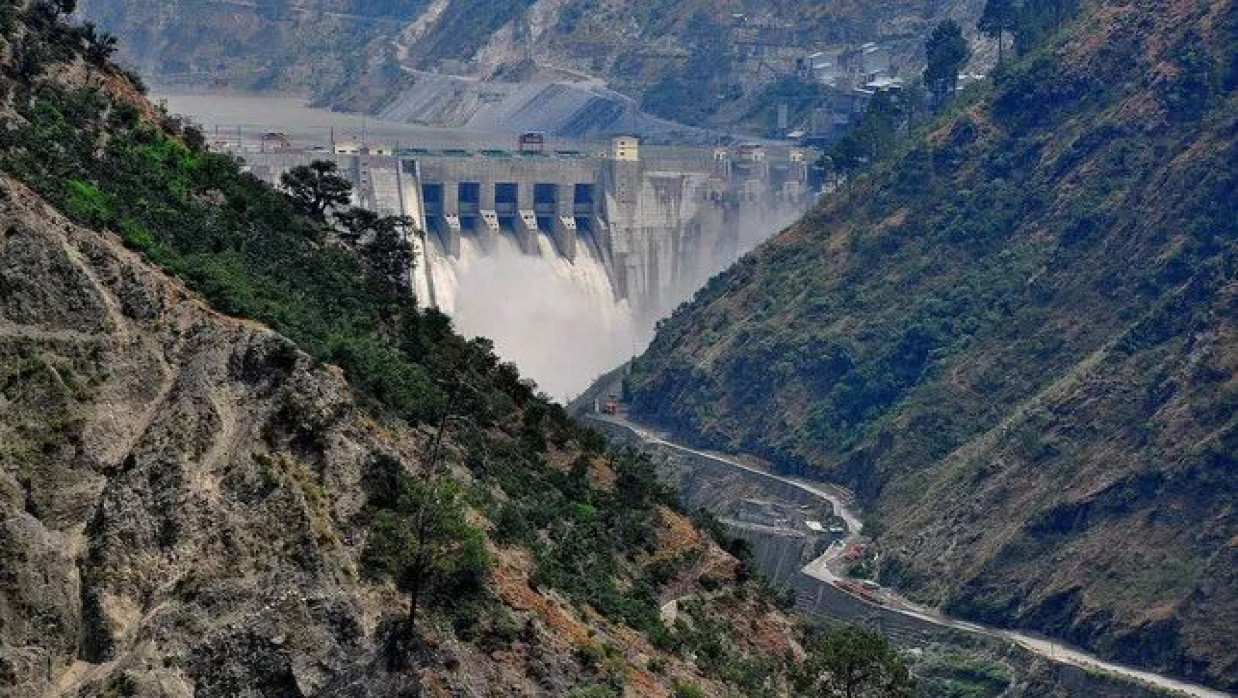
The Ratle Hydroelectric Project on the Chenab River has started to feel like a key concern in the already shaky talk around the Indus Waters Treaty (IWT), one of those major transboundary water-sharing agreements people often cite. Even though it is officially framed as a run-of-the-river hydroelectric undertaking allowed within the treaty’s limits, the mess around Ratle is not just about technical engineering stuff. It’s become a stand-in for bigger fears tied to transparency, treaty adherence, and what happens to water governance stability in South Asia.
What really sits behind these worries is not only the project’s physical structure, but also the ongoing failure to share full hydrological and operational information in a clear and consistent way. That gap, it weakens trust between the two riparian states and it also creates troubling consequences for downstream water security in Pakistan.
Located at Drabshalla in the Kishtwar district of Kashmir, the 850 MW Ratle Hydroelectric Project is being developed on the Chenab River, one of those western rivers that were allocated largely to Pakistan under the Indus Waters Treaty. The project itself covers a 133-meter-high concrete gravity dam, plus diversion tunnels and an underground powerhouse, with four 205 MW Francis turbine units and also an auxiliary unit. While India keeps saying that the scheme fits within treaty limits that apply to run of the river projects, Pakistan has repeatedly voiced reservations about specific design features, which it says go beyond the technical boundaries described in the treaty.
Most of the concerns, mainly circle around pondage capacity, spillway setup, and intake levels. The treaty’s idea behind run-of-the-river projects is to generate hydropower without materially reshaping or changing the natural river flow. Yet once the structure enables more storage, or even a higher degree of control over how water is released, downstream stakeholders tend to worry, because flow manipulation can become possible. With Ratle, Pakistan argues that some design choices could let India regulate water discharge during the moments that matter most for crops, especially in Punjab where millions depend on reliable irrigation, and that reliability is tied to the Indus Basin system.
The problem gets even more delicate when you look at it alongside rising regional water stress, climate variability, and those shifting river flows. Agriculture still sits at the core of Pakistan’s economy, and it depends a lot on river water that arrives, more or less uninterrupted, and on time. Even a short disturbance in the flow during sowing or harvest periods can set off a chain reaction in economic terms, lowering crop output, weakening food security, reducing rural work opportunities, and then hitting broader economic stability. So, developments upstream in the form of infrastructure are not just treated as technical undertakings, they become strategic moving parts, shaping downstream fragilities in a real way.
At the same time, there’s still a persistent absence of openness around key hydrological and operational information. Actually, implementing transboundary river agreements is not only about the written clauses, it also requires steady confidence-building steps, ongoing exchange of information, and real institutional coordination. When river-flow figures, operating routines, sedimentation evaluations, or reservoir management specifics are withheld, or shared late, trust erodes between the sides. And without clear transparent channels, those technical uncertainties can turn quickly into political disagreements, increasing suspicion, and quietly weakening the collaborative momentum that originally helped define the Indus Waters Treaty.
Pakistan’s concerns are therefore not just limited to the physical dimensions of the Ratle project by itself. They also spill over into a wider kind of pattern, where infrastructure design decisions paired with restrained data sharing, ends up making the strategic situation feel unclear. From Islamabad’s point of view, if hydrological information is not fully transparent, it makes it harder to double-check downstream impacts on its own, understand how seasonal flow shifts might look, or put in place mitigation strategies for possible disruptions. This kind of opacity is often seen as running against the cooperative ideas that are built into international water governance arrangements. In that setting, lower riparian states need timely, dependable information, so they can safeguard their economic and ecological interests.
The Ratle dispute also kinda points to a wider, growing challenge in keeping treaty resilience intact, especially now with geopolitical tensions that feel a lot more heightened. The Indus Waters Treaty has long been seen as one of the rare enduring examples of steady cooperation between India and Pakistan, even with all those recurring political crises and military run-ins. But stuff like Ratle is, more and more, testing how much the treaty’s institutions can actually handle, as the technological, environmental, and strategic situation keeps shifting around. As hydroelectric infrastructure gets more sophisticated and climate pressures intensify, disagreements about how to interpret the treaty clauses are turning up more often and, honestly, they’ve become more politically charged too, than before.
Moreover, the strategic importance of water in South Asia has lifted infrastructure disputes beyond just technical arbitration, and turned them into something that people often frame as national security, plus regional stability issues. Water insecurity now bumps into climate change, population growth, food security, and economic sustainability all at once. In a setting like this, even the simple idea that one side might be exercising unilateral control over transboundary water flows can quietly raise suspicion, and make distrust feel more solid, which in turn deepens regional polarization. So, the Ratle project, really, isn’t only an isolated engineering disagreement, it feels more like a wider sign of how fragile cooperative water governance can become when geopolitical competition is humming in the background.
Ultimately, the whole controversy surrounding the Ratle Hydroelectric Project kind of points, to a urgent need for more transparency, tighter institutional accountability, and a renewed push toward cooperative engagement, inside the Indus Waters Treaty framework. Handling shared river systems sustainably is more than just legal compliance by itself, it also really requires mutual confidence, open data sharing, and a plain acknowledgement that both upper and lower riparian states are exposed to linked vulnerabilities. If there isn’t transparent hydrological cooperation, and if the treaty-based safeguards aren’t actually followed, then projects like Ratle may end up turning shared rivers from instruments of regional cooperation into catalysts for long lasting strategic instability. And for Pakistan, the concerns about Ratle are closely tied with safeguarding agricultural sustainability, water security, and economic resilience in a region where water has become almost inseparable from broader questions of national stability and regional peace.

0 Comments
LEAVE A COMMENT
Your email address will not be published