

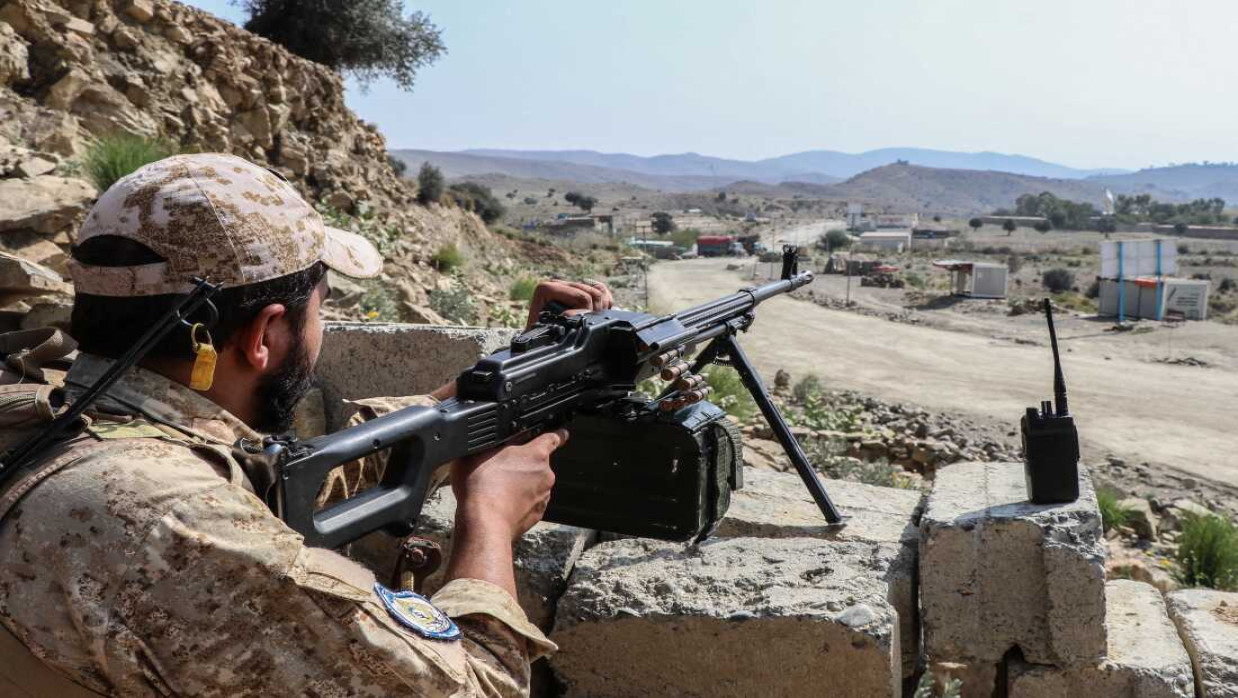
Current South Asian strategic literature shows that Pakistan's Balochistan and Khyber Pakhtunkhwa regions face internal security challenges, which develop into a larger regional conflict that involves external powers which support different factions in the dispute. The international community examines these claims, yet they serve as a basis for understanding Pakistan's entire security situation.
From a U.S. strategic perspective, the core concern is less about attribution of blame and more about the consequences which sustained instability of a geopolitically important region brings. Pakistan’s internal security situation intersects with several key American interests: access to strategic minerals, competition with China and Russia, and maintaining viable connectivity routes into Central Asia.
Strategic Minerals and Economic Diversification
The U.S. government wants to create supply chains that provide essential strategic minerals through its long-term economic and strategic policies. China controls all essential resources used for defense technologies and renewable energy systems and advanced electronics through its complete processing and supply networks. The United States has therefore sought alternative sources across Africa and Latin America and Central Asia.
The resource-rich area of Balochistan in Pakistan serves as a potential partner which shows major potential but needs more development. The province of Balochistan has experienced ongoing security problems because of insurgent activities and political disturbances which have halted all exploration and investment activities. The policy impact of the instability which exists in the region revolves around its capacity to decrease investor trust while hindering infrastructure progress. The result leads to lost chances which could have helped businesses to develop without being tied to Chinese-controlled supply networks.
Central Asia represents another vital area for United States strategic planning. The Central Asian Republics which include Kazakhstan Uzbekistan Turkmenistan Kyrgyzstan and Tajikistan control extensive energy resources and function as a strategic transit point which connects Europe to the Middle East and East Asia. United States officials maintain a long-term objective which aims to achieve economic independence for these states while decreasing their dependence on Russian economic systems.
The process needs dependable southward transportation links which connect Afghanistan and Pakistan to the Arabian Sea. The proposed transit corridor will enable Central Asian Republics to access additional export pathways which they can use to transport their natural gas and mineral resources thus reducing Russia's economic control over their markets. The Afghan conflict together with ongoing disturbances in border areas of Pakistan prevents the construction of these trade routes and energy pathways. The strategic plan which aims to connect Central Asia with international markets faces obstacles because the region lacks safe transportation routes.
Strategic Competition with China
The U.S.-China strategic competition has become the primary geopolitical conflict which defines international relations during the 21st century. Pakistan holds a special role within this system because China maintains extensive economic ties with the country through its infrastructure development projects and energy initiatives and transport links that form part of the Belt and Road initiative.
Some analysts argue that viewing instability in Pakistan solely as a mechanism to contain China is overly simplistic. The ongoing turmoil in Pakistan will lead to an increased dependence on Beijing which functions as an economic stabilizer and infrastructure protection partner. The situation will lead Pakistan to strengthen its ties with China as it reduces its external partnerships.
The United States strategic assessment of Pakistan instability demonstrates that this situation will not help achieve long-term containment goals. The situation which currently exists in Pakistan limits Washington's ability to operate in a region where power dynamics now depend on infrastructure development and energy routes and financial partnerships that extend beyond immediate security relationships.
Russia, Regional Balances, and Energy Routes
The historical and economic and logistical connections between Russia and Central Asia serve as the foundation for Russian power in that region. Moscow has maintained its influence over the area through three main channels which include energy exports and labor migration and security cooperation. The current energy balance can be changed through Central Asian energy resources which will be diverted to southern ports that connect to Pakistan.
A stable security situation throughout Afghanistan and Pakistan serves as a requirement for that security change. The other corridors remain unfeasible for economic purposes without it. The ongoing instability in the region works to maintain Russian control because it stops new trade routes from developing.
Pakistan as a Strategic Node, Not a Peripheral State
The analysis shows that Pakistan functions as a central point which links South Asia to Central Asia and the Middle East and Western China. The internal situation of Pakistan brings significant consequences for various international nations which have interests in the region.
US policymakers see Pakistan as a combination of difficulties and potential advantages. Pakistan provides one of the few remaining land routes which connects Central Asia's energy resources to the Arabian Sea's shipping paths despite ongoing issues with militant activity and governance problems and regional conflicts. The stability of Pakistan affects three major strategic goals which include establishing new mineral supply routes and decreasing Russian power over Central Asia and monitoring China's activities in the area.
Conclusion
The regional narratives explain Pakistan's instability through outside power conflicts between different state actors. The question of how instability affects strategic outcomes across different areas is more important for policymakers than any regional narratives about Pakistan's instability. The ongoing unrest in Balochistan and KP area of Pakistan has multiple effects which include decreasing strategic mineral investments and disrupting Central Asian regional ties and providing Russia and China with better strategic positions and decreasing United States ability to operate in an important geopolitical area.
The United States needs to understand great-power competition as an abstract concept but must also prevent instability from transit areas which connect essential economic and strategic assets in the future. The stability of Pakistan and Afghanistan both serve as regional security requirements and essential components for developing any successful Eurasian strategy.
0 Comments
LEAVE A COMMENT
Your email address will not be published