

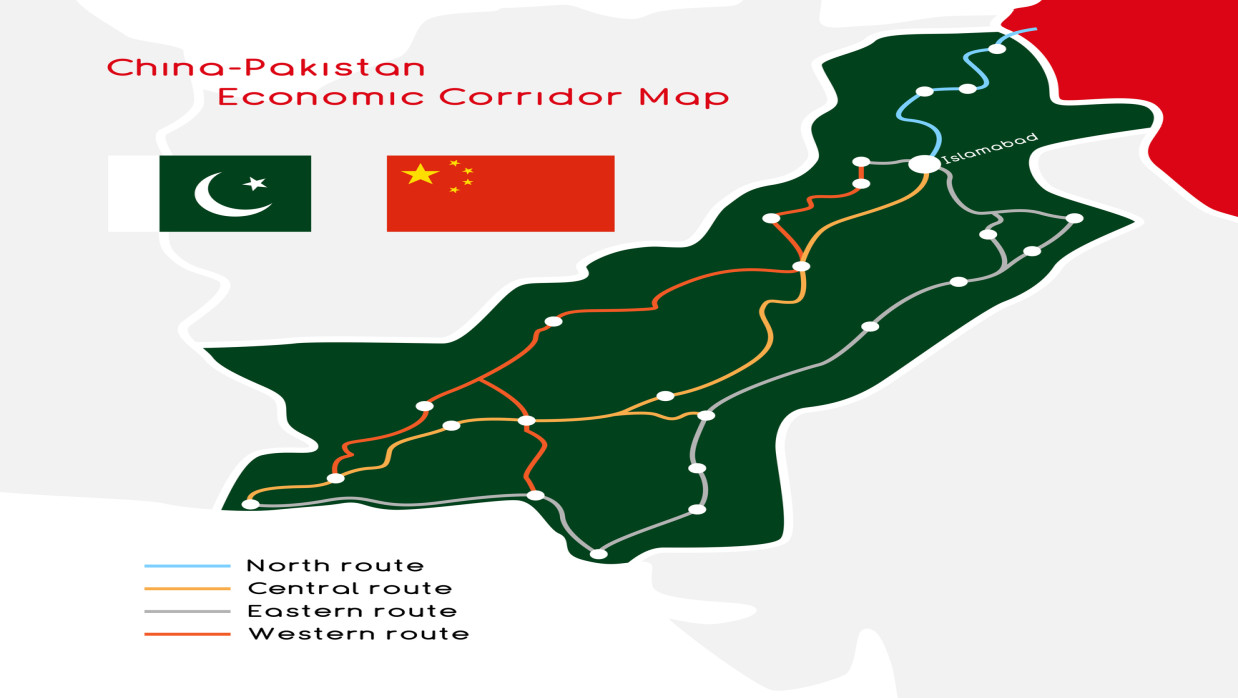
The relationship between Pakistan and China develops through 60 years of mutual trust and strategic connection and permanent backing which creates all-weather diplomatic ties that extend beyond military partnerships to economic development. The agricultural partnership between Pakistan and China serves as a major force which drives modernization and productivity improvements and economic benefits for both nations. The China-Pakistan Economic Corridor upgraded framework enables Pakistan's agricultural sector to experience its first major transformation through Chinese technology and expertise and investment support which originated in the second phase of development that started in 2026.
Pakistan relies on agriculture for its food security and economic stability but the sector faces multiple structural problems which include low agricultural yields and water shortages and land fragmentation and climate change impacts and inefficient value chains. CPEC 2.0 establishes agriculture as one of three primary development sectors which also includes industrial and mining activities to create a shift from infrastructure-based development to methods which focus on boosting productivity and generating value.
The current effort builds on work completed during the previous ten years. The 2018 Memorandum of Understanding established the Joint Working Group on Agriculture Cooperation which created a framework for both countries to collaborate on technology transfer and policy development. Chinese experts have contributed their knowledge to various fields since that time which encompasses drip irrigation and hybrid seeds and high-yield seeds and mechanization and pest control and post-harvest management. Qingfa Seeds and other Chinese companies set up farmer training centers which they used to teach modern canola cultivation techniques. China Machinery Engineering Corporation established its first large-scale contract farming operation to produce chili and sesame, which created a direct market connection between Pakistani farmers and Chinese markets.
The Pak–China Agriculture Investment Conference took place in Islamabad from January 19 to January 20 in 2026. The conference marked a shift from dialogue to execution, with 78–79 Memoranda of Understanding signed, valued at approximately $4.5 billion. The CPEC 2.0 initiative designated agriculture as a primary sector because it received backing from both government officials and private business organizations. The agreements cover ten sub-sectors which will create significant impacts, which include agri-inputs, agricultural machinery, food processing and value addition, and meat and dairy, fruits and vegetables, fishery and aquaculture, animal feed, cold-chain systems, and food-grade packaging.
The agreements establish comprehensive collaborative frameworks which extend from seed production technology and bio-pesticide development to the exportation of heat-treated beef and buffalo UHT milk and camel milk powder and cheese production and poultry machinery and renewable irrigation systems and the enhancement of mango pulp and rice and tea and horticultural products. The total included 37 business-to-business investment memorandums of understanding and 24 joint ventures and 14 partnership agreements which established structured matchmaking connections between 116 Chinese companies and 165 Pakistani companies. Dedicated facilitation units will be created at Pakistan's Ministry of National Food Security and Research and its Embassy in Beijing to make sure implementation occurs on schedule.
The partnership has produced legal frameworks which enable businesses to operate through technology-based corporate and contract farming systems. Chinese-backed joint ventures create demonstration farms which develop experimental fields and implement large-scale operations that use mechanization and precision agriculture and contemporary agricultural inputs. The partnership between Xinjiang and Pakistan which focuses on Gilgit-Baltistan arid and semi-arid areas benefits from Chinese knowledge in developing water-saving agricultural techniques. The models enable smallholders to decrease their risk because they deliver top-quality inputs and expert support and they create market opportunities which result in higher productivity and income. The sector will undergo major changes within months when Pakistan adopts established Chinese technologies according to the country's leadership.
The partnership already shows actual results through its current achievements. The combination of hybrid seeds and climate-resilient crop varieties together with drip irrigation systems, boost crop production in wheat, rice, maize, cotton, canola, chilies, and horticultural crops. The maize breeding contracts which both parties signed in 2025 will create heat-tolerant varieties that improve maize yields from 30 to 50 percent. The livestock sector development through buffalo genetics and dairy processing and meat processing activities, helps Pakistan build its livestock value chain while creating opportunities for halal products to enter China and other markets.
The process of human capital development serves as the main element which drives this change. The Thousand Agriculture Graduates Program, Luban Workshops, and Luban–Mozi College framework agreement signed on January 20, 2026 create training programs which teach Pakistani youth smart agriculture and arid-zone farming and water-efficient irrigation methods while they learn to develop advanced technologies.
Chinese companies are investing in cold storage and warehousing and logistics and food processing facilities which operate beyond the farm gate to decrease post-harvest losses while enabling exports of higher-value products. The trade momentum shows evidence that Pakistan has established stronger agro-industrial connections because its cotton yarn exports to China reached more than $450 million during 2025 while domestic challenges remained.
Pakistan aims to double its agricultural exports from $8 billion within three years through new sanitary and phytosanitary protocols and a seed policy and a national agricultural biotechnology framework. CPEC 2.0 agricultural partnership enables Pakistan to achieve food security through agricultural innovations from China which utilize its extensive farmland and agricultural labor force. The initiative demonstrates effective South-South partnership because it builds trust between countries through a common objective that delivers benefits to both parties over an extended period.

0 Comments
LEAVE A COMMENT
Your email address will not be published