

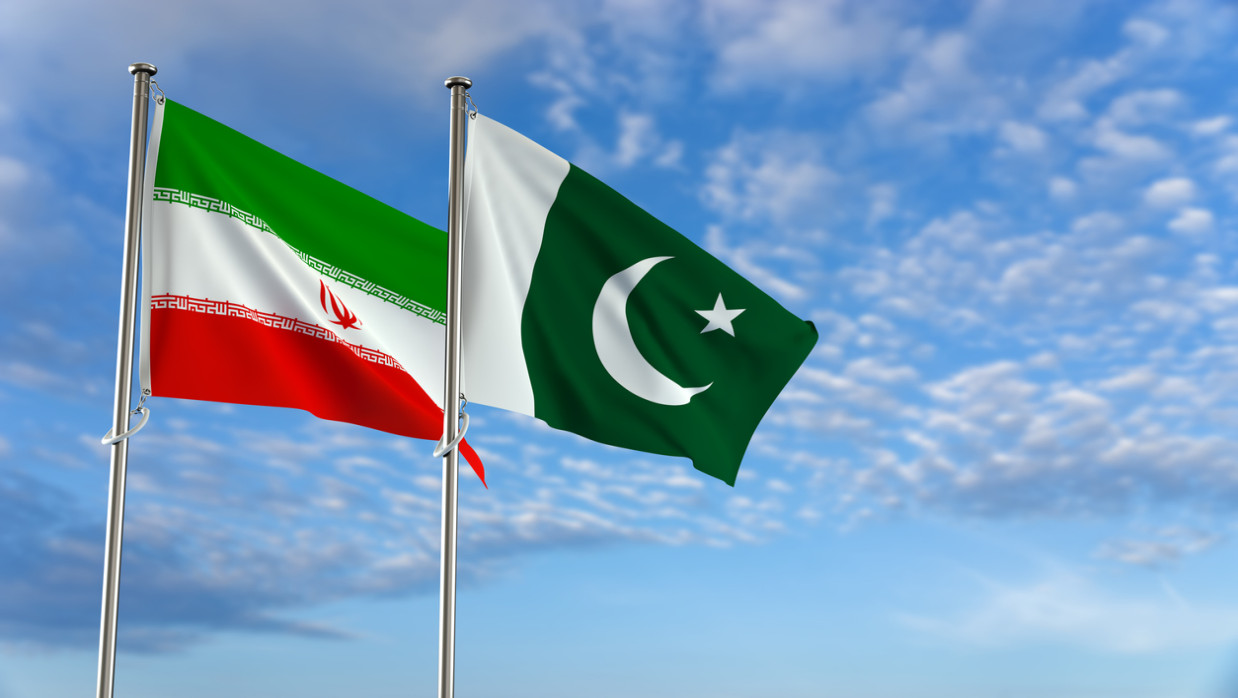
The recent meeting between Prime Minister Muhammad Shehbaz Sharif and Iranian President Dr. Masoud Pezeshkian on the sidelines of the International Year of Peace and Trust underscores a deeper strategic shift quietly taking shape in the region. At a time when West and South Asia are engulfed by instability, coercive geopolitics, and economic fragmentation, the convergence between Pakistan and Iran reflects not sentimentality, but necessity. This engagement signals a growing realization in both capitals that regional challenges can no longer be managed in isolation.
At the heart of the discussion was mutual acknowledgment of support during moments of external aggression earlier this year. Such recognition carries weight in a region where trust deficits are chronic and alliances often conditional. For Pakistan and Iran, this mutual reassurance reinforces a narrative of strategic reliability. It also reflects a broader recalibration: both countries appear increasingly inclined to hedge against external pressures by strengthening regional partnerships rather than relying solely on distant or unreliable actors.
Economic cooperation emerged as a central theme, highlighting how both states view geo-economics as the most sustainable anchor of their relationship. The 22nd session of the Pakistan–Iran Joint Economic Commission was not merely a procedural milestone; it was an attempt to break decades of underperformance in bilateral trade. Despite shared borders and complementary markets, trade volumes remain modest, constrained by sanctions on Iran, limited banking channels, and poor connectivity. Prime Minister Shehbaz Sharif’s call to expand trade, operationalize border markets, and enhance transport links reflects a clear policy shift from rhetoric to implementation.
The renewed emphasis on the Islamabad–Tehran–Istanbul rail corridor is particularly strategic. In an era of supply chain disruptions and geopolitical chokepoints, overland connectivity offers resilience. Reviving this rail link could integrate Pakistan into trans-regional trade networks stretching into Europe while allowing Iran to reinforce its role as a transit hub. This is not simply about commerce; it is about strategic autonomy in a global system increasingly shaped by economic coercion.
Security considerations, especially border management, further reveal the pragmatic tone of the engagement. The Pakistan–Iran border has historically been vulnerable to militancy, smuggling, and underdevelopment. Addressing border security alongside economic facilitation indicates a recognition that security and development are mutually reinforcing. Rather than securitizing the border in isolation, both sides appear to be moving toward a comprehensive framework that combines enforcement with economic opportunity for border communities.
Regional issues dominated the strategic exchange. Pakistan’s call for pressing the Afghan Taliban to act decisively against terrorism finds resonance in Tehran, which has its own concerns about instability spilling over from Afghanistan. While Pakistan and Iran maintain different tactical relationships with Kabul, their strategic interests align in preventing Afghan territory from becoming a hub for militant groups. This shared concern opens space for coordinated regional diplomacy, reducing the risks of unilateral responses that often exacerbate instability.
The discussion on Gaza further reflects political convergence beyond immediate neighborhood concerns. Both Pakistan and Iran view the ongoing crisis as emblematic of the erosion of international law and humanitarian norms. Although their diplomatic styles differ, the shared emphasis on justice for Palestinians strengthens their moral positioning within the broader Muslim world. This alignment also serves domestic audiences, where public sentiment strongly favors principled stances on global Muslim causes.
President Pezeshkian’s reaffirmation of Iran’s desire to deepen ties with Pakistan suggests continuity in Tehran’s regional outlook. Facing economic pressure and diplomatic isolation, Iran increasingly values relationships that offer connectivity, legitimacy, and strategic depth. Pakistan, for its part, benefits from diversifying its regional partnerships, reducing vulnerability to shifting global power alignments.
Symbolism, often underestimated, played its role as well. Prime Minister Shehbaz Sharif’s message of goodwill to Supreme Leader Ayatollah Khamenei reflects Islamabad’s sensitivity to Iran’s political and religious hierarchy. Such gestures reinforce mutual respect and help insulate bilateral relations from episodic tensions or external provocations.
Ultimately, this meeting represents a broader trend: Pakistan and Iran are moving toward a relationship defined less by cautious coexistence and more by strategic pragmatism. Shared history, culture, and faith provide the foundation, but it is converging interests—economic resilience, border stability, and regional influence—that are driving the partnership forward.
The challenge now lies in execution. Infrastructure projects, trade facilitation, and coordinated regional diplomacy require sustained political will and bureaucratic follow-through. If implemented effectively, the Pakistan–Iran partnership could emerge as a stabilizing axis in a volatile region. If not, it risks remaining another well-intentioned dialogue lost to inertia. For now, however, the direction is unmistakable: Islamabad and Tehran increasingly see each other not as optional partners, but as strategic necessities in an uncertain world.


0 Comments
LEAVE A COMMENT
Your email address will not be published