

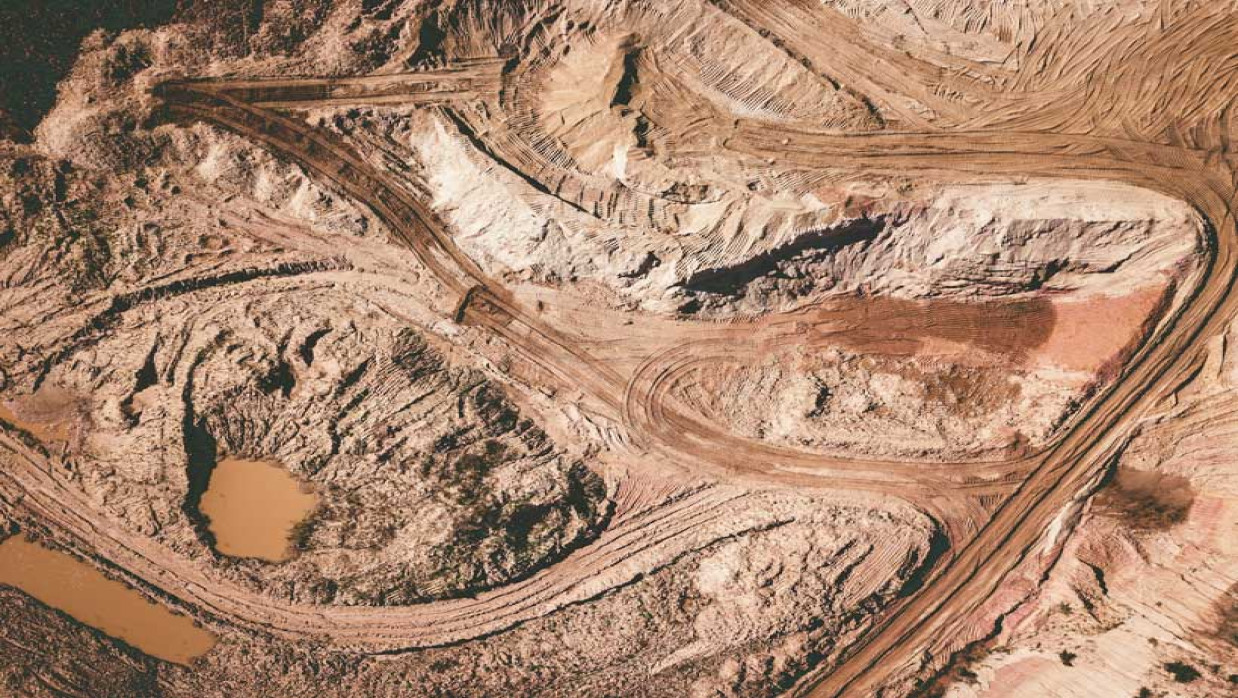
From the plantation monocultures of the old “banana republics” to today’s lithium brine fields, cobalt pits, and coal basins that power the global economy, the architecture of development reveals an enduring moral failure: wealth is accumulated at the center through the systematic displacement of human suffering and ecological ruin onto the periphery. Though ideological banners have shifted—from capitalist empire to socialist development diplomacy—the core logic of extraction endures. Competing systems now operate under different political vocabularies yet reproduce the same frontier model, transforming vulnerable states into suppliers of raw materials and fossil energy for distant industrial centers.
The deepening rivalry between Washington and Beijing has intensified these dynamics, and nowhere is the tension more visible than in Pakistan. Rapid mineral development alongside large-scale coal-power investments has locked the country into a carbon-heavy energy pathway, contributing to severe air-quality degradation — most visibly in urban centers such as Karachi and Lahore, now ranked among the world’s most polluted megacities. Yet this extractive expansion has also generated new layers of insecurity: competition over resource corridors, militarized project protection, displaced communities, and labor targeting have converged to produce an environment where development itself often becomes a driver of instability. As Pakistan is drawn deeper into the race for both battery metals and fossil fuels, it increasingly stands exposed as a contested extractive battleground — not only for global struggles over resources, energy security, and geopolitical influence, but also for its own unresolved tensions between economic growth, environmental sustainability, and human security.
Plantation Empires and the Birth of Informal Empire
The template of modern extractive imperialism emerged most visibly in the early twentieth-century “banana republics” of Central America, the Caribbean, and northern South America. U.S.-based corporations such as United Fruit (now Chiquita), Standard Fruit, and Dole secured vast land concessions across Guatemala, Honduras, Costa Rica, Nicaragua, Panama, Colombia, Ecuador, Cuba, the Dominican Republic, and Haiti. These firms built vertically integrated empires controlling railways, ports, shipping fleets, warehousing systems, and finance.
National economies became appendages of corporate logistics. Local sovereignty mattered little. Governments that attempted land reform or labor regulation faced diplomatic intimidation and military overthrow — most notoriously in Guatemala in 1954, when a CIA-supported coup removed an elected government after modest agrarian reforms threatened U.S. corporate holdings. Similar pressures unfolded across Honduras, Nicaragua, Ecuador, and Colombia.
Labor regimes were sustained through debt peonage, poverty wages, union suppression, and armed strikebreaking groups. Repression culminated in episodes like the 1928 Banana Workers’ Massacre in Colombia, where soldiers opened fire on striking workers, killing hundreds. Environmental destruction followed the same trajectory: rainforests were cleared, soils depleted, waterways poisoned with pesticides such as DDT and chlorpyrifos, and coastal zones damaged by plantation runoff.
Even after many plantation estates were abandoned, the regions remained locked into export monoculture — unable to diversify toward industrial development and burdened by long-term ecological damage.
China’s Industrial Ascent and a Parallel Empire
China’s rise as an industrial powerhouse has produced an extraction system structurally comparable to earlier Western models, though financed and coordinated through state-linked institutions under the Belt and Road Initiative (BRI). Chinese corporations now build railways, ports, dams, and industrial corridors across Africa, Southeast Asia, Central Asia, and Latin America in exchange for long-term access to coal, copper, cobalt, nickel, lithium, oil, and rare-earth minerals.
In the Democratic Republic of Congo (DRC) and Zambia, Chinese firms dominate cobalt and copper production feeding global electric-vehicle supply chains. Sites around Kolwezi and Lubumbashi exhibit dangerous working conditions, child labor in subcontracted pits, union suppression, and extensive acid runoff contaminating agricultural lands.
In Myanmar’s Kachin State, rare-earth mining amid civil war produces chemical waste dumping, river poisoning, deforestation, and land seizures, with extraction revenues flowing to armed groups. In Indonesia and the Philippines, Chinese-linked nickel concessions drive forest clearing, coastal sedimentation, mercury pollution, and labor repression backed by state–corporate security arrangements.
The financial backbone of this expansion is debt-financed infrastructure. Sri Lanka’s inability to service port loans resulted in the 99-year lease of Hambantota Harbor to Chinese operators. Across Kenya, Laos, Ethiopia, Pakistan, Montenegro, and Tajikistan, megaprojects increase sovereign debt while producing limited technology transfer or domestic industrial upgrading. Environmental assessments are frequently bypassed, leaving diverted rivers, displaced villages, and degraded fisheries in their wake.
Mining as the Ultimate Crisis Industry
Minerals sit at the core of today’s energy transition. Copper electrifies cities; lithium and cobalt power batteries; aluminum supports construction; rare earth elements enable wind turbines and semiconductors. As demand surges for decarbonization and digitalization, supply chains for these resources have become arenas of geopolitical competition.
Yet the climate transition rests disproportionately on developing countries that supply these minerals — including the DRC, Chile, Bolivia, Peru, Indonesia, Zambia, and Pakistan. These same states are urged by major powers to restrict emissions and tighten environmental standards even as extraction expands to meet foreign demand. The result is a climate injustice paradox: countries least responsible for historical emissions bear the heaviest ecological costs to sustain “green growth” abroad.
China today controls roughly 60–70% of global rare-earth refining capacity and holds dominant positions in cobalt, lithium, graphite, and nickel processing. While raw minerals originate in the Global South, much of this material is shipped to China for refinement before entering global markets. Value capture therefore concentrates in processing and manufacturing centers — not in the landscapes where minerals are extracted.
Mining itself remains one of the world’s most environmentally destructive industries. It consumes fossil fuels, releases methane from coal operations, generates massive carbon loss through deforestation, and contaminates watersheds through persistent toxic runoff. Tailings dams leak or collapse, releasing arsenic and cyanide into ecosystems. Acid mine drainage — a chemical process triggered when sulfide minerals oxidize — continues dissolving heavy metals into waterways centuries after mines close. Open-pit operations permanently destroy soil profiles and hydrological systems.
Labor conditions are equally grim. Tunnel collapses, methane explosions, silica inhalation, mercury poisoning, and radiation exposure plague miners worldwide. Occupational diseases including silicosis and lung cancers remain underreported. Millions of workers across the DRC, Bolivia, Peru, Indonesia, Nigeria, and Ghana operate beyond legal protections. Child labor persists in hand-washing mercury-contaminated ore — feeding global battery and electronics manufacturers through opaque intermediaries.
Pakistan: Extraction at the Periphery
Pakistan now sits directly within the contested U.S.–China mineral corridor. In 2025, Washington formally began framing Pakistan’s mineral resources as strategic assets as part of its broader effort to diversify global critical-mineral supply chains. Islamabad responded by placing the mining sector under the ambit of the Special Investment Facilitation Council (SIFC), promoting a model of “security-backed investment facilitation.” An unprecedented memorandum of understanding between Pakistan’s Frontier Works Organization (FWO) and U.S. Strategic Metals (USSM) marked the first major American entry into mineral exploration, processing, and refining activity in the country — symbolically positioning Pakistan as a new frontier in great-power resource competition.
Yet entrenched patterns of dependency persist. The Saindak copper–gold project, operated since the early 2000s by China’s Metallurgical Corporation of China (MCC), continues to export copper concentrate with minimal domestic downstream processing or technological transfer. Likewise, the Thar Coal project under the China–Pakistan Economic Corridor (CPEC) ties large-scale lignite extraction to coal-fired power generation, raising serious environmental concerns including toxic air pollution, groundwater depletion, land subsidence, and long-term carbon lock-in. Pakistan’s coal-fired power capacity now exceeds 7,500 MW — largely built under CPEC — at a time when developed economies are accelerating the phase-out of coal, widely recognized as the most pollution-intensive form of electricity generation with severe climate and public-health consequences.
The revival of Reko Diq in 2022, under a joint venture between Barrick Gold (Canada) and the Pakistani state, similarly depends on foreign capital, technology, and management expertise. Taken together, these flagship projects illustrate Pakistan’s current position within the global extractive economy: a supplier of raw materials while value-added processing, manufacturing, and technological learning remain largely externalized abroad — entrenching dependency rather than fostering meaningful industrial transformation.
Labor vulnerability further compounds this extractive development model. Coal miners — predominantly migrant workers — have become frequent targets of militant violence in districts such as Harnai, Duki, Mach, Quetta, and Bolan. Many originate from some of Punjab’s poorest regions, including Dera Ghazi Khan, Rajanpur, Muzaffargarh, Layyah, Bahawalnagar, Bahawalpur, Rahim Yar Khan, Chiniot, Jhang, and southern Multan. Chronic unemployment and the absence of viable local livelihoods compel workers to accept hazardous and poorly protected employment far from home, where they face both industrial exploitation and lethal insecurity.
These dynamics are concentrated in Balochistan — Pakistan’s most geographically remote and least developed province — where multidimensional poverty affects more than 71 percent of the population, nearly double the national average. Recurring mining fatalities in the province further underscore the profound human cost of extractive development amid weak safety oversight and regulatory failure.
The continuing security crisis in Baluchistan, which has rendered the region unsafe for laborers, political activists, journalists, and civilians alike, demands a deeper inquiry into its underlying causes. Travel in Baluchistan, even for essential purposes, is unsafe without formal security arrangements from the relevant authorities. Debate persists over whether this instability stems primarily from domestic governance failures or from the enduring consequences of external geopolitical intervention and proxy conflict.
While the Pakistan Army and Frontier Corps maintain extensive protection for infrastructure corridors and strategic energy installations, labor settlements and daily commuting routes remain largely unsecured — revealing a security architecture oriented toward safeguarding assets rather than protecting people.
These insecurities reflect deeper historical legacies. Pakistan’s role as a frontline U.S. ally during the Soviet–Afghan war (1979–1989), followed by its central involvement in the U.S.-led “War on Terror” after 2001, facilitated widespread weapons proliferation, the expansion of narcotics trafficking networks, and the sustained mobilization of militant groups across the region. Since 2001 alone, terrorist violence and militancy have resulted in tens of thousands of civilians and security-force deaths in Pakistan, underscoring the profound and enduring human cost of the country’s prolonged “frontline” status in regional conflict architectures.
Together, these processes reshaped national security institutions, weakened civilian governance in peripheral territories, and normalized conflict-economy structures. Their aftershocks continue to reverberate through contemporary extraction zones — particularly Balochistan — where fragile governance now collides with contested mineral wealth, producing chronic instability rather than inclusive or sustainable development.
Human Capital as an Alternative
Pakistan’s most sustainable development trajectory lies beyond extractive growth. Investment in human capital offers far higher long-term economic returns with minimal environmental costs compared to resource-intensive pathways. Strategic partnerships with both the United States and China should therefore prioritize technical education, university–industry research collaboration, digital-skills incubation, artificial-intelligence laboratories, semiconductor materials research, climate-technology hubs, and advanced vocational training.
Yet despite having one of the world’s youngest populations — with over 60 percent under the age of 30 — and a network of more than 260 universities and higher-education institutions, Pakistan’s tertiary enrollment remains limited to approximately two million students nationwide. Nevertheless, the country’s expanding IT-services sector, freelance exports, software startups, and emerging renewable-energy innovations already demonstrate global competitiveness even with modest state support.
The strongest evidence of Pakistan’s human-capital value lies in remittance inflows — earnings produced almost entirely through skilled labor rather than resource extraction. In 2024, Pakistan received approximately US$34.6 billion in remittances (about 9.4 percent of GDP). Monthly inflows in 2025 consistently exceeded US$3 billion, peaking at US$3.4 billion in June, pushing projected annual receipts to an estimated US$38.3 billion, a historic high. Pakistan now ranks among the world’s leading suppliers of freelance digital labor through platforms such as Fiverr and Upwork.
Crucially, these earnings required no forests to be cleared, no aquifers to be poisoned, and no workers to be buried underground — underscoring that Pakistan’s greatest wealth lies not beneath its soil, but in the skills, creativity, and productivity of its people.
Conclusion: Convergent Empires, Shared Victims
From the plantations of Central America to the mines of Congo and the coalfields of Pakistan, the same pattern persists: extraction enriches distant centers while leaving workers exploited and environments damaged at the periphery. Despite competing ideologies, rival empires reproduce the same extractive order.
Pakistan’s entrapment between U.S. supply-chain realignment and China’s resource corridors reflects this logic — exporting raw materials while absorbing ecological and social costs. Yet an alternative is visible. Growth rooted in human capital — digital skills, technology exports, and innovation — offers a cleaner, fairer, and sovereign development path.
As Che Guevara warned, empires may change costume, but their extractive essence endures. Pakistan’s true wealth lies not underground, but in its people.

0 Comments
LEAVE A COMMENT
Your email address will not be published