

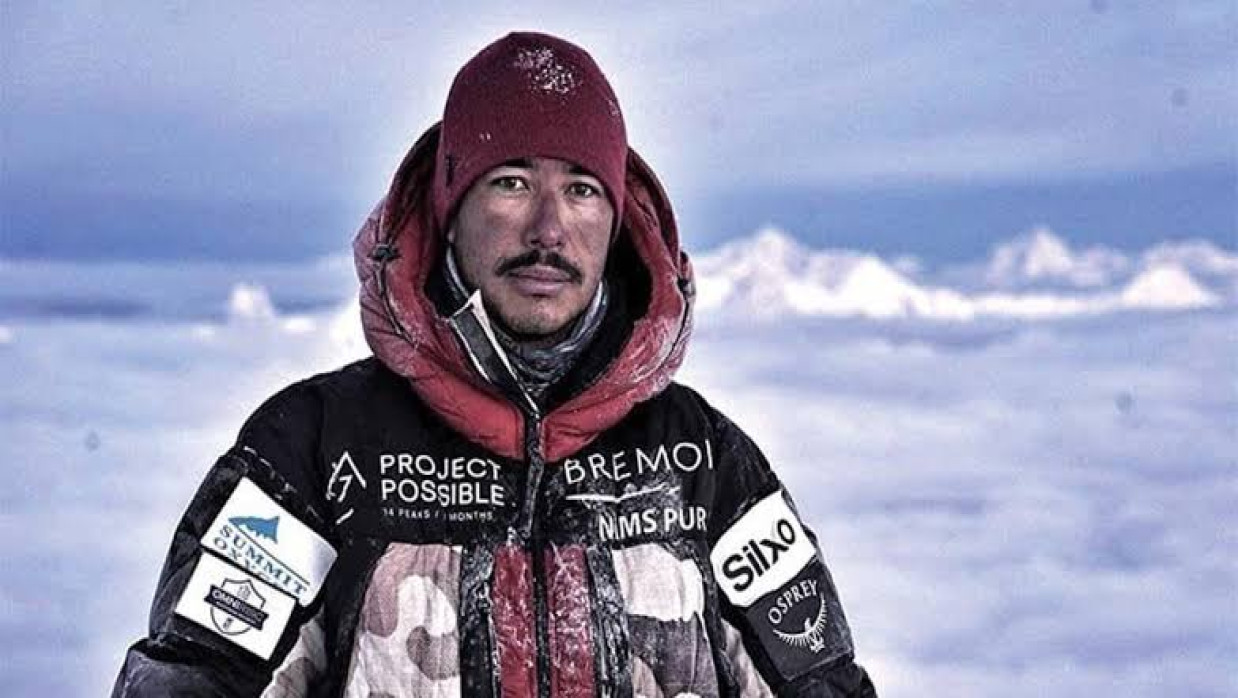
On July 30th, mountaineer Nirmal “Nims” Purja passed away while climbing a peak in Pakistan. Ten other climbers died with him, their names not as popular as the Netflix star who rose to fame with the documentary 14 Peaks: Nothing Is Impossible. This week, news platforms from all over the world have been mourning the mountaineer. Bollywood celebrities, Nepali socialites, and international climbers have been sharing their pictures with him, accompanied by lengthy elegies of the departed. Government officials, public figures, schools, and national media spaces have been publicly grieving this loss and glorifying the man as a martyr. Philanthropists from Europe and the Americas have been pouring euros and dollars into his foundation. And amidst this loud, collective, grieving ceremony, those who are forced to drown are people whose experiences with this man were far from heroic.
In 2024, two women reported sexual assault and harassment by Nims. Despite this being reported by the New York Times, the accused was able to continue his popularity and profit from his businesses. There have been other similar words, mostly whispers among women in Kathmandu and global mountaineering scenes. As usual in such cases, these complaints have been dismissed as propaganda to tarnish his reputation or simply exaggerations.
In 2023, the then-seventeen-year-old victim who accused Sandeep Lamichhane of rape was forced to witness the nation glorify her alleged perpetrator. He was the captain of the national cricket team at a time when Nepal was making history in the field. The accusation didn’t matter, even when the case involved a minor. Instead, the young adult was vilified, and her character shamed on public platforms. How dare she/we shame a national hero?
This is a norm, and a painful reminder of how we live in a world that will burn women on the stake for the sake of the flag, medals, and a good story. Every overt celebration of men accused of violence towards women serves as a trigger to those who have been harmed by them. It is a stabbing of the wound, an invitation to silence and shame.
In 2022, an explosion at his office in Kathmandu caused by the illegal storage of gas cylinders killed three people. Their families and the landlord, who lost his home, reported being threatened for asking compensation. The case was finally settled in the court last year. There are other stories too, tales that cast him in a different light than the headlines this week. Personal accounts of his arrogance, cases of fraud, exploitation of local guides, and blurring of consent with women- if you are in Kathmandu and among similar circles, you have probably heard of them as well. And yet, he remains a champion in public narratives because that makes a better eulogy than the accounts shared by his victims.
A member of Nepali parliament, who describes herself as a “social leader and human rights advocate dedicated to uplifting marginalized communities in Nepal,” has called for the government to declare Nims a national hero. Many others are advocating for similar kinds of honors. Even people who question indigenous folks from Terai and Himalayan regions about their nationality are eager to award this British citizen with national honors reserved for Nepali citizens. Why? Because he “brought our country to the global platform.”
This militant support for Nims is also an index of our internalized white supremacy. In this case, a deep desire to be seen and accoladed by the West. Anytime a Nepali is successful, or even present, in Western spaces, whether in a cooking competition or any television shows, the individual is lauded as a national icon, not because of the quality of their skill (like Elephant in the Fogs, which won the Cannes and is a brilliant film), but because the visibility gets Nepal attention among the Western audience.
Mountains exist without white gaze. So can our peoples, and our stories.
Nirmal Purja was a great athlete. He was a successful businessman, and maybe a good family man, friend even. But he is not a martyr.
Conquering mountains does not win you sainthood. In fact, a saint would not want a conquest over any sacred land or women. May he rest in peace. May we learn how to mourn quietly. May we stop making gods out of men. May we learn how to love women.
Rest in peace
Killi Pemba “Kilu” Sherpa
Nima Sherpa
Pur Bahadur “Yukta” Gurung
Nawang Thindu Sherpa
Gyalu Sherpa
Sohail Sakhi
Nadhira Ahmed Abdullah Al Harthy
Wang Zhong
Mallory Geis


0 Comments
LEAVE A COMMENT
Your email address will not be published