

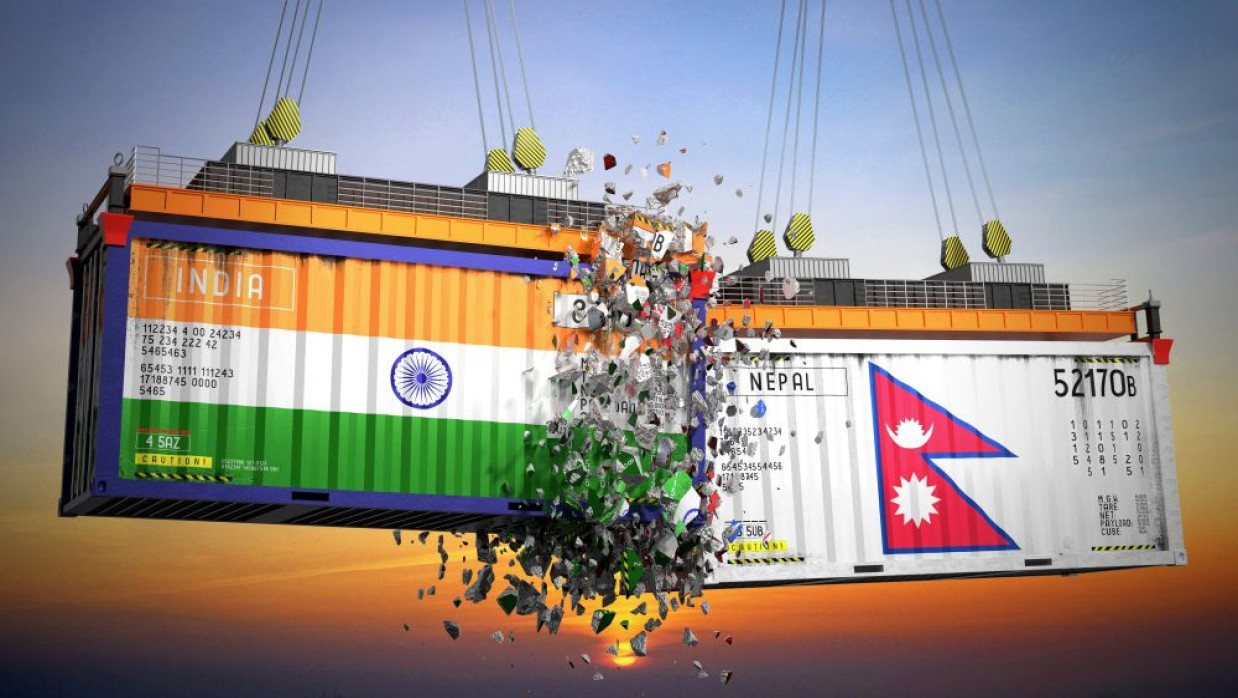
Nepal and India share a common history, culture, open border, and close economic ties. Nepal imports many of its daily necessities from India and also exports its goods to India. But Nepal and India have witnessed political differences from time to time, like most other neighboring countries, which share good relations as well as unresolved border disputes. In 2026, due to political differences between the countries over the publication of a map claiming Greater Nepal, India made several amendments to its import rules governing Nepal’s tea trade. This move impacted Nepal’s tea industry harder than it had in years.
India claims that these are only new protocols that every importer must follow to maintain standard quality and food safety. However, many in Nepal view this as India’s political move to economically suffocate Nepal. Despite the motives, this political difference between the countries affected the lives of many people by creating trade barriers.
Political Background: The "Greater Nepal" Controversy
In May 2026, Nepal’s Prime Minister (Formerly Kathmandu mayor) Balendra Shah sparked fresh controversy by releasing maps claiming an expanded Nepal referred to as "Greater Nepal". sparked fresh controversy by releasing maps claiming an expanded Nepal, referred to as "Greater Nepal". The territorial claims based on old maps overlapped with regions that have been a matter of dispute based on differing historical narratives.
No official endorsement of these maps as Nepal's national map has been issued by the government. However, the incident received widespread attention in Indian politics. Many in India saw the move as inflammatory.
India and Nepal have shared close economic and people-to-people ties but have previously faced issues with their bilateral relationship regarding disputed border regions, including Kalapani, Lipulekh, and Limpiyadhura.
India's New Tea Import Regulations
Shortly after diplomatic relations soured, India's Tea Board issued a new Standard Operating Procedure (SOP) on the import of Nepali tea.
Before this new SOP, tea exported from Nepal to India entered through the border with only minimal procedural hurdles. With the new regulation in place, each shipment must be sent to a lab for testing before it can be sold in India.
Indian officials have claimed that the rule was designed to ensure all imported tea is held to the same standards as domestic products in terms of quality, safety, and residue. No Nepal-specific product would be given preferential treatment, they argued.
From Nepal's point of view, however, the implementation of those measures overnight had amounted to a non-tariff trade barrier.
Severe Economic Consequences for Nepal
The immediate impact on Nepal's tea industry has been profound.
The eastern districts of Ilam and Jhapa, which together form the heart of Nepal's orthodox tea production, have experienced widespread disruption.
Reports indicate that:
Fifty-three tea processing factories have suspended operations in Ilam.
Thirty-two factories have closed in Jhapa.
In total, more than 85 processing facilities have either halted or sharply reduced production.
These closures threaten the livelihoods of more than 60,000 workers, including tea pluckers, factory employees, transport workers, exporters, and thousands of smallholder farmers whose incomes depend almost entirely on tea cultivation.
Because tea is a seasonal agricultural product, marketing delays can rapidly reduce product quality, cash flow, and future production capacity.
Growing Stockpiles and Liquidity Crisis
The regulatory bottleneck has resulted in an unprecedented accumulation of unsold tea.
Around 200,000 kg of Nepali tea is said to be stuck in warehouses in Kolkata, awaiting the results of laboratory tests. Other reports claim that between 50,000 and 300,000 kg are awaiting results. Inside Nepal, warehouses have around 900000 kg waiting to be exported. Overall, unsold Nepali tea stocks are estimated at over 1 million kilograms. Inventory is money tied up for producers and exporters. Tea factories typically buy fresh green leaves from growers throughout the season. When exports grind to a halt, factories incur rising storage fees but no longer have cash on hand to buy additional harvests from growers.
Concerns of Indian Tea Growers
Indian tea producers have for years expressed concerns regarding competition from imported Nepali tea.
Growers in states such as West Bengal and Assam have argued that imported tea should be subject to the same quality standards, pesticide residue limits, and traceability requirements as domestically produced tea.
Industry bodies in India have argued that rules need to stay consistent to protect consumers and ensure fair play.
Under this argument, the laboratory testing rule change seeks to standardize current practices rather than impose new constraints on Nepal.
However, critics note that the abrupt implementation without a lengthy transition period has imposed substantial adjustment costs on Nepalese exporters.
Trade, Politics, and Perceptions
Whether the new regulations were introduced solely for quality assurance or were influenced by broader political tensions remains a matter of debate.
Suspicion that tougher testing norms were imposed for political reasons was stoked by the fact that the 'Greater Nepal' row coincided almost exactly with tougher norms being announced.
India has officially denied that the tea norms were connected to any diplomatic friction, saying that safety and regulatory issues were behind the move.
However, in the world of diplomacy, as in business, perception can become reality. If trade disputes coincide with regulatory clampdowns, the natural instinct of the business community is to believe the two are connected.
Nepal's Heavy Dependence on the Indian Market
One thing this crisis also brought to light is Nepal’s structural dependence on India as the sole market for tea exports.
While Nepal has gained global recognition for producing high-quality orthodox teas that rival those of high-end Himalayan brands, most of the production is still bought by Indian traders, who blend, auction, and ship it using Indian infrastructure.
This dependence leaves Nepal vulnerable to regulatory changes beyond its control.
Many analysts argue that Nepal should accelerate efforts to diversify export markets by expanding direct access to Europe, North America, Japan, the Middle East, and other Asian markets. Greater investment in branding, certification, value-added packaging, and international marketing could reduce dependence on a single export destination.
The Way Forward
Resolving the dispute will require diplomacy as much as regulatory coordination.
Both governments have strong incentives to restore smooth trade flows. India benefits from stable regional economic relations, while Nepal depends heavily on uninterrupted access to Indian markets.
Joint quality-certification mechanisms, reciprocal acceptance of labeling, simplified border-testing protocols, or bilateral regulatory/industry meetings are all practical steps to consider.
In addition, more transparency on testing would help eliminate uncertainty for exporters and restore confidence.
Conclusion
In a single night, India revoked decades-old rules on imports of Nepali tea. Overnight, two decades of trade between the neighbors came to a grinding halt. Nepal condemns this as an illegal economic blockade. India says it is simply enforcing rules. Regardless of who's right, the abrupt rule change has Nepal's tea trade stunned. Tea factories are closing; inventories are piling up; jobs are being lost; export earnings have nosedived. Whoever is right or wrong in this silly political feud, the takeaway is that trade-dependent neighbors also crave predictability. And maybe more importantly, both Nepal and India have much to lose from undermining trust. Bilateral trade between the two countries should be restored expeditiously, with stringent quality checks.

0 Comments
LEAVE A COMMENT
Your email address will not be published