

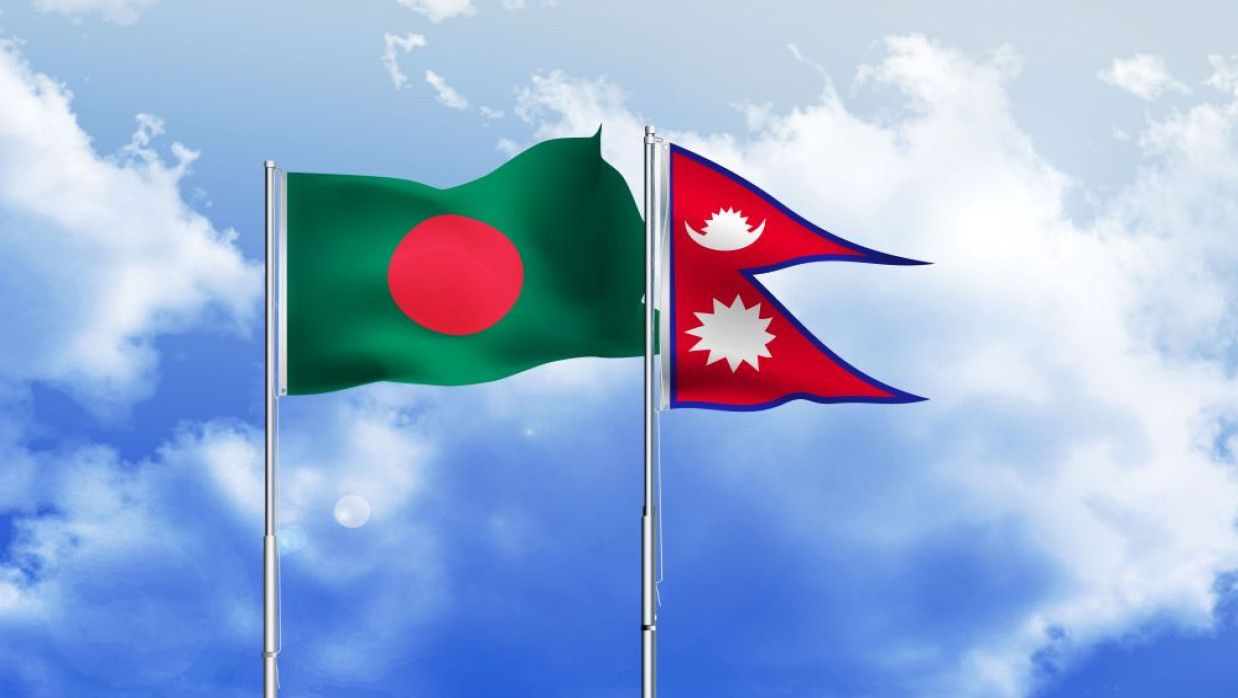
New Governments, New Opportunities: US Relations with Bangladesh and Nepal Three Months In By Nilanthi Samaranayake In the past two years, Bangladesh and Nepal have experienced significant upheaval in their respective political orders. Both witnessed violence in response to public protests and ousted their leaders. Both transitioned from interim governments and conducted elections with new prime ministers entering office. During roughly the first 100 days of the two governments, both have had the United States reach out through official visits, agreements, and opportunities for future cooperation.
In Nepal, Prime Minister Balendra Shah took office in late March, and senior US diplomats sought to engage the new government immediately. Assistant Secretary of State for South and Central Asian Affairs Paul Kapur made a stand-alone trip to Nepal in April. This is notable because trips to the region by US officials usually cover multiple countries and often include India. US Under Secretary of State for Public Diplomacy Sarah Rogers visited the next month, as did Sergio Gor, US Special Envoy for South and Central Asia. News reports suggest that Gor sought a meeting with Prime Minister Shah, who is insisting on a policy of meeting only with ministerial-level or higher-level officials. This was a missed opportunity for Shah to meet with President Trump’s Special Envoy for the region. Shah and his party were elected by many younger voters disillusioned with the previous era of politics, and observers expect his government to demonstrate more creativity and flexibility than previous administrations.
Unlike in Nepal, the United States currently has an ambassador posted in Bangladesh, Ambassador Brent Christensen, to facilitate American diplomacy on the ground. After Prime Minister Tarique Rahman entered office in February, Assistant Secretary Kapur visited Bangladesh in early March and discussed a range of economic and security issues. The United States has been Bangladesh’s leading national export market, and US companies are Bangladesh’s largest foreign investors. Meanwhile, Bangladesh ranks among the largest apparel-exporting countries to the United States.
The US-Iran conflict has caused fuel shortages in Bangladesh, and Foreign Minister Khalilur Rahman met with Secretary of Energy Chris Wright in late March in Washington, DC to discuss the issue. By mid-May, they concluded a much-anticipated memorandum of understanding that facilitates Bangladesh’s ability to import US liquefied natural gas, liquefied petroleum gas, and other energy products.
Bangladesh’s trade agreement with the United States has been another significant development this year, although it was signed before Prime Minister Rahman’s term began. The 32-page document specifies cooperation on a range of issue areas such as tariffs, agriculture, fisheries, and even defense. The trade agreement includes provisions that encourage Bangladesh to purchase US military equipment, while limiting similar acquisitions “from certain countries,” likely US competitors such as China. Even though this language confines Bangladesh’s choices as a smaller state, Dhaka might already be pulling away from China as a supplier of defense platforms due to Beijing’s support for the Myanmar government. The fallout from the conflict in neighboring Myanmar, including the Rohingya refugee crisis, is Bangladesh’s most pressing security threat in recent years. The United States has been the top contributor of humanitarian assistance to address the refugee crisis at roughly $2.4 billion, $1.9 billion of which has gone to Rohingya support in Bangladesh.
Going forward, US cooperation and projects with Bangladesh and Nepal will come under increased attention and likely include measures to benefit American businesses. Historically, aid has been a critical aspect of US relations with Nepal and Bangladesh. USAID had been Nepal’s biggest donor, while until the past year Bangladesh had been the largest of USAID’s programs in Asia. However, the second Trump administration has significantly altered its approach to US foreign aid.
Despite this shift, the Trump administration preserved the $500 million Millennium Challenge Corporation (MCC) compact signed with Nepal in 2017. In 2025, it gained an additional $50 million in funding. Meanwhile, Kathmandu contributed $197 million of its own financing—the largest one-time contribution by a partner country in the MCC’s history. The project expands electricity transmission availability and improves road infrastructure while providing opportunities to US businesses in Nepal’s market.
In addition to grant assistance, the United States has worked with both countries to develop business opportunities. In Bangladesh, Biman Bangladesh Airlines agreed to purchase 14 Boeing aircraft at roughly $3.5 billion. In Nepal, US Assistant Secretary Kapur participated in a meeting with industry leaders about expanding US business opportunities in Nepal’s information and communications technology sector. Delegations from both Nepal and Bangladesh also participated in May in the Department of Commerce’s SelectUSA Investment Summit, which convened global business leaders to facilitate foreign direct investment opportunities.
Defense is another area that holds prospects for greater cooperation. The United States already cooperates with both countries on humanitarian assistance and disaster relief. In February, the four-star Commander of IndoPacific Command, Admiral Samuel Paparo, traveled to Nepal and visited the Birendra Peace Operations Training Centre. Nepal currently ranks as the top contributor of troops in the world to United Nations peacekeeping operations. Going forward, Nepal could reconsider whether to participate in the US State Partnership Program (SPP). It previously declined when its potential participation became highly politicized against the backdrop of geostrategic rivalries. By contrast, Sri Lanka and Maldives recently expanded their participation in the SPP with the Montana National Guard, while Bangladesh participates with the Oregon National Guard.
Washington would like Bangladesh to sign the General Security of Military Information Agreement (GSOMIA) to enable the country to purchase additional defense platforms and equipment, as well as the Acquisition and Cross-Servicing Agreement (ACSA) for logistics cooperation. For a regional comparison, India and Sri Lanka signed similar agreements in 2002 and 2017, respectively. Furthermore, Bangladesh is the only South Asian country with a navy that is not a member of the US-led Combined Maritime Forces in Bahrain, and Bangladeshi experts see an opportunity in Dhaka joining this partnership.
The past few months have witnessed Washington’s eagerness to work with the new governments of Nepal and Bangladesh. Going forward, Kathmandu and Dhaka have clear opportunities to expand their economic and defense relationships with the United States. To what extent Nepal and Bangladesh seize these opportunities remains to be seen, especially as these Smaller South Asian countries view strategic competition between large powers and resist being caught in these tensions.


0 Comments
LEAVE A COMMENT
Your email address will not be published