

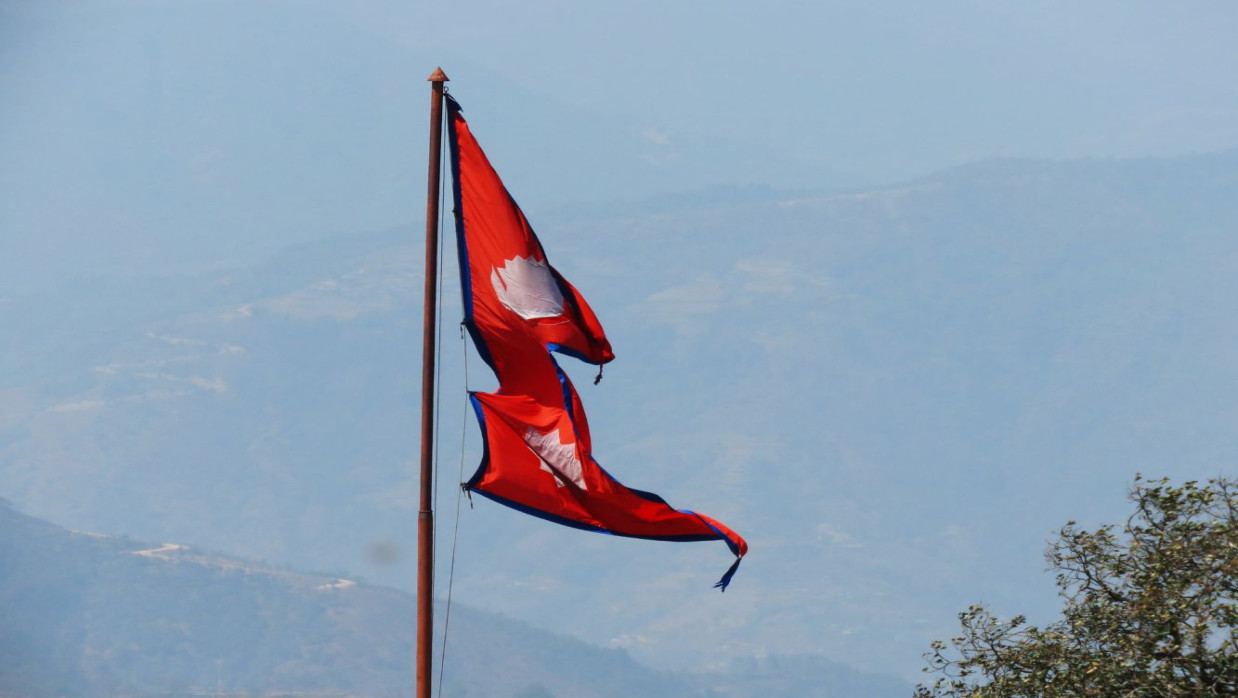
Nepal is set to head to the polls for its upcoming parliamentary elections next month. While voters will have the choice between competing political parties, behind the scenes, another struggle is taking place that goes beyond mere party politics. As anger mounts among Nepalis over the country’s post-war situation and politicians’ failure to deliver basic services, calls for Nepal to reinstate its monarchy and stop being a secular nation are gaining steam. This is symptomatic of the Hindu nationalist anger brewing within the country, as well as of broader ideological trends unfolding across Nepal’s southern neighbor, India.
In late February, worshippers at Nepal’s Janaki Mandir (Temple of Goddess Sita) in Janakpur, a pilgrimage site for Hindus who worship the goddess Sita, wife of the Hindu god Lord Ram, were met with an unusual sight. Hanging in the temple courtyard was a banner proclaiming that “former King Gyanendra Shah should return to Nepal” with the added plea: “King, come and save the country.” Asad Pathan, a vendor selling incense sticks and garlands to worshippers leaving offerings at the temple, told the Hindu nationalist website, Rashtriya Swayamsevak Sangh (RSS)-PRP.in, that this slogan has become increasingly popular. “People tell us to say it often these days,” he said.
Janakpur is itself significant; vendors also noted higher sales of Hanuman flags and stickers that read: “Victory to Lord Ram,” which are two religious symbols most closely aligned with Modi’s BJP party and Hindu nationalist political movements across India. Nationalist Hindus broke ground on a massive temple honoring Lord Ram in Ayodhya, Uttar Pradesh, in early January 2024. Known as the Ram Mandir, this Hindu temple was built on the grounds of a centuries-old mosque known as the Babri Masjid, which was razed to the ground by Hindu nationalists in December 1992.
Until recently, Nepal was itself a Hindu kingdom. Nepal was ruled by 10 consecutive kings of the Shah dynasty for 206 years until it was declared a secular republic in 2008. The dynasty itself traced its roots back to 1768, when Prithvi Narayan Shah became the first King of Nepal. The Hindu monarchy of Nepal ended in June 2008 when parliament voted to dissolve itself and abolish the monarchy following several years of civil war and political tumult.
The move to secularism stems back to the events of 2005, when then-King Gyanendra abruptly overthrew Nepal’s elected officials, claiming absolute power ostensibly to combat the Maoist insurgency plaguing the country. This move only inflamed protesters, who had overthrown the king in a popular movement in 2006 and had agreed to reinstate parliament under the new interim constitution drafted in 2007, which declared Nepal a secular state. Nepal’s 2015 constitution affirmed Nepal as a secular republic.
It was thought at the time that Nepal’s fate as a secular republic was settled. However, sections of Nepal’s population have always remained devoutly monarchist and religious. There is significant frustration among more conservative groups in Nepal who oppose the secularism enacted by political parties “without a referendum or substantial public discourse”.
This conversation has come back into play amidst Nepal’s turbulent politics ahead of next month’s election. The election comes on the heels of nationwide protests in Nepal, mostly by members of Generation Z. In September, protests broke out across Nepal in response to dissatisfaction with government corruption, economic stagnation, and political stagnation. Violence escalated when police cracked down on protesters, killing at least 76. Protests and violence engulfed the country after the incident, culminating in the ousting of Nepal’s government and installation of an interim election-conducting body.
It is in this environment that monarchist and Hindu nationalist rhetoric has thrived. Former King Gyanendra has been mostly absent from the public eye for over a decade, having been deposed in 2006. However, he resurfaced this February, releasing a video statement to the people of Nepal as election day approached. In the message, Gyanendra questioned the legitimacy of the upcoming election and suggested postponing the election date to allow time to address the country’s problems. His message has rallied supporters who see him as a potential leader who could unify Nepal.
Monarchism in Nepal still faces several hurdles in finding substantial support. Gyanendra will have to face public dissatisfaction with his own seizure of power in 2005. Additionally, even before Gyanendra took power, Nepal’s royal family had been tarnished by the unimaginable. In 2001, then-King Birendra and much of his family were massacred by his son, Crown Prince Dipendra. Despite these scandals, fringe monarchist parties are participating in the election.
The most popular political expression of monarchist nostalgia, the Rastriya Prajatantra Party (Party for National Democracy, or RPP), currently polls below 6% and has never been a major force in Nepali politics. There are also divisions among Nepali monarchists over whether to reinstate the king or simply reinstate Nepal as a Hindu state without a monarchy.
Others see greater potential in newer right-wing reform parties like the Rastriya Swatantra Party (National Liberation Party, or RSP), led by former journalist Rabi Lamichhane, which has been popular among Nepal’s youth for its promises to curb corruption and improve the economy. The candidate for prime minister is Kathmandu mayor Balendra Shah, popularly known as Balen. Balendra Shah has tried to portray himself as a younger leader separate from the old guard of Nepali politics.
That said, analysts warn that symbols and culture associated with Hindu nationalism are already on the rise across Nepal’s political parties. Comments or references that would have been considered bizarre or unthinkable for politicians to make in public a decade ago are now regularly seen on podiums, social media feeds, and campaign posters. Organizations affiliated with Hindu nationalism across India have grown stronger in Nepal as well, alarming academics and NGO leaders.
Minority religions in Nepal, such as Islam, Buddhism, and ethnic traditions, worry about what the future could bring if secularism weakens further. Many Hindu scholars have even voiced concerns that radical forms of Hindu nationalism would harm Nepal’s legacy of religious tolerance.
We may be at a point where Nepal’s next election will decide not just which party will lead the country, but whether Nepal remains a secular republic. With voter anger, ideological pressure from neighboring countries, and political polarization over identity, all of which factor into the next election, only time will tell how Nepal defines itself moving forward.

0 Comments
LEAVE A COMMENT
Your email address will not be published