

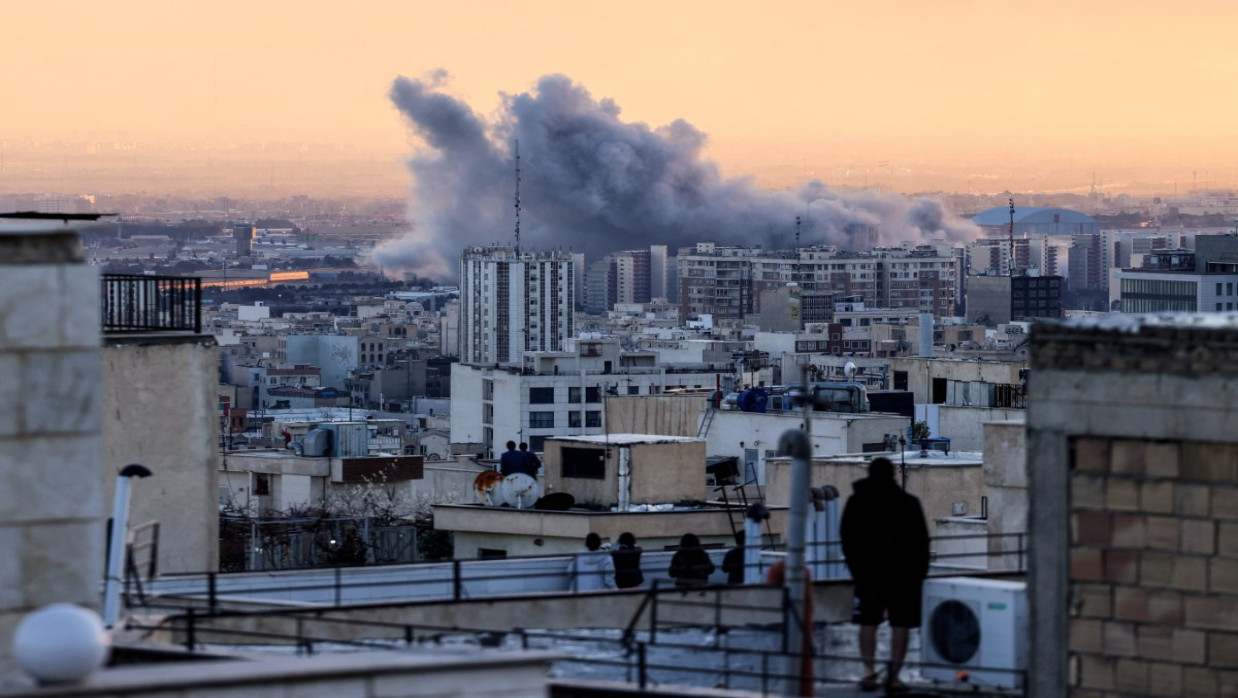
Without sufficient clarity over the linkages between strategies and outcomes of the current war in the Middle East and driven by nebulous objectives, the US and Israel through their joint military campaign, however, have achieved several tactical gains vis-a-vis Iran through the use of their massive airpower largely propelled by long-range missiles and bombers. They were able to assassinate the supreme leader of Iran, Ayatollah Ali Khamenei in the very beginning of their operation on 28th February.
Subsequently, they assassinated top leaders and commanders ranging from those of security to intelligence wings of the country. The combined military campaign of US and Israel degraded Iran’s military and nuclear capabilities which was again a tactical success rather than a successful strategy. They attained these gains with significant collateral damage as civilian toll in Iran reached more than 1900.
However, strategically, both these powers have failed so far as their airstrikes could not deter Iran from launching its own drones and short-range missiles across the Middle East targeting at the financial sinews such as ports, banks, oil depots and hotels apart from American military bases and diplomatic presence. It has also carried out deadly strikes on Israel and fired long-range missiles at the distant American military base in Diego Garcia in the Indian Ocean. It has sent shockwaves throughout the Middle East by its sheer capabilities of destroying the military and financial infrastructure and holding the global economy to ransom by effectively closing the Strait of Hormuz- the most significant global gateway for passage of oil, natural gas and fertilizers. The US strategy failed to reckon with these consequences prior to going into the war. The call for regime change turned out to be a hollow promise of the US as the war did not distinguish the civilians from the military and air power was used indiscriminately against Iran- the whole country. As circumstances moved from bad to worse, lack of a clear strategy of the war also became fairly perceptible when the US found it difficult to exit. The US plan for exit would have spelt victory for Iran as it survived with the existing regime.
Quixotic Search for Peace Perceiving the war as quickly turning into a quagmire for the US which within a few weeks drained its military stockpiles and financial coffers and precipitated instability in the financial market, President Donald Trump changed his mind immediately following his threat to bomb Iran’s power plants over Iran’s intransigence to open Strait of Hormuz. He unilaterally offered a grace period that was extended up to April 6 and asserted on the bilateral negotiations with Iran which the latter denied as false reports. As per reports, the US took assistance of Pakistani intermediaries to open up diplomatic channels and press for a ceasefire with Iran. Meanwhile, such dovish gesture from President Trump quickly dissipated and the US and Israeli missile attacks on Iranian military and financial assets continued. Quite contrary to his decision to inch towards peace, the US moved more than 2000 marines from Japan to the Middle East. Ironically, Trump wanted to dictate a ceasefire by threatening to destroy Iran’s electricity plants, oil wells and Kharg Island unless there was a peace deal.
In last year June, following the American attacks on Iran’s nuclear facilities, Tehran retaliated with attacks on US military base in Qatar but avoided to cause major regional conflagration by disclosing its plan of attack and agreed to the ceasefire as proposed by President Trump. The US had a clear strategy to conduct surgical strikes and had defined objectives- to destroy Iran’s nuclear capabilities. Moreover, last year, it was not combined military campaign from the beginning that threatened Iran. The US joined the Israeli campaign midway through.
However, this time the US and Israel embarked on a joint campaign from the beginning and pushed for regime change by assassinating the supreme leader of Iran Ali Khamenei and encouraging the protesters to take over the government. As Iran faced an existential threat, it took to all sorts of measures that it needed to survive.
Iran expanded the horizon of military operation as well as engaged several non-state actors to invigorate the war into a war of attrition unlike the last year’s mild retaliation. Iran ran joint operation with Hezbollah in Lebanon and backed Shiite militia of Iraq to sabotage American presence and interests there. The depth and scale of the operations from the parties to the war would make a ceasefire less likely.
The war in Lebanon has turned into another theatre of the war making the ceasefire difficult. While American strategic thinking and approach to the war kept shifting with attendant costs on its military inventories and financial exchequer as well as concerns about global supply of natural resources, Israel was seen more willing to pursue the war by continuing its strikes on Iran and Hezbollah strongholds in Lebanon. It seemed as if President Trump had little influence over Israel to stop fighting. If the trajectory of the war is observed Israel has demonstrated unmitigated resolve and willingness to bear far more human and material costs to the perceived imminence of Iranian threat compared to the US. Israel’s intransigent behaviour and its actions in Lebanon would chip away at a possible ceasefire.
Meanwhile, the exit option has been dented by assassination of high level Iranian officials and commanders who did have more experience in negotiations and were moderates compared to the young generation of officials and military personnel who consider the war as an opportunity to prove themselves by avenging on the US and Israel by making them pay back in the same coin. For instance, killing of Ali Larijani, the former secretary of Iran’s supreme national security council, chips away at the success of the proposed ceasefire as he has been replaced by more hard-line IRGC ex-commander. Similarly, Mojtaba Khamenei, son of Ali Khamenei is more radical and has taken more confrontational stance towards the US due to his long association with IRGC and loss of his father and other family members in the war.
Iran will have lesser appetite for a negotiated end to the war unless it receives far more incentives compared to the past deals. It is also aware of the fact that Israel did not respect the ceasefire in Lebanon and Gaza and continued intermittent strikes. Hence, Iran would want far more credible security guarantees before signing into a ceasefire agreement. Iran is also wary of the fact that it has been attacked this year just like the last year while negotiations were very much on regarding nuclear issues which must have taken away much of its enthusiasm for a deal.
The Trump administration through Pakistani intermediaries has reportedly sent a 15 point plan for a ceasefire. A coalition of mediators including Egypt, Pakistan and Turkey has been forged to influence Iran to agree to a ceasefire. It is believed that as all of them are Islamic-majority states, they can collectively influence Iran to cooperate. However, the ceasefire plan remains tethered to the American and Israeli interests and asks so much from Iran without offering it anything substantial in return. For instance, the US has proposed for zero nuclear enrichment by Iran coupled with restrictions to its missile programme. It seeks an end to Iran’s support for regional proxy groups.
Tehran will hardly accept these proposals considering the existential threats it perceives from Israel and unflinching support rendered by the US to it. Iran will not agree to surrender all these strategic assets which proved vital to its survival in this ongoing war. Any ceasefire to be successful must incentivise both parties to the agreement. Iran will agree to major concessions only when the other side concedes in proportion. Similarly, Iran has demanded all US military bases in the Middle East to be closed and troops be vacated from region and it wants to be funded for post-war reparations which are unlikely to be acceptable to the US. However, the US can offer major sanction relief to Iran and allow it access to its frozen assets if it negotiates the ceasefire in good faith. The mediators, meanwhile, must leverage their shared goals with Iran and US to bring soaring prices of natural resources under control and allowing passage at the Strait of Hormuz. They need to focus on the possibilities rather than idealistic hopes that each party expects from the other. Deliberations must include as to how the mines are to be cleared from the Strait and naval escort for commercial ships will be provided. Here, China which imports 90 percent of its crude oil from Iran and India which is also significant buyer of its natural resources and a partner in building Chabahar port can use their economic and diplomatic leverage towards these goals.

0 Comments
LEAVE A COMMENT
Your email address will not be published