

Introduction
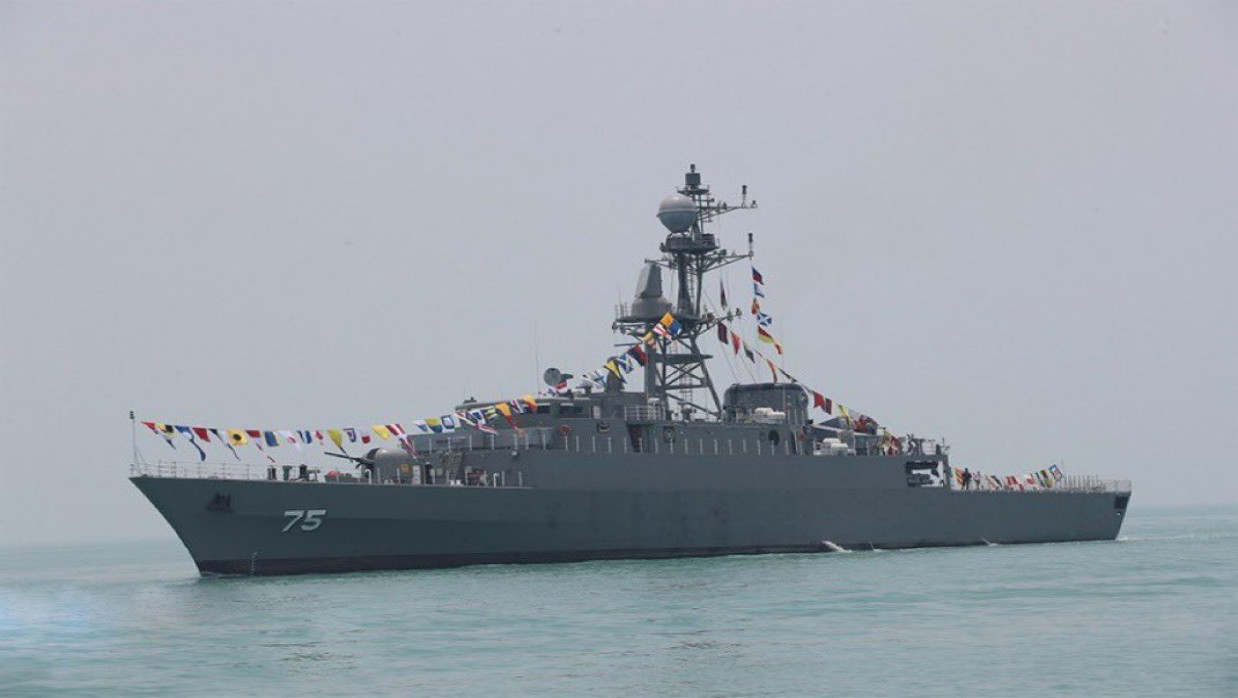
Naval diplomacy is probably one of the oldest tools for conspicuous displays of international cooperation. Fleet reviews, bilateral and multilateral exercises, and maritime conferences seek to reassure foreign countries with which one’s own nation competes strategically. Iranian warship IRIS Dena, however, was sunk by US forces near Sri Lanka’s coast last week, highlighting the limits of naval diplomacy.
Iranian news sources reported that IRIS Dena was torpedoed by a US nuclear submarine lurking off the coast of Sri Lanka. Days before its sinking, the Iranian destroyer had concluded a port visit to Visakhapatnam, where it participated in India’s MILAN-26 International Naval Exercise and Maritime Security Conference as a friendly foreign warship. Why did IRIS Dena visit India for a naval exercise only to be attacked days later halfway around the world? The incident has many South Asians wondering what the attack means for Indian Ocean maritime security, India’s strategic autonomy, and great-power competition in the Indo-Pacific.
IRIS Dena’s visit to India highlights the challenges that states like India face as they try to navigate great-power rivalry in the Indo-Pacific region.
The MILAN Naval Exercise and Iranian Warship IRIS Dena
IRIS Dena visited Visakhapatnam port last month to participate in MILAN-26 International Naval Exercise and Maritime Security Conference organized by the Indian Navy. The biennial event saw participation from regional and extra-regional navies for professional interactions and learning.
Like any foreign warship entering a country’s port, IRIS Dena did so under the conditions of an unarmed port visitor. Guns, missiles, and torpedoes are rendered useless as a sign of respect when naval ships enter another country’s territorial waters to conduct diplomatic business or port calls. IRIS Dena’s crew consisted of officers, cadets, and sailors visiting India to attend the conference and conduct goodwill engagements with the Indian Navy.
President of India Droupadi Murmu, other senior officials, and foreign naval delegations attended the MILAN Exercise in February. The United States Navy sent naval officers but decided against sailing US naval ships to the MILAN conference, something many US officials are likely regretting after learning of IRIS Dena’s port visit. Iran’s rationale for participating in the exercise was to conduct naval diplomacy with Asian powers such as India.
The Torpedoing Near Sri Lanka
After completing the exercises, the IRIS Dena departed from India and sailed southward through the Indian Ocean on its return journey.
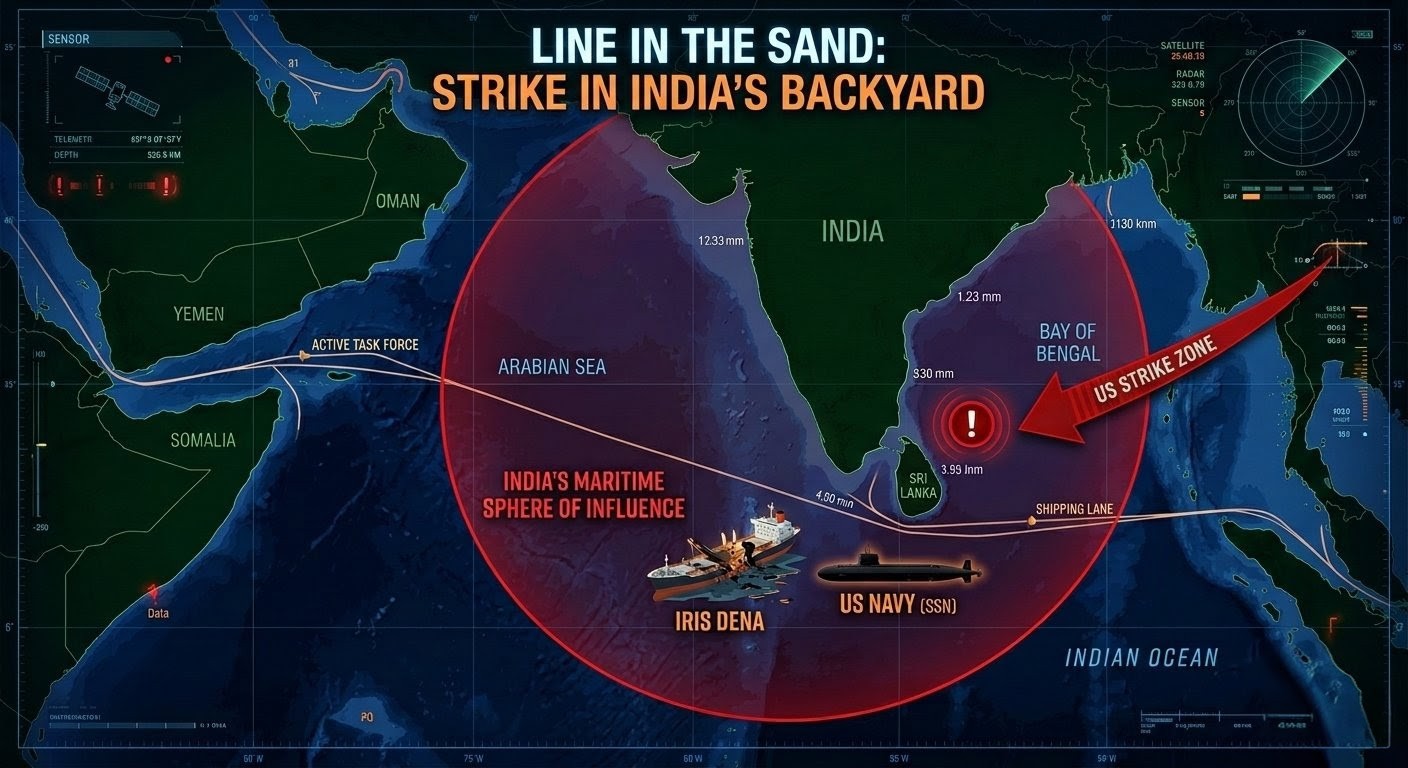
According to reports, the vessel was torpedoed approximately 40 nautical miles off the coast of Galle, Sri Lanka, by a U.S. nuclear-powered submarine. The attack caused catastrophic damage, sinking the ship rapidly.
Of the 180 sailors onboard, nearly 100 reportedly lost their lives, while the remaining crew was rescued by Sri Lankan authorities. Many survivors were taken to hospitals in Galle in critical condition.
Images from Sri Lankan hospitals showed emergency vehicles transporting injured sailors, highlighting the human cost of the incident.
The attack shocked observers because the vessel had recently participated in a multinational naval event and was reportedly operating in friendly waters with its weapons secured.
Sri Lanka’s Humanitarian Response
In the aftermath of the disaster, the Sri Lankan government played a crucial humanitarian role.
Sri Lanka’s President Anura Kumara Dissanayake announced that a second Iranian naval vessel, IRINS Bushehr, requested permission to dock at a Sri Lankan port. The government allowed the vessel to enter the country and assisted the Iranian sailors.
Authorities transported 208 personnel from the ship to Colombo, including officers, cadets, and sailors. Meanwhile, the vessel itself was placed under custody at Trincomalee, an important naval harbor on Sri Lanka’s eastern coast.
Sri Lanka’s decision reflected a careful balancing act between humanitarian obligations and regional geopolitical sensitivities.
Iran’s Reaction
Iran harshly condemned the attack.
In a released statement, Iranian Foreign Minister Hossein Amir-Abdollahian Arachi expressed his strong displeasure and reiterated that the Dena had been in allied waters after participating in a parade. Iranian officials have claimed the vessel was unarmed and the majority of those on board were civilian diplomatic workers.
"This action is seen as targeting the diplomatic protection of naval forces as well as human life," Iran's Foreign Ministry spokesman continued.
Iran wondered how the ship was attacked mere hours after celebrating with dozens of countries.
Political Reactions in India
The incident quickly became a topic of debate within India’s political circles.
Opposition leaders criticized the government of Prime Minister Narendra Modi for remaining silent about the sinking.
Sanjay Singh, a leader of the Aam Aadmi Party (AAP), accused the government of cowardice and argued that India should have protested the attack, particularly because the vessel had participated in an Indian-hosted naval event.
Similarly, Pawan Khera of the Indian National Congress challenged the government to demonstrate moral courage by condemning the incident and expressing sympathy for Iran.
Critics argued that India’s silence suggested an unwillingness to confront Washington, even in situations involving vessels that had been welcomed by the Indian Navy.
India’s Strategic Constraints
India’s cautious response is widely interpreted in light of its deepening strategic partnership with the United States.
Over the past decade, India has signed several foundational military agreements with Washington, integrating its defense infrastructure with the broader U.S. Indo-Pacific strategy.
These agreements include logistical support, intelligence sharing, and communications compatibility. Combined, they embed India into the U.S. Indo-Pacific Command’s Area of Responsibility (AOIR). Consequently, India has more frequently positioned itself as a “net security provider” in the Indian Ocean, partnering with the United States and other Western allies to police the region. Critics have argued that India cannot afford to publicly criticize American military decisions, given this strategic dependence.
The Role of the U.S. Fifth Fleet
The incident must also be understood within the broader context of the Middle East conflict.
Before hostilities escalated, Iran had warned that if the United States directly entered the war, it would target American bases across the region.
Anticipating escalation, the U.S. Fifth Fleet, headquartered in Bahrain, repositioned many of its warships toward the Arabian Sea and Indian Ocean.
This deployment expanded the operational reach of U.S. naval forces across a wide area, including waters close to South Asia.
The presence of American submarines in the region suggests that the attack on the Iranian vessel may have been linked to wider strategic calculations.
Diego Garcia and the Western Security Architecture
A fourth factor influencing the regional strategic landscape is the Diego Garcia naval base in the Indian Ocean's Chagos Archipelago.
Situated in the middle of the Indian Ocean, Diego Garcia is one of America's most significant overseas military bases outside of the Western Hemisphere. From Diego Garcia, the United States and the United Kingdom have carried out long-range bomber patrols, naval deployments, and surveillance over much of the Middle East and Asia.
Western access to Diego Garcia has recently been extended for several decades. In addition, India has agreed to cooperate with Western security operations in the Indian Ocean. This includes information sharing on maritime surveillance and allowing their navy to use Western ports for logistics and support.
India's cooperation with the West continues to bring it further into the Western security sphere.
Questions About Naval Diplomacy and Trust
The sinking of the IRIS Dena raises serious questions about the future of naval diplomacy.
Fleet reviews and international naval exercises are intended to create confidence among participating nations. When a vessel that has just taken part in such an event is later attacked, it risks undermining the very trust these gatherings are meant to build.
Critics further note that India could have at least made diplomatic calls with minimal effort by alerting the US to the ship's participation in an event or by contacting Iranian officials for early passage clearance.
One can debate whether these measures would have helped, but regardless, the lack of outward diplomatic communications coming from India following the event has opened them up to heavy scrutiny.
Final Thoughts
Analysts will dissect the sinking of IRIS Dena off the coast of Sri Lanka for months, if not years, to come. The case is emblematic of the broader strategic rivalry in the Indian Ocean region and of how emerging and established powers will navigate great-power politics.
Diplomatically speaking, New Delhi is going to have a hard time appeasing both sides. But as India continues to balance its relationships with Washington and traditional partners such as Tehran, incidents like this will call into question New Delhi’s ability to hedge while maintaining solidarity.
Going forward, if India wants to be viewed as a neutral power capable of managing tensions, it had better have some semblance of credibility when using its navy as a diplomatic tool.
Major powers are going to continue competing with one another in the Indo-Pacific region, and nations like India will be faced with the decision of who to trust when unforeseen accidents like the tragic shooting of the IRIS Dena occur.
Perhaps now more than ever, the Indian Ocean is no longer just a commercial hub. It’s a hardening frontier of geopolitical competition.


0 Comments
LEAVE A COMMENT
Your email address will not be published