

How History, Covert Action, and Regional Rivalries Converged into the 2026 Crisis
Episodic showdowns can come with so many hair-trigger ultimatums that it’s easy to lose sight of the longer arcs at play: nuclear flashpoints, blazing street demonstrations, gunboats offshore. Yet even the blink-of-an-eye crises can rarely be summed up as “sudden” in onset. Think palimpsests: old grievances remembered anew, deterrence strategies cobbled together on deadline, alliances ossifying, old/new political scripts dusted off from past lessons learned in conflict. There are several dangerous currents at play in the crisis that feels so perilous right now: Iran’s pinched economy and ticking domestic discontent; Israel’s zero enrichment stance and attacks meant to surgically dismantle Iran’s regional deterrence architecture; Washington’s stepped-up military deployments; and Gulf fissuring along competitive axes.
The more salient question now is not whether there will be war, but rather what form martial developments will take: a one-off strike, a protracted air-and-cyber campaign, or some escalatory loop that regionalizes into a conflict that remakes security calculations from the Levant to the Arabian Sea.
The “Original Sin”: 1953 and the Roots of Mutual Distrust
Flashback to August of 1953. The democratically elected but imperfect Prime Minister Mohammad Mosaddegh took office and decided he wanted Iran’s oil nationalized. This was a direct affront to British (and by proxy Western) business interests at the time. The CIA and MI6 would then conspire to depose him via Operation TPAJAX, facilitating the Shah’s return to power. Declassified U.S. documents (and subsequent documents from the UK National Archives) have enabled historians to verify this episode with ease.
Many Iranians across the political spectrum, including Iranian adversaries of the Islamic Republic, took 1953 as proof that democracy and national sovereignty could be violated whenever the national interests of more powerful countries were at stake. It matters. It helps explain the security paradigm you see in Iran today: When cornered or pressured, try to help yourself before you bet on others' promises or guarantees.
From Shah to Religious Revolution: How Iran's Security Establishment Produced its Own Counter-State
Once the Shah had resumed power, he proved a willing partner to Washington in its grand Cold War scheme for the Middle East. Ordinary Iranians paid that geopolitical price in blood with tyranny at home and foreign dependence abroad. Opposition political capital thus accrued to those who could credibly position themselves against subservience to another country — ultimately won by the political faction that could most convincingly demonstrate its independence from Washington. To this day, the Islamic Republic’s raison d’etre is its guarantee that Iran will never again be held “hostage” by “a puppet.” Tehran tried to build self-reliant security institutions across the military, intelligence, and ideological components, should it need to take care of itself.
Following the 1953 coup, the Shah became Washington’s stalwart partner in its broader Cold War vision for the Middle East. The cost of that bargain felt acutely in Iran was tyranny at home and reliance on foreign powers abroad. As a result, the political capital of Iran’s Islamic opposition accrued to those who could credibly position themselves against subordination, ultimately by the faction that could most convincingly claim independence from Washington. To this day, the Islamic Republic’s existential legitimacy has been rooted in the idea that Iran will never again be held hostage by “a puppet.” The result was a governing philosophy centered on building autonomous institutions, military, intelligence, and ideological in case things go badly.
The Iran–Iraq War and the Hardening of Iran’s Deterrence Doctrine
The third turning point continues to influence Iran’s strategic culture today: the 1980–88 Iran–Iraq War. Of any conflict since 1953, more Iranians lived through the conflict, more Iranians saw chemical weapons used against Iranian troops and civilians, more Iranians felt the complete inadequacy of international institutions to respond to crimes against civilians, and more Iranians witnessed great-power gamesmanship in the service of national interests. Regardless of what one thinks about the conduct of the government of Tehran, few inside Iran (or outside it) ever want to see their country as exposed as it was during that conflict again. Which means they will seek missile forces, subterranean facilities, dispersed Command and Control, and regional allies as part of a deterrent “depth” to deny a would-be aggressor freedom of action.
Of course, the raison d’etre for today’s “axis of resistance” politics. Hezbollah, Iraqi militia groups, and so forth aren’t just political disciples marching in ideological lockstep with Tehran. They’re Iran’s force multiplier, particularly as Iran faces limits on developing and fielding a conventional military alternative.
Covert War Became Everyday Policy: Stuxnet to Targeted Assassinations
Far before 2025, Iranians and their foes had settled into normalized expectations about what covert conflict looks like: assassinations, sabotage, cyber attacks, and “plausible deniability” operations. Stuxnet, the now-notorious computer virus that attacked Iranian centrifuges, has been written about and reported widely as a cyber attack conducted by the U.S. and Israel. Among its most significant impacts: it showed American and Israeli officials that cyber operations could achieve strategic effects once the sole domain of air power.
This occurred alongside an extensive campaign of Iranian nuclear scientists (and associated personnel) being assassinated via bomb, car crash, and poison. Much like cyber conflict, reporting at the time (and history books since) has closely tied these assassinations to Israeli covert military capacity. Official confirmation for either side has been scarce.
Why does this matter?
Partly because it normalizes the expectation that “someone” is always pulling the strings.
Partly because it leaves a gray area between domestic instability and foreign sabotage. It is a breeding ground for disinformation campaigns, regardless of who you ask.
The 2025 Strikes Create a New Status Quo – and Escalation Ladder
The region became far more dangerous following a June 2025 Iranian nuclear facility attack. First, Israel launched bombs at Iranian nuclear-related facilities. Then, the United States did the same.
Generic public reports described the Israeli operation as Operation Rising Lion and the U.S. action as Operation Midnight Hammer.
Analysts varied on questions of how long Iran’s nuclear program was set back, but there was general agreement on the strategic effect: Tehran moved closer to assuming the worst in terms of its security landscape, and Israel took encouragement that regular strikes were a viable form of prevention. Iranian lawmakers then voted to limit IAEA access after the bombings, which only intensified speculation about just how long Iran could produce a nuclear weapon.
Escalation ladders get remarkably unstable when one side hits the other, and both parties walk away feeling “det-detked.”
Iran’s 2025–26 Uprising: What We Know, and What We Cannot Honestly Claim
Iran’s most recent protest movement began in late December 2022, driven by an economy staggering from a currency collapse and extraordinary economic pressure. It grew in size and spread to other cities and incidents in the following weeks. Rights groups and press accounts chronicle a deadly crackdown by authorities, widespread arrests, and ongoing protests, including a resurgence of student demonstrations in February around mourning ceremonies.
Were Mossad and the CIA “involved”? Did they “stop” the protest movement?
To answer those questions fairly, we should first state what we do know:
Iranian authorities have repeatedly claimed foreign intelligence agencies were “behind” the protests, including Israelis. Yet there is no publicly available evidence that proves CIA or Mossad operatives orchestrated the protests “from start to finish,” rather than running influence campaigns, amplifying diaspora voices, or targeting specific protesters through information operations.
What we can point to:
Iran has a history of claiming foreign conspiracy to describe popular unrest, which it uses as a tactic to delegitimize it.
The U.S. and Israel both have long records of carrying out covert action in Iran, such as sabotage and cyber attacks. That makes Iranian claims of foreign interference in specific events sound credible to many people, even if those claims can’t be proven.
Most of the tools used to “stop” protests are homegrown: police and paramilitary forces, surveillance technology, internet restrictions, and arrest networks.
While there are grounds to assess motives and likelihood, shouting “plot!” does not become analysis when facts are slim.
Was it Created by Netanyahu and Six Others Who Met in Washington?
Asking if Iran is the victim of a conspiracy can lead us down the path of imagining that one plan drives current events. The most popular version replaces specific planners with a “neocon” agenda that leverages American power to help Israel reorder the region in its favor. We did see a meeting of Netanyahu and six others in Washington in 1996.
“A Clean Break,” the white paper the delegation drafted while in Washington, argued that Israel should adopt a more aggressive approach to shaping the Middle East. “A Clean Break” has been worn like a badge of honor by some interventionist thinkers since then.
Similarly, the George W. Bush administration cultivated an environment where calls for regime change were normalized. Then-NATO supreme commander Wesley Clark infamously alleged that he was briefed on a plan to invade seven countries in one speaker’s series. (7) The claim has been challenged since, but regularly resurfaces in Arabic coverage of the Middle East.
So was the current crisis “designed” by these people?
Not necessarily. What the evidence does allow is a stronger argument:
There is a tendency in American foreign policy that views sanctions, coercion, and military power as tools to force our adversaries to change their behavior.
Iran’s nuclear program and militia alliances have always been an existential threat to Israel that it has sought to prevent.
Even if there is no original meeting of the minds conspiring today, those two tendencies can converge to produce foreign policy excess when it’s politically advantageous to do hardline things.
Essentially, conspiracies are often just systems tearing themselves apart.
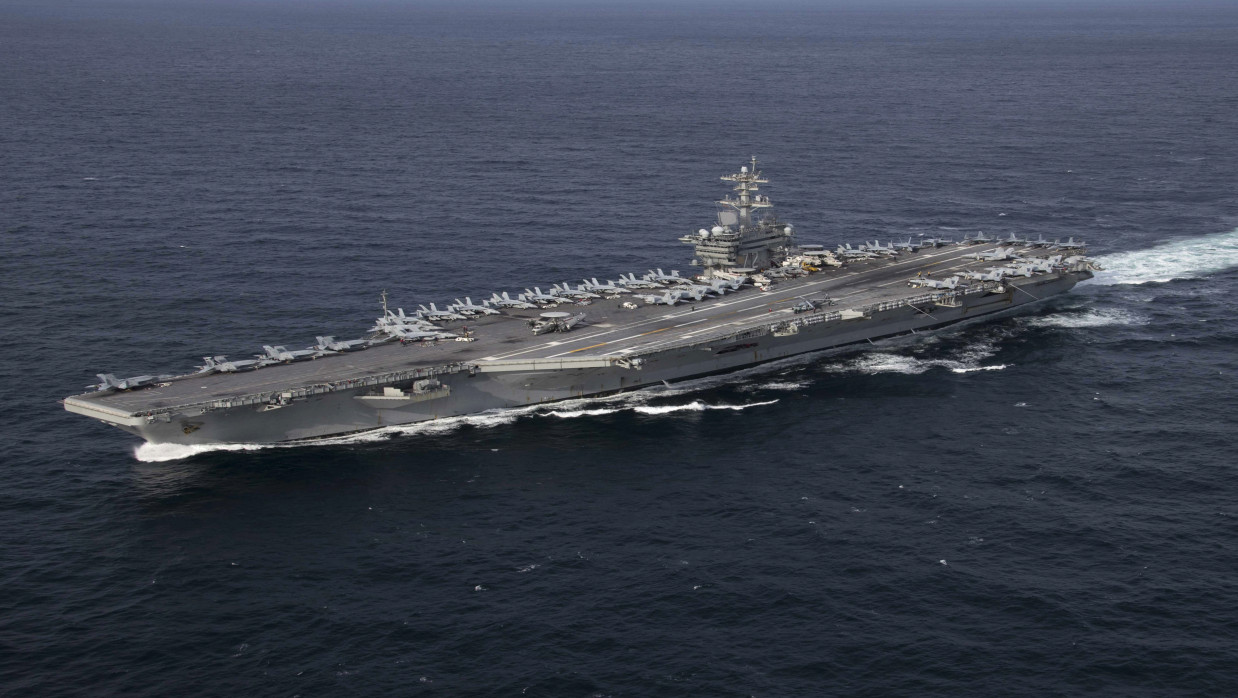
The U.S. Build-Up: Deterrence Posture or Trap Dynamics?
Reporting over the past few days has illustrated this reality: maximum pressure plus parallel diplomacy. This often means military moves that look to the targeted state like a “trap”: negotiate while we’re ramping up, give in to our maximal demands, or we will strike and claim “we tried diplomacy.”
This isn’t new. This is coercive bargaining made particularly difficult when leaders draw red lines publicly, and domestic politics severely punishes backdowns.
Just how much damage could the U.S. attempt to inflict?
Quite a lot. Americans can do enormous harm from the air and in cyber the fixed nature of Iran’s critical infrastructure. Air defenses. Command nodes. Ports. Refineries. Power grids. Suspected nuclear-related facilities. A concerted campaign could not only impose tremendous economic shock but also degrade Iran’s ability to function as a state and project power regionally.
There are limits, however:
Iran can threaten “asymmetric” retaliation. Missile attacks. Drone strikes. Maritime disruption. Anything that complicates plans for a “clean” military victory.
The global economy is too interconnected to weather Hormuz disruption. All-out war will hurt Americans. And even efforts to target Iranian forces carry the risk of strategic blowback against the party that initiates them.
Aerial campaigns don’t tend to produce enduring political results, a lesson that planners know all too well from Iraq and Libya.
The Shia Question: Who Pays the Price Across the Region?
There has been very little discussion about how the U.S.–Iran confrontation affects Shia communities across the Middle East. That includes not just Iran and Iraq, but Lebanon, Bahrain, Saudi Arabia’s Eastern Province, and communities everywhere, really.
War is one mechanism by which tensions escalate:
Anti-government Shia rhetoric is sanctioned.
Shia citizens in the Gulf are treated as suspected fifth columns.
Militias in Iraq are further mobilized, with corresponding pressures for state fragmentation.
Shia communities face blowback for Tehran’s politics even if they don’t support those politics.
Once it starts down this road, sectarian rhetoric begets sectarian rhetoric. It’s incredibly difficult to reverse.
Saudi Arabia vs UAE: The Gulf’s Fractured Front and the “Trojan Horse” Charge
What should we watch in 2026? Something I’ll be exploring in more detail in the coming months is the increasing public rift between Saudi Arabia and the UAE, with Saudi-linked sources openly charging that the UAE is aligning with Israel as a “Trojan horse” faction seeking to reshape the regional order.
The Saudi concern is less Israel, per se. Saudi leaders had previously entertained normalization on paper, but what the UAE-Israel security relationship means for the Kingdom: intelligence sharing, defense industrial cooperation, and a political order in the Gulf where Abu Dhabi, Washington, and Tel Aviv are perceived as colluding to box Riyadh in.
If a war breaks out between the United States and Iran, what will Saudi Arabia do?
It won’t go to war with Iran, but the Kingdom’s choices are likely to fall into one of these three buckets:
Providing private assistance and voicing strict conditions: i.e., allowing limited logistical support while calling for restraint and messaging tirelessly about regime security to reduce blowback.
Seeking a mediation role: getting ahead of domestic energy shock and sectarian backlash by assuming a responsible mediator profile.
Building a Gulf bloc without the UAE: tightening the ranks with Turkey, Egypt, and Pakistan to balance the perceived “threat” of Iranian regional power and contain the UAE’s rising weight.
The bottom line: the Gulf region is no longer a Sunni-block monolith that Washington can move like chess pieces. Saudi Arabia and the UAE are going to be allies and rivals at the same time, and American foreign policy must adapt to that reality.
Was this the Abraham Accords Game Plan?
The Abraham Accords were about economics, diplomacy, and buying rockets together.
Did they “foresee” today’s moment? Of course not directly. Did they set the stage? Absolutely:
By legitimizing overt Israel–Gulf security coordination.
By raising the Iranian perception of encirclement.
By creating (potentially) the material conditions for escalation against Iran to be justified as defending a new pro-Western regional security architecture.
That’s why Tehran sees the Accords not as peace but as mutual defense, and one reason why today matters so much.
How Tough Is It to Actually “Take America to War?”
Does the president have the power to “take the US to war”? Legally and constitutionally, it’s a gray zone. Congress has the power to declare war, but presidents have often ordered military strikes or interventions without declaring war, citing commander-in-chief authority and previous authorizations for the use of military force. After Vietnam, Congress passed the War Powers Resolution of 1973 to prevent presidents from escalating unilaterally, but presidents can (and have) ignore it when they want.
The reality:
Anything short of overt invasion is possible on Day 1.
A president can plunge the US into sustained war. But long and bloody wars with wide escalations lead to massive political blowback at home, especially if they cause mass casualties or hike up energy prices.
Can presidents start a war? Yes. Can they guarantee how the war will go, especially after stage-two and stage-three responses kick in? No.
Wrap Up: Escalation In The Middle East (Plus, Asia In The Background)
The smart money is not on Hollywood-style “decisive blows” that resolve anything. Instead, pick your favorite version of one of these three futures:
A: The Nuclear Deal Onlife
The U.S. keeps up its combo of “maximum pressure” and high military readiness. Iran provides a nuclear “framework” with significant limits. Israel continues to lobby allies against accepting Iran’s missiles/proxies. Talks continue, but probably under the cloud of periodic strikes. War insecurity = persistent.
B: Chip-shot Strike → Regional Conflict
Conflict between Israel/U.S. and Iran bleeds into wider regional conflict: attacks on bases, shipping, oil, and gas facilities. Oil prices spike. Gulf countries impose greater controls at home, especially against Shia communities. Iraq plays the worst spoiler of all.
C: Longer War Leads To Asian Realignment
Extended conflict fully kicks off the global move toward Asia: China/Russia deepen security ties with Iran (even if no alliance), while Asian buyers of Gulf oil cut themselves new hedges and workarounds (alternate shipping routes, build-up of strategic reserves, currency diversification). The Middle East becomes another region where Asian powers increasingly get to call the shots on what “stability” looks like, and U.S. dominance is further conditionalized.
The biggest lesson from watching this crisis build over early 2026 is how “contained” none of this really sounds. The U.S. can unleash devastating force. Iran can retaliate with devastating (though asymmetric) effect. Israel can tip us past the point of no return. The Gulf will crack. Millions of ordinary citizens, mostly Shia, can get hurt in the crossfire.
History sometimes teaches us basic lessons. If great powers make war merely another tool of bargaining, then bargaining might well turn into war.

0 Comments
LEAVE A COMMENT
Your email address will not be published