

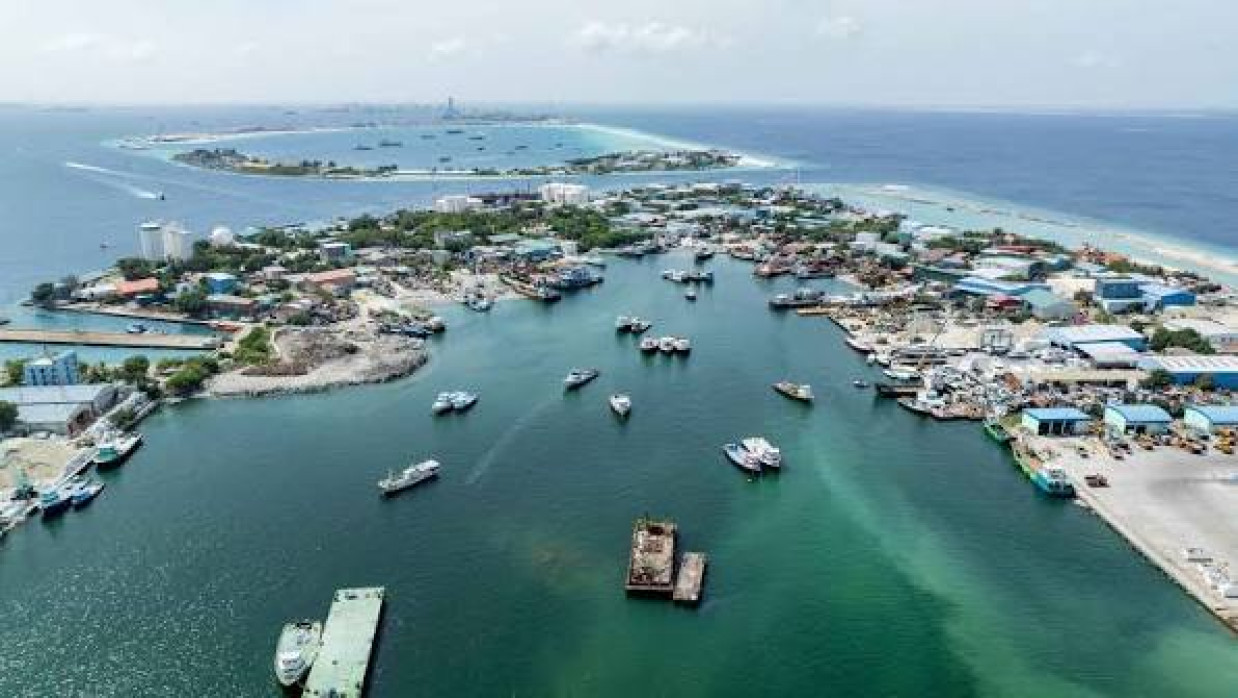
Thilafushi can be beneficial. Malé's busy commercial port serves the small Island capital. Moving this port could allow quicker unloading, better storage, and easier transport between the atolls. Because the Maldives imports most of what it uses day to day, reducing wait times at the island’s main port matters. President Mohamed Muizzu has been campaigning to have this move completed by November 2027.
China Harbor Engineering Company (CHEC) was first contracted to help with design and surveying for this project. Maldives Ports Ltd then contracted CHEC to build the International and local quay walls. This can be concerning, as they could influence how the project is built. Maldivians should know how the construction cost was determined and what other options were available. It is also important to know who will oversee the project's quality once it's built.
CHEC being awarded this contract isn't surprising. After opening their embassy in Malé in 2011, China has become one of many contractors and lenders to our country. Although they have provided the country with some much-needed facilities, we need to be aware of our debts. With the new China-Maldives free trade deal coming into effect in January 2025, it remains to be seen whether it benefits locals when selling their products.
The award also belongs to a longer history. Since establishing an embassy in Malé in 2011, China has become a prominent builder and creditor in the Maldives. Its projects have delivered infrastructure the country needed, while also raising concerns about debt and reliance on foreign contractors. The China–Maldives free trade agreement, which entered into force in January 2025, extends the relationship beyond construction. Its value to Maldivians, however, will depend on whether exporters can turn improved market access into actual sales.
India is of course playing a big role. The $500 million Greater Male Connectivity project will connect Malé to the islands of Villingili, Gulhifalhu and Thilafushi via bridges and roadways. Many arguments gloss over this important fact. India is funding the connectivity project. CHEC was awarded the port construction. The two intersect at Thilafushi, but the official write-up about India's grant and line of credit doesn't show that India will give CHEC money to construct the port.
Of course, this doesn't take away from the political implications. India is helping the Maldives gain access to Thilafushi, and a Chinese company will be constructing some of the cargo facilities on that island. But it's unfair to treat Thilafushi as a trophy to be handed to one partner or the other. The Maldives needs a functional bridge and a functioning port. Their government needs to make sure it gets the best deal for the country.
The government of the Maldives has stated that the port will be state-owned and operated and that it followed proper procedure when awarding the contract. We should trust that they did and allow them to disclose information that will back up their claims. If the Maldives disclosed how much the port cost, how it will be financed, why CHEC was chosen, when milestones will be completed, and whether third parties will have access to inspect the site. That would speak volumes more than bickering with other countries.
It is an important question as the Maldives cannot afford costly failures. In June 2026, the IMF projected public debt to stay high and said the likelihood of external debt distress and overall debt distress was high. Ports can benefit a country's economy. They can move cargo through and generate revenue that justifies the investment. If they become too costly because of construction, upkeep, and debt payments, they can harm a country's finances.
Security also requires caution. The Maldives sits in a key part of the Indian Ocean and will be scrutinized by India if China grows its influence. Building quays by a Chinese company does not make it a Chinese port or guarantee future military use. That depends on the terms set between China and the Maldives for how the port will be used. If there is further concern, we need to review the contractual terms and what the Maldives will allow at the port.
There is no Chinese takeover happening at Thilafushi, and it won't be an easy fix for the Maldives either. It's a country trying to build necessary infrastructure while staying neutral between powerful countries. Making sure their port is efficient and their contracts are open for the public to see will help keep Maldivians sovereign.


0 Comments
LEAVE A COMMENT
Your email address will not be published