

One of the most critical questions in the ongoing debates and discussions on financial inclusion in India is, “Who actually accesses formal credit and why?” The current empirical findings make an essential, timely contribution to this debate by focusing not on institutions but on borrower behavior and capabilities, particularly in the poorly covered North Eastern Region (NER) of India.
The research rests on one simple yet essential idea: access to credit depends not only on the supply of finance but also on people’s skills, knowledge, and attitudes towards the financial system.
In other words, financial literacy is more than a mere recommendation—it is a crucial factor. It is particularly relevant because it disputes a persistent myth of policy-making, namely the belief in the direct link between the expansion of the banking sector and financial inclusion.
Financial Literacy: The Missing Link
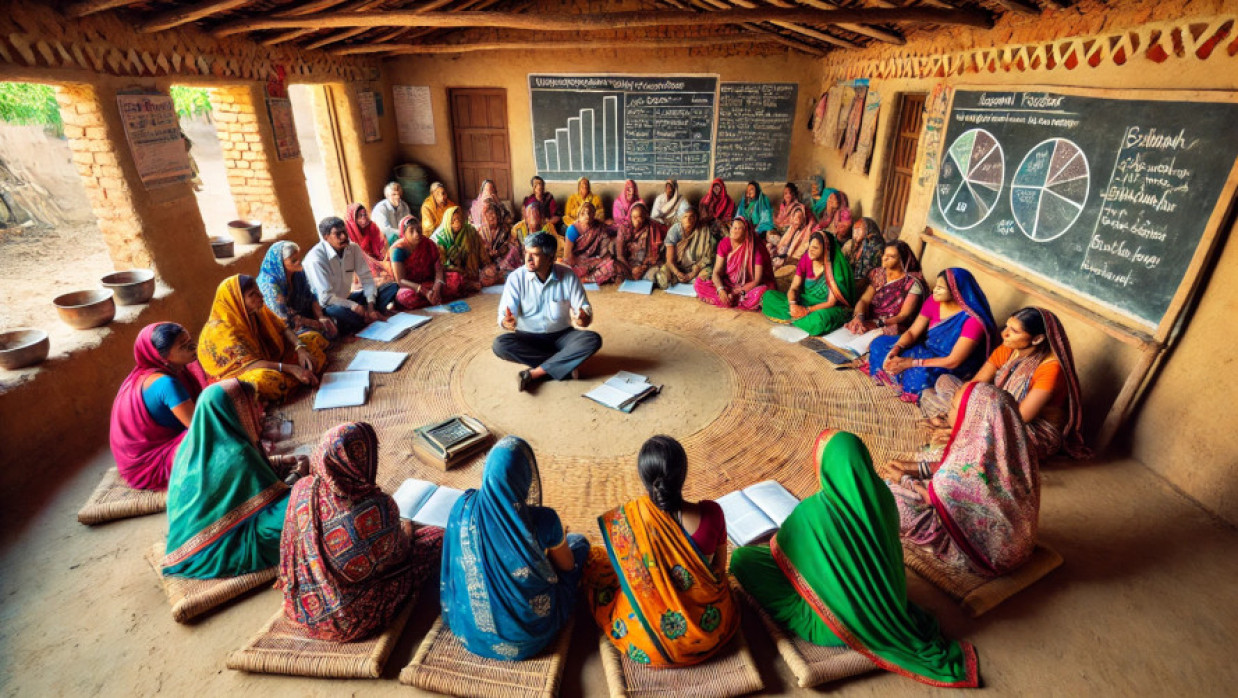
There is no doubt now that financial literacy is the biggest determinant of entrepreneurs' ability to get loans from formal institutions. Those who have undergone financial literacy training are much more likely to get loans from banks. The importance of this finding cannot be overstated.
This finding reveals that credit constraints stem not only from structural constraints, such as the absence of bank infrastructure, but also from information constraints. Most people who cannot access loans are not excluded because banks refuse to lend, but because they lack information on how to access these facilities.
In areas like Northeast India, where geographical isolation makes it difficult to have bank branches, this information problem is particularly important. Lack of information about loan application process, eligibility requirements, and repayment policies means that many people effectively bar themselves from accessing loans.
The Shadow of Information Asymmetry
In this context, the research draws on the well-known theory of information asymmetry, which reflects unequal knowledge among parties involved in market transactions. In the credit market, knowledge asymmetry usually favors creditors. If an entrepreneur lacks knowledge of financial instruments, he is unlikely to apply for a loan, whereas the bank is unsure of the borrower's quality.
An additional aspect adds an interesting twist to the concept of information asymmetry by introducing borrower asymmetry. Instead of focusing solely on lenders' reluctance, this approach explains how a lack of financial knowledge affects borrowers and leads them to avoid participating in financial activities. Financial literacy is thus a tool that helps overcome uncertainty and build trust in the market environment.
It is crucial for countries with developing economies because of low trust in institutions and limited experience with financial tools. Policymakers can thus address not only economic problems but also behavioral and psychological ones related to low participation in financial activities.
A Surprising Behavioral Insight
One of the paper's most fascinating observations is the reverse relationship between business profitability and access to credit. Unlike popular opinion, the more profitable the business, the less likely it is to take loans from banks.
This observation aligns with the "pecking order" principle, which states that firms prefer internal funds to external borrowing. Small entrepreneurs, particularly those operating under unpredictable circumstances, feel safer using retained earnings rather than dealing with the complexities of banking operations. Borrowing in an entrepreneurial environment can be viewed as a risky and uncertain activity that most business owners would like to avoid if they have enough internal funds available.
This contradicts the commonly accepted notion that increased profitability leads to increased demand for credit. Behavioral considerations play a significant part here.
Banks Still Dominate—but Growth Is Slowing
On the supply side, the research finds that commercial banks still provide the largest share of financing for MFIs, accounting for about 50% of all credit provided over the last fifteen years, due to their stronger capital base, organizational capabilities, and outreach compared with other financial organizations.
It should also be noted that although lending volume grows steadily, its growth rate tends to slow. This tendency indicates that microfinance development may already be at a stage where rapid growth is no longer guaranteed, and maintaining the pace would require additional efforts. It could also be seen that during specific periods, for example, the period of the global pandemic, there were changes in the dynamics of credit provision, which also show how sensitive this process is to various factors. However, after the pandemic, the dynamics of credit provision appear to have recovered.
Bridging Demand and Supply
The strength of this research is its integrative analysis, which considers borrower behavior from the demand side alongside trends in institutional lending from the supply side. This integrative strategy gives us an all-round view of the credit market environment. In one way, financial institutions play an important role in providing access to credit.
In another way, borrowers should be willing and ready to take advantage of the credit facilities provided. If there is a deficiency in any of these areas, the credit market environment will be suboptimal. This research shows that although credit facilities may be available, barriers to access persist because of a lack of financial literacy.
Policy Implications: Beyond Access to Awareness
This initiative for “Financial Literacy and Credit Facilitation Hubs” stands out. These platforms would provide both education and real-time help, encouraging borrowers to act on what they learn. By providing hands-on support, these financial literacy hubs would reduce process-related hurdles and reassure new borrowers.
In areas like northeast India, where both physical and information-based barriers exist, such measures could help increase the number of people participating in formal financial systems.
This opinion article is based on the Author’s published work titled “Who Gets the Credit and Why? Information Asymmetry, Borrower Behavior and Lending to Microfinance Institutions in India” in Small Enterprises Development, Management & Extension Journal by Sage Publications


0 Comments
LEAVE A COMMENT
Your email address will not be published