

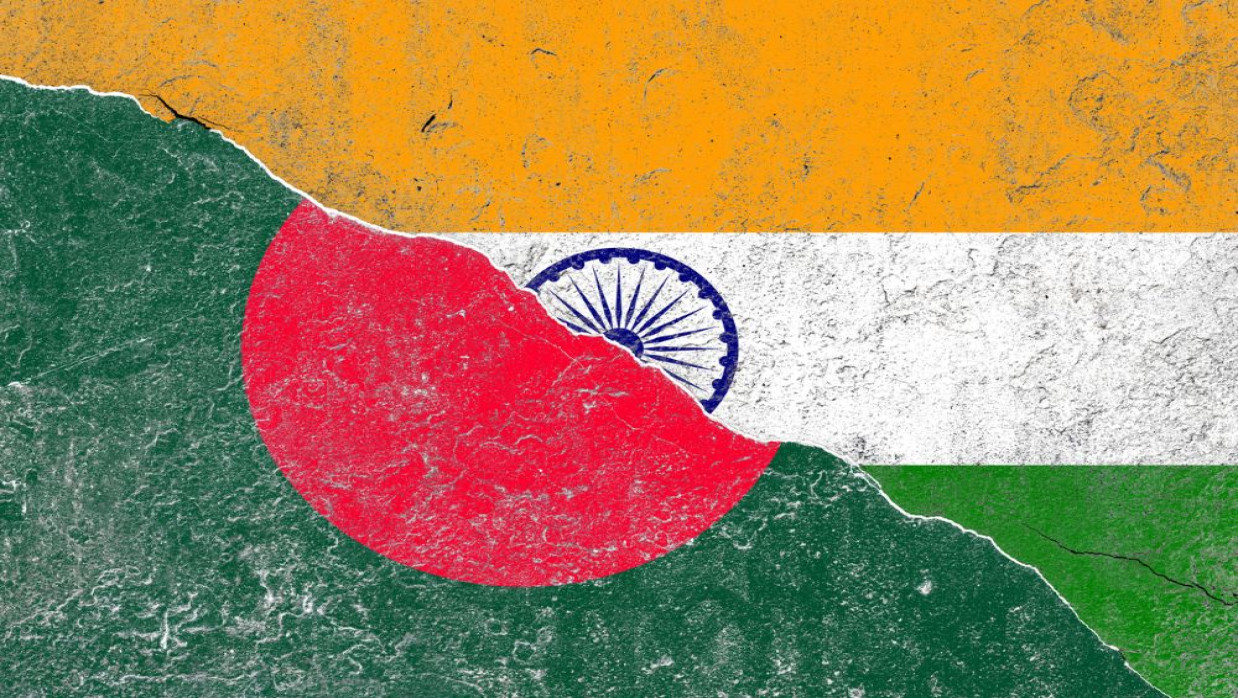
India and Bangladesh have more in common than a border. Their experiences are linked by the Bengali language, its literature and music, migration, and the political upheavals that transformed the subcontinent. But similar cultural heritage has not prevented diplomatic conflict. Disputes over river flows, border control, migration, and the political legacy of Sheik Hasina have shown the limits of historical familiarity in sustaining bilateral relations. Literature is a way of keeping communication open in an age of increasing political mistrust. But it is worth posing a harder question: can cultural interchange remain meaningful as the politics surrounding it grow more hostile? The relationship of the two countries has been expressed in the language of historical friendship. The Indian support for Bangladesh’s Liberation War in 1971 is a major part of bilateral memory, and Bengali literature offers a cultural lexicon that goes beyond national boundaries. Rabindranath Tagore is one of the most visible manifestations of this linked heritage whose compositions were adopted as the national anthems of the two countries. Kazi Nazrul Islam, who wrote poetry criticizing injustice and religious differences, holds a similar place in their creative traditions.
But these connections are not to be taken as evidence of a simple cultural unity. Historians have argued that the partition, the competing nationalisms, and the divergent political experiences have shaped the Bengali identity differently in India and Bangladesh. The language that was the foundation of Bangladesh’s independence remains a major regional identity in India. Thus, the same cultural inheritance has different political implications on the two sides of the border. Research on the making of Bengali identity shows the changing nature of these views. The value of literature lies precisely in the fact that it enables these differences to be explored, not concealed.
Beyond the talk of a common heritage
Cultural diplomacy is often praised as a tool of good-will. Literary festivals, film screenings, translation efforts, and cultural centers offer opportunities for people to engage with other countries outside of the stories produced by governments. In a region where political disagreements often shape popular perceptions of other countries, such exchanges can provide alternative reference points. But the effectiveness of cultural diplomacy depends on the circumstances in which it is used. Shared literary heritage does not always outweigh the suspicions raised by disputes over sovereignty, security, or political intrusion. Fame does not require audience agreement about the political relations between a writer’s or musician’s country and others.
The case of India and Bangladesh illustrates this distinction. But conflicting notions of what friendship means have also shaped bilateral relations, even if their cultural ties have survived great political upheavals. The close ties between India and the government of Sheik Hasina raised concerns in some sections of Bangladeshi society that New Delhi was too closely associated with a particular political elite. These perceptions were to form part of a wider review of the partnership after the political upheaval of 2024. Concerns over security, political stability, and treatment of minorities have intensified public debate in India.
The danger is that cultural affinity substitutes for addressing these frustrations. Quoting Tagore or recalling India’s role in 1971 does not address the present-day concerns of sovereignty, democratic accountability, or benefit sharing in bilateral cooperation. A relationship dependent too much on past gratitude runs the risk of missing the changing expectations of younger generations in Bangladesh. A culture may start a discourse, but it cannot finish it.
Who is painting the Bengali identity?
One has only to think of Bengal's history to understand the political importance of literature. The partition in 1947 sundered a region whose linguistic and cultural bonds went back further than the modern nation-state. The creation of Bangladesh in 1971, an independent country whose national identity was strongly shaped by the Bengali Language Movement and resistance to political dominance from West Pakistan, further altered the history. These experiences created similar but not identical cultural narratives. The Bengali language played a key role in Bangladesh's struggle for political recognition and self-determination. In West Bengal, as a constituent of the Indian Union, a Bengali identity was forged with its own histories of migration, political contestation, and regional belonging. Such experiences with paradoxes are recorded in the literature. Writing on Partition, Displacement, and the Liberation War takes you into histories that are often glossed over in national narratives. As literary scholar Kaiser Haq writes in his study of Partition writing, a singular, homogeneous account of migration and loss cannot adequately represent Bengali experiences. His study of Partition literature emphasizes the significance of reading the literary traditions of both the Bengals while simultaneously respecting their differences. This is where cross-border literary exchange can make a huge difference. Indian readers of translations of modern Bangladeshi writers, and Bangladeshi audiences for Indian Bengali writing, might contest the assumption that cultural familiarity necessarily leads to political understanding. These discussions can show how people interpret nationalism, religion, class, gender, and the cruelties of history in different ways.
But representation is important. Cultural engagement must not privilege metropolitan literary elites over rural writers, minority voices, regional dialects, and people who do not fit dominant narratives of Bengali identity. The Bengali-speaking region should not be seen as culturally homogeneous. Bangladesh is home to many linguistic and ethnic groups. The cultural scenario of West Bengal is not confined to a single model of Bengali identity. A real literary dialogue must embrace this diversity and not use the shared heritage as one more tool for cultural supremacy.
The Boundaries of Soft Power.
The strongest argument for cultural engagement is that it can sustain relationships that are difficult to sustain diplomatically. Literary institutions, universities, publishers, and independent cultural organizations can maintain the channels of communication not fully dependent on the current political situation. But this participation requires more than symbolic gestures. For exchanges, you want institutional consistency, accessible finance, visa arrangements, publication opportunities, and relief from arbitrary political limitations. When writers cannot travel, books cannot circulate, and cultural institutions face diplomatic difficulties, the rhetoric of a shared heritage loses all practical value. There is also the danger that governments use culture to project a façade of friendship while failing to address the root causes of mistrust. Cultural events can be good publicity, but you can’t measure their value just by counting heads or ceremonial participation. More crucially, do they increase access to diverse voices, encourage long-term engagement, and allow for conversation about painful pasts?
This distinction is particularly relevant in unequal relationships. India has more economic and strategic clout, but Bangladesh has its own national goals and growing global linkages. Cultural diplomacy should not mean that Bangladesh owes India political respect because of their history, nor can India assume that cultural familiarity will trump genuine disagreements. Dialog implies reciprocity, not inherited obligations. Literature benefits from challenging rather than reproducing these preconceptions.
Building a conversation that survives political change
Practical measures would have to be taken to create a more lasting cultural link. Universities and literary institutions could set up permanent translation programs, joint research projects, and fellowships for young writers from both countries. Publishers may help finance international editions of modern fiction, poetry, and history. Literary festivals could be spaces to discuss Partition, the Liberation War, migration, and minority experience without forcing participants into a single political narrative. Digital platforms can also increase access to writing that is rarely published internationally through traditional publishing channels. Such efforts, instead of being limited to state-sponsored cultural diplomacy, would require transparent selection procedures and involvement of independent institutions. These measures would not solve political differences. Their goal would be to make sure that disagreements are not the only lens through which neighboring societies understand each other. The challenge is to move from memory of a common past to institutions that can live with disagreement today. Getting comfortable with each other’s cultures won’t resolve disputes about rivers, borders, or political accountability. There is a need for dialogue, for evidence, and for political judgment. But literature can muddy the attribution of a neighboring community’s behavior to its government.
When diplomacy fails, literature cannot help negotiate a treaty or engender political trust. It can keep alive the art of listening. That option is important to India and Bangladesh—not because a shared language means conflict is inevitable but because it creates a space where differences can be acknowledged without being misread as permanent antagonism. The future of their cultural relationship will be less about how often they mention their shared past and more about whether both communities are prepared to engage with each other’s shifting realities. Literature cannot substitute for diplomacy. But it can help ensure that when political options narrow, the conversation between the peoples of the two countries does not stop there.


0 Comments
LEAVE A COMMENT
Your email address will not be published