

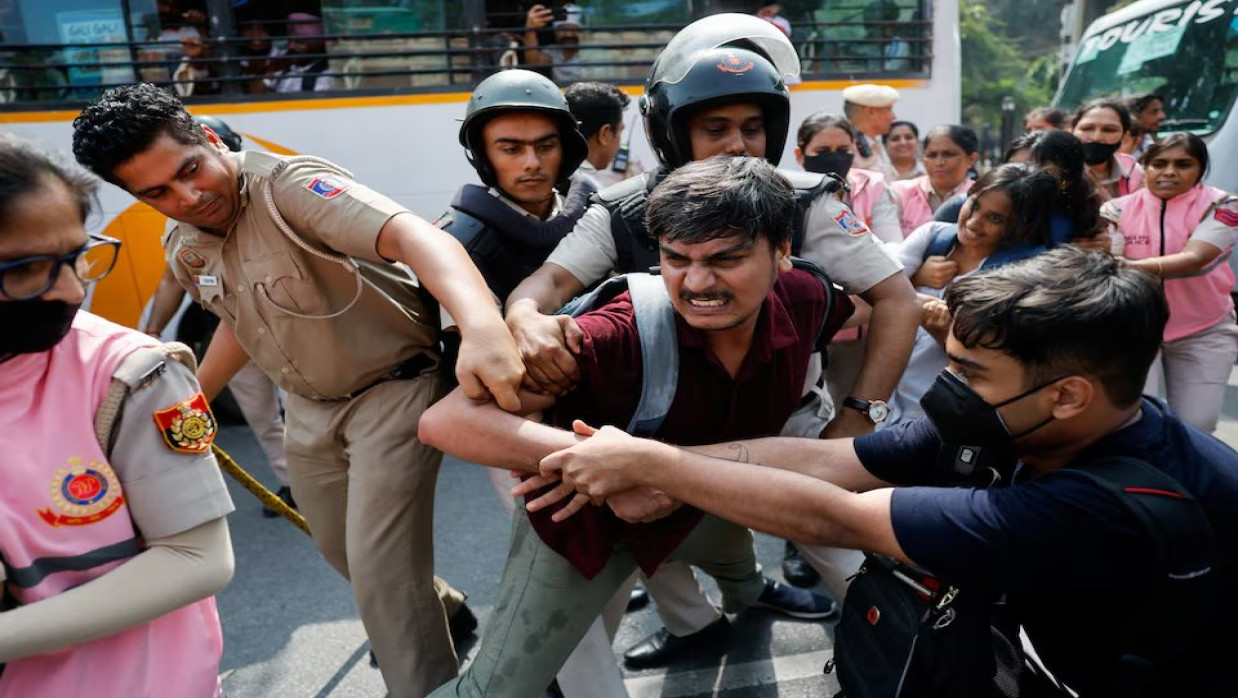
It is as yet too early to describe Gen Z’s protest against Chief Election Commissioner (CEC) Gyanesh Kumar and revision of electoral rolls as a total success. At the same time, the same cannot also be described as having failed. Certainly, actual success would remain elusive till there seemed some definite sign of Kumar heading for resignation and/or the controversial Special Intensive Revision (SIR) of electoral rolls being scrapped. However, the fact that these issues have contributed to protests in the capital city and other parts of the country cannot be ignored. Equally significant is the fact that attempts made to restrict these by increasing security forces, restricting travel services, gatherings, etc. have actually not succeeded totally in preventing the same. This also suggests that protestors are probably surging forward with a new sense of fearlessness and also a certain defiance, which was not too visible around a decade ago. What does this suggest?
It is possible, around a decade ago, greater hope rested in Modi-led government. It was after all its first chance at the center. The situation is different now. Narendra Modi heads the government at present as the Prime Minister for the third term. Perhaps, the young voters feel his team has been given enough time. In politics, it tends to be easier to justify allegations against power-holders, who are supposed to be answerable to voters, for their responsibility, use of power, their role and so on. The situation of those in opposition is totally different. They are not power-holders and may be viewed as not responsible for shortcomings displayed by those holding reins of power.
In addition, just sections of Gen Z have not displayed their move to participate actively in these protests, even if the same leads to their being detained and/or facing some physical injuries. Undeniably, several opposition leaders have been raising their voices about the same issues, specifically scrapping of SIR for quite some time. The publicity gained by young protestors has not been ignored by opposition parties, their leaders and supporters. This has been marked by their coming forward in these protests. This has added to strength of protestors in number and also influence. Certainly, the concerned authorities have not refrained from going ahead in detaining the protestors and preventing them from participating in their scheduled protest marches. The nature of these protestors being arrested has only helped in their gaining more publicity.
The preceding point only suggests that if the concerned authorities’ aim has been to stifle/kill the movement and/or prevent protestors from raising their voices, strategies used by them appear to have failed. Rather, the same voices seem to be echoing more aggressively than probably expected. This has been to a degree also visible in significant coverage gained by these protestors. This certainly poses questions for those projecting these protests as fairly insignificant.
Ironically, these protests also seem to have raised numerous questions about social credibility of campaigns which Bharatiya Janata Party (BJP) leaders and their extremist supporters had been banking upon tremendously. This specifically refers to their giving importance to their religious cards together with communal campaigns. The spirit of Indian secularism cannot be missed in these protests. Social differences, whether based on religion, caste or other divisions, seem to bear little importance for protestors coming forward as a team. This also suggests that in context of issues these protestors are aggrieved by, communal campaigns are likely to have little impact. Electoral campaigns using communal cards have been periodically used to win votes. At present, these protest movements have certainly raised questions about the electoral credibility of the same communal campaigns, quite a few political parties as well as their leaders have tended to bank upon.
It wouldn’t be surprising, if the same leaders are forced to deliberate seriously before trying to make use of communal campaigns for electoral gains. True, each and every Indian has not come forward to participate in these protest marches. But the message conveyed by these marches has certainly not been confined to protest-sites, protestors being detained, additional forces being deployed and so forth. It has extended to numerous more deliberating on the same issues. Against this backdrop, protestors have certainly succeeded in raising their voices significantly enough to leave an impact, be acknowledged and also be noticed considerably. In the whole process, whether unintentionally or otherwise, the strength of Indian secularism has also been displayed. Communalism has certainly been defied by protestors’ secularism!


0 Comments
LEAVE A COMMENT
Your email address will not be published