

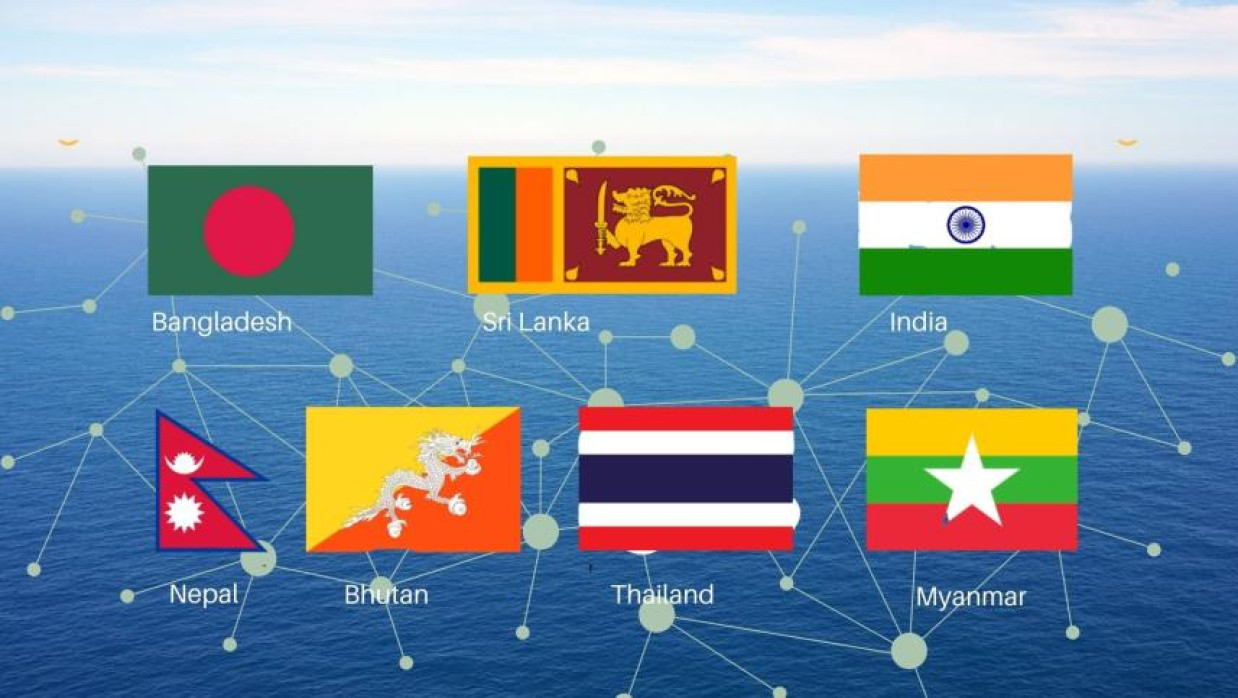
As global supply chains undergo a major restructuring amid geopolitical tensions and the China+1 strategy, South Asia has a window to establish itself as a manufacturing hub. Despite the region being home to nearly a quarter of the world’s population, it is one of the least economically integrated in the world. The problem is not simply low trade, but the absence of production networks that allow neighbouring economies to grow together.
As BIMSTEC gains prominence as a platform for regional cooperation, it provides an opportunity to rethink this approach. Rather than focusing solely on increasing trade volumes, the group should focus on integrating production across member states. From textiles and pharmaceuticals to agro-processing and electronics, integrated production networks allow countries to specialize in the industries where they are most competitive. If BIMSTEC is to emerge as a meaningful driver of regional economic integration, strengthening regional value chains may be more important than negotiating another free trade agreement.
From Trade to Production
Trade agreements facilitate the movement of finished goods across borders, while regional value chains integrate production across economies. Instead of being designed, manufactured and assembled all within a single country, various stages of production are distributed across multiple countries according to their comparative advantages. One country may provide raw materials, another may manufacture intermediate components, and a third may carry out the final assembly before the product enters world markets. For instance, cotton grown in India could be processed into fabric in Bangladesh, stitched into garments using machinery sourced from Thailand, and exported to global markets through integrated regional supply chains.
This model has underpinned the success of several regional economic blocs. For example, East Asia's manufacturing system is based on dense production networks that allow firms to source inputs efficiently across borders. These linked value chains have driven competitiveness, attracted foreign investment, and allowed countries at various levels of development to participate in global value chains and international trade.
BIMSTEC already possesses many of the building blocks needed to adapt this model. Its member states possess complementary economic strengths, like India has a large manufacturing and services sector, Bangladesh is the world’s second-largest garment exporter, Thailand is part of regional automotive and electronics supply chains, and Nepal and Bhutan have substantial hydropower and agricultural resources. Yet these strengths remain largely disconnected from one another, limiting the region’s ability to build integrated production networks. So, the transition from trade in finished goods to trade in the integrated production processes might generate much bigger economic benefits than simply reducing tariffs.
What's Holding BIMSTEC Back?
Despite its potential as a vehicle for regional economic integration, it has been unable to foster regional value chains. The barriers are not confined to just tariffs. High costs of logistics, complex customs regulations, non-uniform regulatory standards, and poor transport infrastructure continue to make cross-border production costly and inefficient.
Moreover, the member states have largely pursued export-led growth on their own rather than as part of a collective manufacturing ecosystem. Instead of developing complementary production networks, countries often compete in the same export markets. Consequently, the region has missed out on the greater investment, productivity improvements, and supply chain resilience that integrated value chains can bring. Addressing these structural constraints will be essential if BIMSTEC is to translate regional cooperation into meaningful economic integration.
From Potential to Reality
The ongoing reconfiguration of global trade presents BIMSTEC with a once-in-a-generation opportunity. As multinationals diversify their supply chains following the China+1 strategy, production is no longer concentrated in a single country but is increasingly distributed across multiple locations. Countries with efficient connectivity, reliable logistics and integrated manufacturing ecosystems are likely to emerge as preferred investment destinations. For BIMSTEC, this is an opportunity to project itself not as a collection of individual markets, but as an integrated regional production hub.
But this potential will remain unrealised without greater coordination at the regional level. Successful production hubs in Southeast Asia have shown that production networks flourish when infrastructure, regulations and industrial policies are coordinated across borders. To realise this vision, complementary national capabilities must be woven into a regional production system capable of responding to an increasingly fragmented global economy.
Why BIMSTEC?
Unlike SAARC, whose economic agenda has often been held hostage to political issues, BIMSTEC has increasingly focused on connectivity, trade facilitation and economic cooperation. Its geographic location at the intersection of South and Southeast Asia provides opportunities to integrate with broader Asian production networks rather than remain confined within South Asia.
Moreover, BIMSTEC’s diverse economic structure allows for regional value chains to thrive. India has a large manufacturing base and consumer market, Bangladesh is a world leader in garment exports, Thailand is well embedded in automotive and electronics supply chains, and Sri Lanka contributes strategic port infrastructure, while Nepal and Bhutan offer significant hydropower resources. Together, these complementary strengths provide the foundation for regional production networks that can enhance competitiveness and attract investment. If BIMSTEC can strengthen connectivity and policy coordination, it has the potential to evolve from a forum for dialogue into a platform for production-led economic integration.
Conclusion
The restructuring of global supply chains presents BIMSTEC with an opportunity to redefine regional economic cooperation. While free trade agreements remain important, they are only one part of the equation. The region's long-term competitiveness will depend on its ability to develop integrated production networks that harness the complementary strengths of its member states.
The challenge for BIMSTEC is no longer whether regional cooperation is desirable, but whether it can translate political intent into tangible economic outcomes. If it succeeds in building regional value chains through enhanced connectivity, policy coordination and industrial cooperation, the group can move up from being a facilitator of trade to becoming a driver of shared prosperity. In doing so, BIMSTEC would not only strengthen its position in the global economy but also offer a more resilient and inclusive model of regional integration for the Bay of Bengal. Ultimately, BIMSTEC's success will be measured not by the number of agreements it signs, but by whether businesses begin to produce together across borders.


0 Comments
LEAVE A COMMENT
Your email address will not be published