

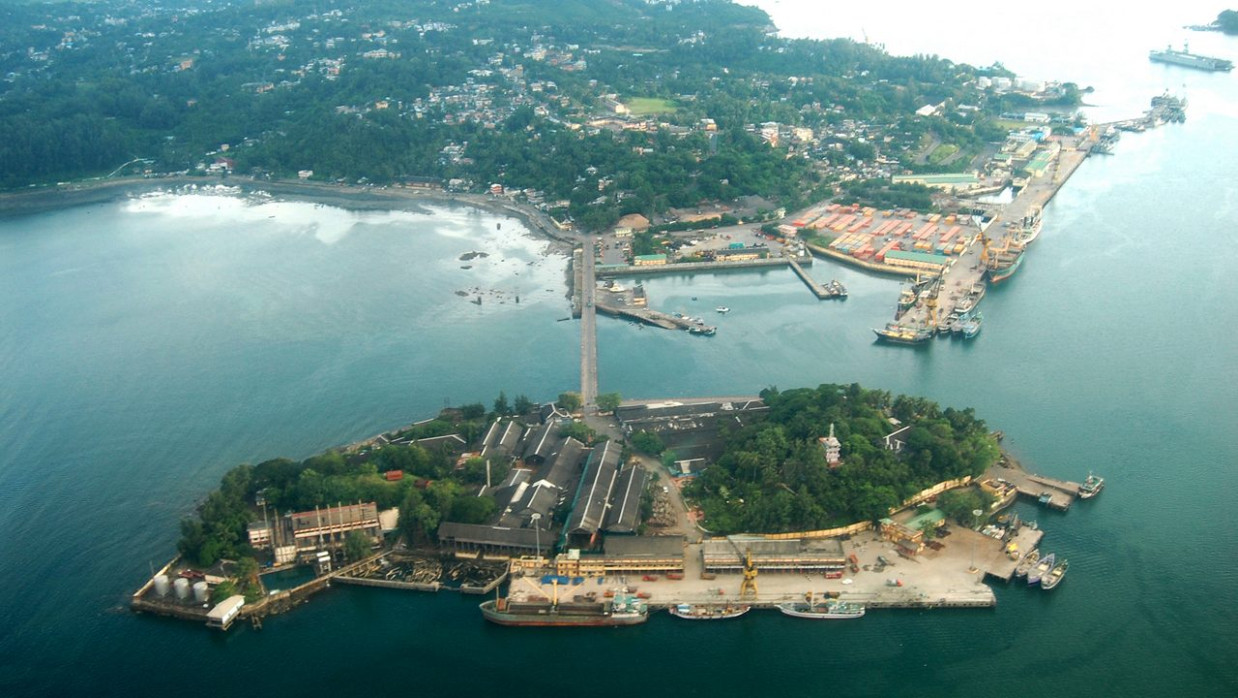
The Andaman and Nicobar Islands are emerging from years of obscurity and have today become one of the most strategically important regions in the Indo-Pacific. From being an isolated and relatively untouched archipelago, the Andaman and Nicobar Islands are now at the heart of discussions on geopolitics, ecology, and our nation's development strategy. The development debate around Great Nicobar Island has brought all these facets into sharp relief, raising basic questions on growth versus conservation, sovereignty versus stewardship, and strategy versus sustainability.
A Pre-Colonial World of Isolation and Indigenous Sovereignty
Politically and culturally, prior to European colonization, the Andaman and Nicobar Islands had no relation to India or any other country of the Indian peninsula. Indigenous tribes such as the Shompen, Nicobarese, Jarawa, Onge, and Sentinelese inhabited the islands. Isolated societies developed over millennia, largely separate from societies on larger landmasses. Life on the islands developed under the influences of tropical island and coastal ecology, the resources found on the islands and at sea (including jungle and fish), and their geographic isolation (which limited contact with foreigners).
Tribes were non-state peoples who lived by hunting and gathering or harvesting seafood for sustenance, and whose culture was based on their relations with the natural environment. Traders from Arab regions had some contact with the islands, and travelers, Chinese and Europeans, wrote of their visits, but it remained largely outside imperial reach. Geography, disease, and difficult terrain prevented large groups from permanently settling the islands. This is not to say that they were historically "Indian" or "Asian" as contemporary political concepts would define them; they were simply islands.
Colonial Incorporation and the Penal Colony Era
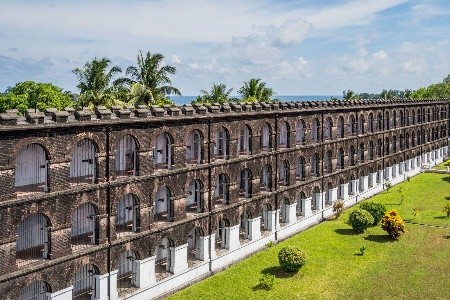
It was during British rule that changes were made to the islands. The islands were used as a British penal colony after the Indian Rebellion of 1857. Rebels and convicts from India were transported to these islands as prisoners. A Cellular Jail in Port Blair prison was established, and Indian freedom fighters who revolted against the British Raj were imprisoned here. India officially administered these islands as part of British India, unlike many other regions, which were princely states. The islands came under the direct administration of British India as a Chief Commissioner's Province. The British settlements and establishments brought many changes to the islands' demographic and ecological system. The natives were pushed to the margins, and the British brought in laborers and constructed settlements here, along with developing them as a strategic asset.
Seamless Transition into Independent India
The islands became independent from British rule in 1947. Since they were under the direct control of the British Crown, they automatically became part of the Dominion of India. There was no accession; no discussion or negotiation, and no police action/intervention occurred, as in Hyderabad or Kashmir. At the time of the transfer of power, there was no question of allegiance to Pakistan. No insurgent movements were challenging India's control, unlike in many other states. The islands remained under the Government of India and were declared a Union Territory in 1956.
Strategic Relevance in the Indo-Pacific Era
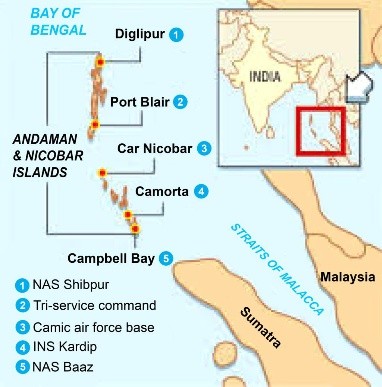
For many years after Independence, the islands received little attention in New Delhi. But with the Indo-Pacific emerging as the arena of great-power rivalry, the islands have become strategically significant for India. Located at the mouth of the Strait of Malacca, through which a third of maritime trade, including energy shipments to East Asia, transits, the islands command the sea lines of communication traversing this crucial chokepoint.
Recognizing the islands' strategic location, India set up a unified command – the Andaman and Nicobar Command. Stationed on the islands, the Indian military can keep watch over major sea lanes of communication and power projection in the Indian Ocean Region. Further, India can use the islands to conduct surveillance, logistical support, and safeguard its maritime interests in the region.
China did not raise any territorial claims over the islands and, in fact, acknowledged Indian sovereignty over the Andaman and Nicobar Islands. However, Beijing began expressing concerns over India militarizing the islands, especially considering India's potential to monitor and even choke Chinese vessels transiting through the Malacca Strait.
India's strategic position over the Strait is regarded as a classic example of China's vulnerability to the "Malacca dilemma." For decades, China has sought alternate routes to overcome this dilemma. It has already invested in ports located at Gwadar (Pakistan), Hambantota (Sri Lanka), and Kyaukpyu (Myanmar), to name a few.
The Great Nicobar Development Project
That policy vision is, many observers believe, currently undergoing a dramatic shift with the proposed development of Great Nicobar Island. As part of a national integrated coastal development plan, detailed plans call for constructing a deep-sea transshipment port/power plant/greenfield township, with associated infrastructure, at the island's southern tip. The project has been sold in policy discussions as both an opportunity to seize new sources of wealth and a means to defend against all manner of threats.
Advocates of developing Great Nicobar Island further claim that it will enable India to become a regional maritime hub and reduce its reliance on foreign ports, which may, in turn, allow it to choke off trade with its rivals. The deep waters surrounding Great Nicobar make it easier for large ships to dock.
Strategic Imperatives and Opportunities
From a geostrategic perspective, Great Nicobar offers several advantages as well. Being in proximity to the Strait of Malacca will allow India to dominate this chokepoint, just as many other countries do from their respective vantage points. Such locations become immensely valuable during periods of great-power competition at sea.
Great Nicobar can serve as a counter to the Chinese presence in the Indian Ocean region. From there, India would be able to keep an eye on developments and project power effectively with a robust forward base. Finally, such developments will also help strengthen partnerships in the Indo-Pacific, especially the QUAD partnerships with the US, Japan, and Australia.
Environmental and Ecological Risks
Still, this can't be justified given the project's environmental costs. The Great Nicobar Island is a UNESCO-designated biosphere reserve and home to many rare flora and fauna, including the leatherback sea turtle. Many trees and habitats will have to be cleared if the project is to be completed at the scale it is envisioned.
Speaking of policy debate, once this rich biodiversity is hampered, there can never be a reversal to what has been lost. We cannot get these rainforests back. Sure, the islands can take a lot of damage, but this.
The Tribals and Cultural Survival Essay
The tribals of this land, too, are at risk. Particularly, the Shompens who have been living here for generations. Tribals have a lifestyle ingrained in their forest home. Highways will take away their homes and means of living.
The Indian government has promised to take measures to safeguard the land's tribes. Yet again, many are doubtful. Experience has taught us that development comes at the cost of displacing many innocent lives.
Development Philosophy: A National Test Case
The Great Nicobar debate comes down to India's grand vision for development. Does India envision islands of prosperity fueled only by strategic delusions? Can we not develop responsibly with respect for nature and compassion for the displaced? Do development and compassion have to be mutually exclusive?
Just ask Uttarakhand and Himachal Pradesh. Rapacious development fueled by ecological disaster didn't make anyone wealthy there. It simply floated dreams away on muddy deluges. Hopefully, Great Nicobar won't serve as another case study.
Implications of the project on the international front:
Indo-Pacific: Militarization of Great Nicobar is also likely to redraw the geopolitical map of Indo-Pacific. Militarily, India will be better positioned to dominate the region as a capable maritime power. Economically, as one of the custodians of these major trade routes, the world trade will be well secured.
South China Sea: Strategically, India might find itself competing with China at many places where it has no claim at all. One major international concern linked with the project is its environmental impact.
Environment: The potential loss of a valuable biodiversity hotspot may raise questions about India's stance on global commitments to environmental protection.
Conclusion: Between Power and Preservation
India's Andaman and Nicobar Islands have seen drastic transitions over the centuries: from isolated indigenous settlements to strategic British Penal Colonies to the rare tropical paradises they are today. Now, their future hangs in the balance once again with the Great Nicobar Development project.
But behind the steel vs soft infrastructure argument, there is another larger question we should be asking ourselves: what sort of country do we want India to be as we stake our claim on the global stage? What are our values? Can we walk that tightrope? Our answer will decide how we impact Great Nicobar and what example we set for responsible development in the Indo-Pacific.

0 Comments
LEAVE A COMMENT
Your email address will not be published