

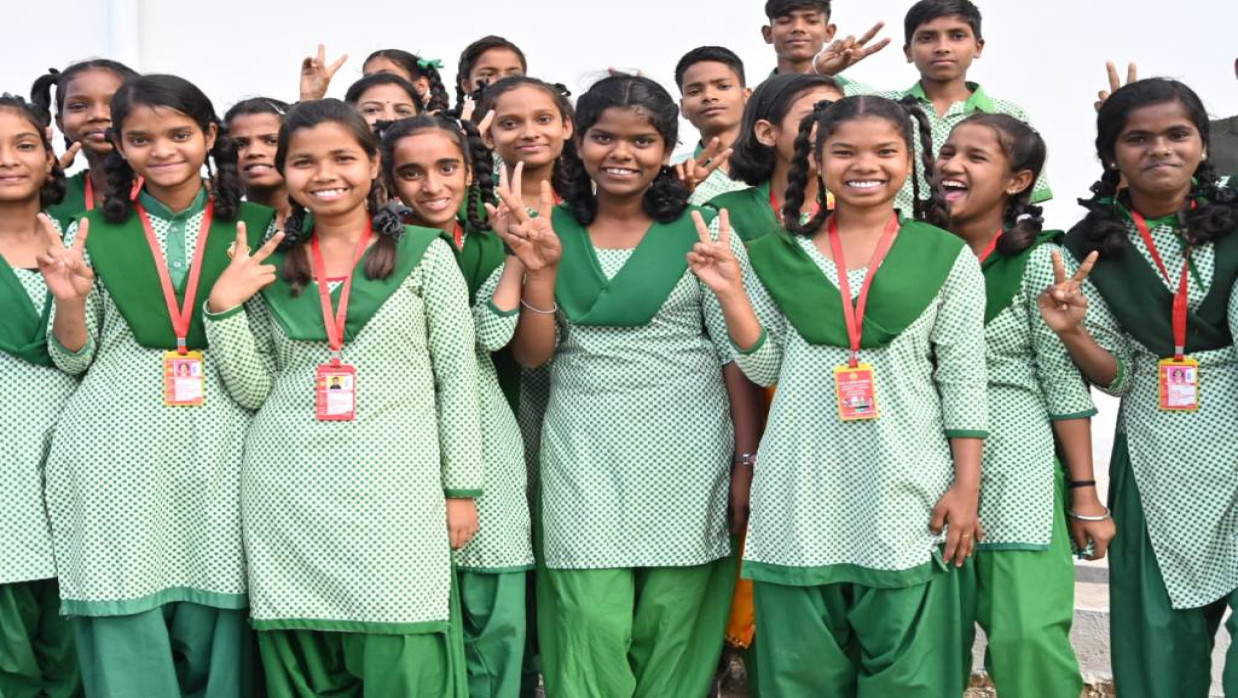
A Silent Crisis in Classrooms
In a government school near Ranchi, a teenager who once participated actively in class has slowly withdrawn—missing school, avoiding peers, and losing interest in studies. There is no visible illness, yet something is clearly wrong. For thousands of children across Jharkhand, such distress often goes unnoticed until it escalates into something far more serious. India today is witnessing a worrying rise in mental health challenges among children and adolescents. According to a 2024 report cited by Business Standard based on NCRB data, over 13,000 students die by suicide every year, with a steady annual increase. These figures are not just numbers—they reflect deep emotional struggles shaped by academic pressure, family stress, social inequality and lack of support systems.
Jharkhand presents a particularly urgent context. A study conducted by the Central Institute of Psychiatry found that about 11.1 per cent of the state’s population suffers from mental health conditions, a figure highlighted by Hindustan Times. Yet access to mental health services remains extremely limited, especially in rural and tribal areas where stigma and lack of awareness often prevent early intervention. For children growing up in such environments, emotional distress is rarely identified in time. Schools, which should ideally serve as safe spaces, are often not equipped to respond to these needs. Mental health continues to remain outside the core priorities of schooling, despite growing evidence that it directly affects learning outcomes, attendance and overall development. Research published in Frontiers in Education (2024) clearly shows that students who receive mental health support perform better academically, show fewer behavioural issues and build healthier peer relationships.
Bridging the Gap: Teachers and Systems
In Jharkhand, schools are often the only consistent institutional space in a child’s life. Teachers interact with students daily and are in a unique position to observe changes in behaviour—withdrawal, aggression, absenteeism or declining performance. These are early warning signs. However, most teachers are not trained to interpret or respond to them. This gap is critical. Studies available through ScienceDirect (2024) indicate that children facing emotional distress are more likely to drop out, underperform or disengage from education altogether. Yet, the system continues to treat mental health as a specialised issue rather than a foundational part of schooling. While the National Education Policy 2020 recognises the importance of student well-being, its implementation remains uneven. As highlighted in analyses by The Hindu (2023), there is a lack of clear, localised strategies to translate policy into practice, particularly in states like Jharkhand with diverse socio-cultural realities. The shortage of trained mental health professionals further complicates the situation. The National Health Systems Resource Centre (2021) notes a severe deficit of psychiatrists, psychologists and social workers at the community level. This makes it unrealistic to rely solely on specialised services.
A more practical and scalable solution lies in strengthening the capacity of teachers. Even short, structured training programmes can equip them with basic psycho-social skills—understanding child behaviour, recognising early signs of anxiety or depression, and providing immediate emotional support through simple approaches like Psychological First Aid. Platforms such as TalkToAngel (2024) highlight how integrating such skills into education systems helps create supportive classroom environments and encourages children to seek help. At the same time, teachers need institutional backing. Professional social workers can play a complementary role by providing counselling support, engaging families and strengthening referral linkages with health and child protection systems. Currently, these linkages remain weak, and most mental health interventions are limited to clinical settings at the district level, as also noted in discussions reported by The New Indian Express (2023). Equally important is addressing stigma. Reports such as those by Roots Foundation (2023) highlight how mental health is still treated as a private issue, leading to silence and delayed action. Schools have the potential to change this by normalising conversations around emotions through life skills education, peer engagement and parent sensitisation.
Way Ahead
For Jharkhand, the way forward lies in building a child-centred, school-based mental health system that is both practical and inclusive. This requires integrating mental health into teacher training programmes, deploying social workers at block or cluster levels, and strengthening linkages with District Mental Health Programmes and child protection services. Schools must also embed mental well-being into everyday practices—through classroom interactions, peer support systems and community engagement. Such an approach does not require entirely new structures; it requires better use of existing ones with a clear focus on children’s emotional needs. In a state marked by socio-economic disparities and cultural diversity, interventions must also be locally contextualised and sensitive to community realities. Ultimately, education cannot succeed if children are struggling silently. A child who feels unsafe, anxious or unheard cannot fully participate in learning. Moving beyond the blackboard means recognising that emotional well-being is not separate from education—it is at its very core. Unless Jharkhand’s schools respond to this reality, the promise of education will remain incomplete for many of its children.


0 Comments
LEAVE A COMMENT
Your email address will not be published